
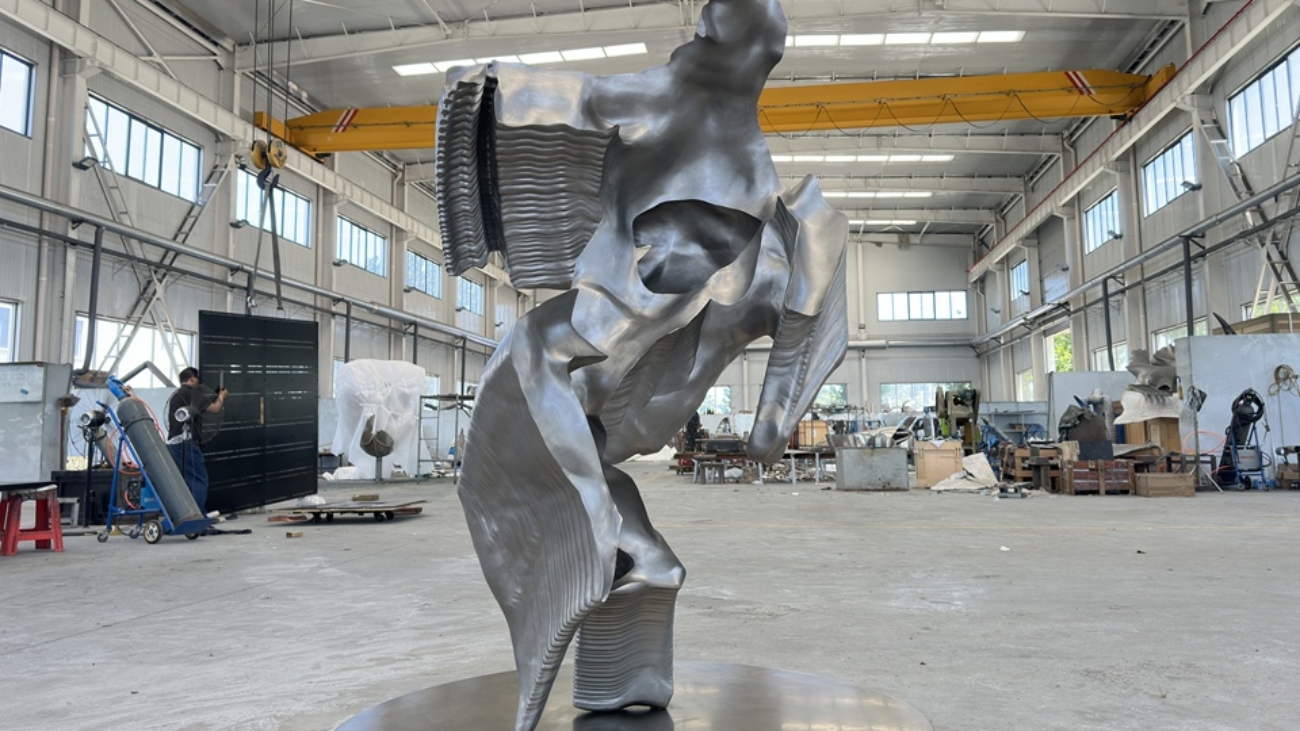
Bronze or Stainless Steel? The 30-Second Answer
It is the first question almost every sculpture buyer asks: bronze or stainless steel? Both are premium metals that last for decades outdoors, but they speak completely different design languages — and they suit different budgets, climates, and project types.
The short version: choose bronzo for classical, figurative, and commemorative work — statues, memorials, animal figures, collectible art — where warmth and tradition matter. Choose acciaio inossidabile for modern, architectural, and large-scale work — commercial landmarks, abstract forms, contemporary gardens — where a clean reflective look and lower maintenance win. Everything else is detail, and this guide covers the details that actually change your decision.
Bronze vs Stainless Steel: Side-by-Side Comparison
| Fattore | Rame | Acciaio inossidabile |
|---|---|---|
| Visual character | Warm, classical, traditional; develops patina | Modern, architectural, reflective; finish stays constant |
| Typical cost (life-size figure) | $4,500–$15,000+ factory-direct | $5,000–$12,000+ for comparable scale |
| Production method | Lost-wax casting (mold-based) | Hand forging + welding / fabrication |
| Peso | Heavy — a life-size figure runs 180–220 lbs | Lighter hollow fabrication; easier to ship and suspend |
| Outdoor durability | 50–100+ years; patina is protective | Decades; grade 304 inland, 316L coastal |
| Manutenzione | Annual re-waxing recommended | Wash with mild soap; otherwise none |
| Color over time | Brown → green verdigris (often desired) | Stays silver; PVD color options available |
| Ideale per | Statues, memorials, busts, animals, collectibles | Landmarks, abstract/commercial work, modern gardens |
Cost: Where the Money Actually Goes
Both metals are priced by size, complexity, and labor — but the cost structures differ:
Rame carries raw-material cost that tracks the copper market, plus a multi-stage lost-wax casting process: clay model, mold, wax, ceramic shell, pour, chasing, patina. That process is why bronze has historically been the artist’s metal — it reproduces fine anatomical detail beautifully. If you are budgeting a bronze commission, our custom bronze statue cost and pricing guide breaks down real numbers by size.
Acciaio inossidabile replaces casting with fabrication: laser-cut and hand-formed sections, welded, ground, and polished. Sheet and tube cost less than cast bronze per piece, and hollow construction keeps weight (and shipping cost) down. Large statement pieces — 4 meters and up — are usually more economical in stainless steel than in solid bronze. Current pricing is covered in our stainless steel sculpture price guide.
Practical takeaway: for a life-size figurative statue, expect similar quotes from both materials. For very large or geometric work, stainless steel usually wins on price; for finely detailed realism, bronze delivers what fabrication cannot.
Durability and Maintenance: The Honest Comparison
Both metals survive outdoors for generations — the difference is come they age.
Bronze ages visibly and proudly. The surface slowly shifts from warm brown to green verdigris. This patina is not decay; it is a protective oxide layer, and on memorials and classical statues it is often the desired final look. Maintenance means an annual wash and paste-wax to keep the finish you chose — our bronze sculpture care guide covers the routine.
Stainless steel does not change color, period. Grade 304 handles rain, snow, and UV indefinitely in inland climates; in coastal salt air, specify marine-grade 316L. Maintenance is a rinse with mild soap once or twice a year — genuinely that simple.
Practical takeaway: if you want the artwork to look “timeless and living,” bronze. If you want it to look exactly the same in year twenty as on installation day, stainless steel.
Aesthetics: Warm Patina vs Modern Mirror
This is the decision most buyers actually make on feeling — so let’s make the feeling concrete:
- Choose bronze if your space is classical, traditional, or meant to honor something: a founder’s statue, a memorial, an animal piece for a garden with mature landscaping, a collectible that might appreciate. Bronze signals heritage and permanence.
- Choose stainless steel if your space is modern: a contemporary villa, hotel lobby, shopping mall, corporate plaza, or minimalist garden. Reflective surfaces interact with light, water, and architecture in ways bronze cannot. Stainless signals now.
One more aesthetic consideration: detail capability. Faces, hands, flowing drapery, animal fur — these render best in cast bronze. Clean geometry, ribbons, spheres, wings, and large abstract forms render best in fabricated stainless steel. Match the metal to the shape you actually want.
Which Metal for Which Project? A Scenario Map
| Your project | Our recommendation |
|---|---|
| Memorial or commemorative statue | Bronze — patina and tradition carry emotional weight |
| Lifesize figure with realistic detail | Bronze — casting captures anatomy best |
| Hotel / mall landmark | Stainless steel — modern look, low upkeep, photo-friendly |
| Coastal garden installation | Stainless 316L, or bronze with annual waxing |
| Large abstract piece (4 m+) | Stainless steel — lighter, more economical at scale |
| Collectible / resale value | Bronze — established collector market |
| Very tight budget at large scale | Stainless steel, or cold-cast bronze (resin + bronze powder) |
Can You Combine Both Metals in One Project?
Absolutely — and it often produces the best result. A common configuration is a stainless steel architectural base or surrounding structure with a cast bronze figure or relief at its center. The stainless provides modern framing; the bronze provides the warm, detailed focal point. Another popular combination: stainless steel water features with bronze animal sculptures at the rim. When you work with a manufacturer that casts bronze and fabricates stainless steel under one roof, mixed-material projects do not carry the coordination penalty you would expect.
How Each Metal Is Actually Made
If you want to understand why the two metals behave so differently on cost and detail, it helps to see the processes side by side. Bronze is poured — the step-by-step bronze casting process runs through clay modeling to patina in eight stages. Stainless steel is built — sections are formed, welded, and finished by hand, which is what allows its freedom of scale and geometry.
Domande frequenti
Is bronze or stainless steel better for outdoor sculpture?
Both are excellent outdoors. Bronze lasts 50–100+ years and develops protective patina; stainless steel keeps its original finish indefinitely if you use grade 316L near the ocean. Choose by look, not by lifespan.
Which is cheaper, bronze or stainless steel?
At life-size figurative scale, quotes are usually comparable. At large scale (4 m+), stainless steel fabrication is typically cheaper than solid bronze casting. Small finely detailed figurines are usually cheaper in bronze from existing molds.
Does stainless steel rust like regular steel?
No. Stainless steel contains chromium, which forms an invisible passive layer that self-repairs. Grade 304 resists rust in most climates; grade 316L adds molybdenum for salt-air environments.
Will a bronze statue turn green?
Outdoors, gradually — over years it shifts from brown to green verdigris. Many owners love this look; if you prefer the original brown, annual waxing keeps it.
Which metal holds value better?
Bronze has an established collector and resale market, and its material value tracks copper prices. Stainless steel sculptures trade on design and craftsmanship rather than a secondary art market.
Still deciding? Send us your project idea, size, and location — we will recommend the right metal, provide 3D renderings in both options if useful, and quote factory-direct.

 Italian
 English
 German
 French
 Spanish