
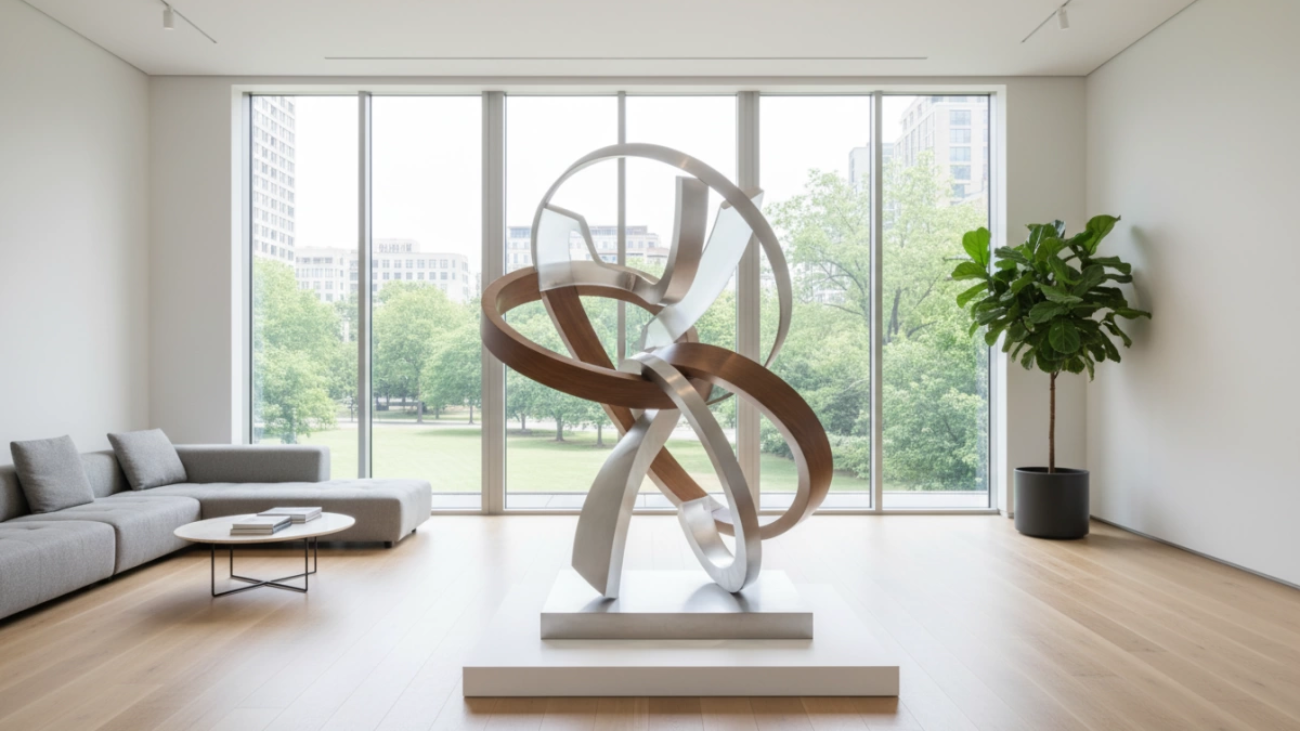
What Is 3D Abstract Art Sculpture?
3D abstract art sculpture is three-dimensional art that doesn’t try to copy real-life people, animals, or objects. Instead, it uses pure shapes, lines, curves, angles, and textures to create emotion, movement, and atmosphere. Think of it as sculpted energy or ideas, not a literal object.
A modern abstract sculpture might be:
- A geometric abstract sculpture made of sharp lines and clean metal planes
- An organic abstract form that twists and flows like wind or water
- A minimalist abstract sculpture that uses one simple, powerful shape
Key Traits of 3D Abstract Sculptures
Most 3D abstract art sculptures share a few things:
- Non-representational: They don’t “look like” a specific thing, but they still feel meaningful.
- Focused on form: Shapes, edges, and negative space (the gaps and openings) are the main language.
- Rich textures: Smooth polished metal, rough stone, brushed bronze, or textured resin create visual drama.
- Interaction with light: Reflections, shadows, and highlights constantly change how the piece feels.
3D Abstract vs 2D Abstract vs Realistic Sculpture
- 2D abstract art (paintings, prints) sits on a flat surface. You see one main view.
- 3D abstract sculpture exists in real space. You walk around it, look through it, and see new shapes from every angle.
- Realistic sculpture aims to represent something identifiable (a figure, an animal, an object).
- Contemporary abstract art sculpture strips away the “object” and keeps only pure visual impact.
This is why a bronze abstract sculpture, a metal wall sculpture, or a textured 3D sculpture often feels more like architecture or music than a traditional statue.
Why 3D Abstract Sculptures Feel Different in Real Life
Photos flatten everything. In real life, 3D abstract art sculpture is:
- Physical – You feel its height, weight, and presence in the room.
- Dynamic – Light, shadow, and reflections shift as you move.
- Spatial – It changes how you move through a space, especially large abstract statues or floor standing abstract sculpture.
That’s why 3D abstract art for living room, abstract sculpture for office, and abstract garden sculpture have such a strong impact in person. A good piece doesn’t just decorate a space – it redefines the space around it.
History of 3D Abstract Art Sculpture
3D abstract art sculpture really took off in the early 20th century, when pioneers like Constantin Brâncuși, Naum Gabo, and Henry Moore started stripping away details and focusing on pure form. Instead of copying the human body or nature exactly, they pushed non‑representational shapes, smooth curves, and bold voids, which still define modern abstract sculpture today.
Movements like Cubism, Futurism, and Expressionism then changed the game. Cubist sculptors broke objects into angular, geometric planes; Futurists chased speed and motion; Expressionists exaggerated forms to boost emotion. All of this fed directly into the way we design geometric abstract sculpture, organic abstract forms, and even today’s minimalist abstract sculpture for homes, hotels, and public spaces.
As industry evolved, artists moved from only stone and traditional bronze abstract sculpture into steel, iron, fiberglass, and other industrial materials. This opened the door to modern metal abstract art, large outdoor installations, and sleek stainless steel abstract sculpture that feels right at home in contemporary lobbies and plazas. If you want to dive deeper into this shift, the overview on the art and history of bronze sculpture is a solid starting point.
Technology then flipped the script again. Welding allowed light, open, and even kinetic abstract sculpture; advanced casting made complex forms repeatable; and 3D‑printed abstract sculpture brought digital design into real space. Today, I can take a digital sketch, 3D model it, and move seamlessly into metal fabrication or bronze casting, using workflows similar to those described in how to make a bronze sculpture that will last in this guide to long‑lasting bronze sculpture making. This mix of art, engineering, and fabrication is exactly what drives the custom, large‑scale abstract pieces we produce for global clients.
Famous 3D Abstract Sculptors and Iconic Works
When we talk about modern 3D abstract art sculpture, a few names always set the standard and shape what we see in homes, hotels, and public spaces today.
Key sculptors who defined 3D abstract sculpture
- Constantin Brancusi – Pure, simplified forms like Bird in Space showed how a single curve can feel spiritual and weightless.
- Henry Moore – Large organic abstract forms, often based on the human body, with empty “holes” that turn negative space into part of the sculpture.
- Barbara Hepworth – Clean, carved shapes with strings, openings, and smooth surfaces that feel calm and architectural.
- Alexander Calder – Kinetic abstract sculpture pioneer; his mobiles proved that movement, balance, and air can become part of the artwork.
- Isamu Noguchi – Blended sculpture and design, creating abstract forms that work as both art and functional objects.
These artists set the foundation for today’s modern abstract sculpture, geometric abstract sculpture, and minimalist abstract sculpture used in interior and exterior spaces.
What makes their works abstract and powerful
Their sculptures are powerful because they focus on:
- Form, not faces – No literal figures; just shapes, curves, lines, planes.
- Emotion through geometry – Sharp angles feel energetic or tense; soft curves feel calm and inviting.
- Space and shadow – Openings, cutouts, and layered parts catch light and shadow, so the piece changes all day.
- Material honesty – Bronze looks timeless and solid, stainless steel feels futuristic, stone feels grounded.
That same logic applies when we design bronze abstract sculpture, stainless steel abstract sculpture, or textured 3D sculpture for clients who want a strong visual statement.
What we can learn for modern decor
For indoor abstract decor and abstract home decor art, here’s what these masters teach us:
- Use one strong 3D abstract sculpture as a focal point instead of many small distractions.
- Pick a clear direction: geometric, organic, or kinetic – and let the room support that style.
- Think in silhouettes: the outline of the sculpture should look striking from across the room.
- Let materials speak: polished metal for luxury, matte stone for calm, bold resin or fiberglass for color and impact.
This is exactly how I approach abstract sculpture design for homes, offices, and hotels – one hero piece that anchors the whole space.
How museum and public abstract sculptures influence decor trends
People experience bold public abstract art installations in plazas, lobbies, and parks every day. Those memories directly shape what they want at home:
- Big city plazas inspire requests for large abstract statues and abstract statue for hotel lobby.
- Outdoor parks and squares push demand for abstract garden sculpture and outdoor modern sculpture in private villas.
- Contemporary museums inspire 3D wall art sculpture, metal wall sculpture, and abstract wall decor sculpture in offices and living rooms.
Many of our clients bring us photos of public sculptures and ask for a custom sculpture commission with a similar mood but personalized scale, colors, and materials. Through our tailored custom bronze and modern sculpture services, we translate those iconic museum feelings into bespoke sculpture design for real-world interiors and exteriors, whether that’s a luxury residence or a corporate lobby.
Main Types of 3D Abstract Art Sculpture
When you’re choosing a 3D abstract art sculpture, it helps to know the main types. Each style brings a different kind of energy to a room, garden, office, or public space.
Freestanding 3D Abstract Sculptures
Freestanding modern abstract sculptures are designed to stand on their own, with no wall support.
- Indoor: Great as floor standing abstract sculptures in living rooms, hotel lobbies, offices, and galleries. They work well as a clear focal point.
- Outdoor: Used as abstract garden sculptures or large abstract statues at entrances, plazas, and courtyards. Materials like bronze and stainless steel handle weather well.
If you want a strong statement piece that anchors a space, a freestanding geometric or organic abstract form is usually the first choice.
3D Abstract Wall Art & Wall-Mounted Sculptures
3D wall art sculpture sits between painting and sculpture:
- Saves floor space while still giving a sculptural, textured 3D look
- Ideal for hallways, above sofas, reception desks, and long corridors
- Works especially well as metal wall sculpture or modern abstract metal wall art in busy areas
Well-designed metal abstract wall art can turn a plain wall into a feature wall without cluttering the room.
Geometric Abstract Sculpture
Geometric abstract sculptures use clean lines, sharp edges, and simple shapes:
- Cubes, spheres, arcs, triangles, and minimal forms
- Fits perfectly in modern, minimalist, or industrial interiors
- Common materials: stainless steel, aluminum, painted metal, stone
If your style is sleek and contemporary, a geometric abstract sculpture or minimalist abstract sculpture will feel very natural.
Organic Abstract Forms
Organic abstract forms are softer and more fluid:
- Inspired by nature, waves, rocks, clouds, and the human body
- Smooth curves, flowing lines, and textured 3D sculpture surfaces
- Works well in homes, spas, hotels, and gardens where you want a calm, natural feel
These contemporary abstract art sculptures are great when you want the piece to feel alive and emotional without showing a literal figure.
Kinetic & Interactive Abstract Sculpture
Kinetic abstract sculpture brings movement and interaction into the artwork:
- Moving parts that spin, sway, or rotate with wind or touch
- Light-based sculptures using LEDs, reflections, or shadows
- Sound or interactive pieces that respond to visitors
Kinetic pieces are powerful in public abstract art installations and tech-forward offices where you want people to engage physically and emotionally with the sculpture.
Small Tabletop vs Large Abstract Statues
Scale changes everything in 3D abstract art sculpture:
- Small tabletop abstract pieces
- Perfect for desks, shelves, consoles, and side tables
- Easy entry point for abstract home decor art
- Great for gifts or first-time collectors
- Large abstract statues
- Designed for hotel lobbies, corporate atriums, malls, and outdoor plazas
- Instantly define traffic flow, mood, and brand presence
- Often created as custom sculpture commissions or bespoke sculpture designs
If you’re not sure where to start, begin with a small indoor abstract decor piece. When you know your taste and space better, step up to a large stainless steel abstract sculpture or bronze abstract sculpture as the hero of your space.
Materials Used in 3D Abstract Art Sculpture
When I design or source a 3D abstract art sculpture, the first decision is always material. It controls texture, weight, light, mood, and whether the piece belongs indoors, outdoors, or in a high-traffic public space.
Traditional Materials: Bronze, Stone, Wood, Clay
- Bronze abstract sculpture
- Pros: Premium look, strong, ages beautifully, perfect for both indoor and outdoor modern sculpture, great as long-term investment art.
- Cons: Higher cost, heavy, needs occasional waxing or patina care.
- Stone (marble, granite, limestone)
- Pros: Timeless, weather-resistant, ideal for abstract garden sculpture and large abstract statues.
- Cons: Very heavy, hard to move, carving is time-consuming and costly.
- Wood
- Pros: Warm, organic abstract forms, great for indoor abstract decor and minimalist abstract sculpture.
- Cons: Sensitive to moisture, sunlight, and insects; not ideal long-term outdoors.
- Clay
- Pros: Perfect for handmade abstract sculpture and prototypes; highly detailed.
- Cons: Fired clay can be fragile; better for small indoor abstract interior sculpture pieces.
Modern Materials: Stainless Steel, Aluminum, Resin, Glass, Mixed Media
- Stainless steel abstract sculpture
- Pros: Ultra-modern, reflective, durable outside, great for public abstract art installations and hotel lobby abstract statues. Spray-painted or mirror-polished stainless pieces, like a modern stainless steel tower sculpture, can completely change a plaza or entryway.
- Cons: Needs professional fabrication; fingerprints show on high-polish finishes.
- Aluminum
- Pros: Lightweight, corrosion-resistant, ideal for wall-mounted metal wall sculpture and large but easy-to-hang 3D wall art sculpture.
- Cons: Softer than steel; can dent if not handled well.
- Resin
- Pros: Flexible in shape and color, great for unique abstract sculptures and affordable abstract home decor art.
- Cons: Can yellow or crack outdoors if low-quality or badly coated.
- Glass
- Pros: Strong visual impact, plays with light beautifully, perfect for luxury abstract sculpture accents.
- Cons: Heavy, fragile, best for protected indoor spaces.
- Mixed media
- Pros: Lets me blend metal, stone, wood, or glass for truly contemporary abstract art sculpture with rich textures.
- Cons: Different materials age differently; needs careful planning.
3D-Printed Abstract Sculptures & Digital Fabrication
- 3D printed abstract sculpture lets us create complex geometric abstract sculpture and intricate organic abstract forms that are almost impossible by hand.
- I often use 3D printing to:
- Prototype custom sculpture commissions.
- Print resin or plastic models that we later cast in bronze or fabricate in metal.
- The result: precise, repeatable forms that still feel artistic, especially when combined with hand-finishing and traditional patinas.
Indoor vs Outdoor: Pros and Cons by Material
Best for indoor abstract decor:
- Resin, wood, glass, aluminum, bronze.
- Pros: Controlled environment, less weather damage.
- Watch out for: UV on resin, humidity for wood.
Best for outdoor modern sculpture and abstract garden sculpture:
- Stainless steel, bronze, durable stone, high-grade aluminum.
- Pros: Weather resistance, structural strength, long life.
- Watch out for: Patina changes on bronze (which many collectors love), pollution staining metals if not cleaned.
If you want a modern metal abstract art piece with high weather resistance and color options, a spray-painted stainless steel sculpture is one of the most practical choices, and we specialize in this type of outdoor abstract sculpture.
How Material Changes Texture, Light, and Mood
- Smooth, polished metal (stainless, aluminum):
- Reflects light, feels futuristic, sharp, and bold.
- Patinated bronze:
- Deep, rich tones; feels stable, classic, and premium.
- Rough stone or textured 3D sculpture surfaces:
- Catch shadows, feel grounded and calm.
- Glass and high-gloss resin:
- Play with transparency and color; feel light, modern, and artistic.
- Wood:
- Warm and natural; perfect for relaxed, minimalist spaces.
When I help clients pick a 3D abstract art sculpture, I always match material to:
- The space (indoor vs outdoor),
- The style (minimalist, geometric, or organic), and
- The mood they want: dramatic, calm, luxurious, or playful.
Techniques and Fabrication Methods for 3D Abstract Art Sculpture
Hand Sculpting, Carving, Modeling & Casting
For most 3D abstract art sculptures, the process still starts by hand:
- Hand sculpting & modeling – I shape clay, wax, or foam to explore freeform geometric or organic abstract forms. This is where the main movement, balance, and negative space are decided.
- Carving – For stone or wood abstract sculpture, I remove material to reveal simplified curves, planes, or sharp angles, focusing on bold silhouettes instead of fine details.
- Casting basics – Once the abstract form is set, I create a mold (usually silicone or plaster), then cast it in resin, bronze, or other materials to get a durable final piece or a series of editions.
Bronze Casting for Abstract Art Sculpture
Bronze is still the go-to for high-end abstract sculpture and art investment:
- I sculpt the original in clay or wax.
- A rubber mold is made around it.
- Wax copies are poured and refined.
- The wax is encased in a heat-resistant shell.
- Wax is melted out, and molten bronze is poured in.
- After cooling, the shell is broken, and the bronze is chased, welded, and finished.
Patinas and polishing give bronze abstract sculptures their depth, from matte earthy tones to rich dark or golden finishes. For more detail on the craft side, I recommend this breakdown of the key elements that make bronze sculpture so captivating.
Metal Fabrication: Welding, Bending, Polishing, Patina
For modern abstract sculpture in stainless steel or aluminum, fabrication is more architectural:
- Cutting & bending – I cut plates or rods, then bend them into clean geometric lines or flowing organic shapes.
- Welding – Pieces are welded together, then welds are ground smooth for a seamless, minimalist sculptural surface.
- Polishing & finishes – Surface can be mirror-polished, brushed, sandblasted, or given a patina for color and texture.
- Outdoor-ready – Stainless steel abstract sculpture is ideal for outdoor modern sculpture thanks to its corrosion resistance and strong visual impact.
3D Printing for Contemporary Abstract Sculptures
3D-printed abstract sculpture lets me push complexity and precision:
- I design the piece in 3D software (CAD or sculpting tools).
- The model is 3D printed in resin, plastic, or even metal.
- The print can be the final artwork or a master for bronze casting or metal fabrication.
- This is perfect for intricate geometric abstract sculpture, lattice forms, and lightweight large-scale designs.
From Sketch to 3D Artwork with Custom Sculpture Manufacturers
When a client comes to me with a simple idea or sketch, I turn it into a finished 3D abstract art sculpture through a clear workflow:
- Concept & sketch – We define mood, size, placement (hotel lobby, office, garden, public space), and budget.
- 3D modeling – My team builds a digital 3D model so you can see proportions, angles, and how light hits the form.
- Engineering & structure – We plan internal supports, base design, and installation method for safety and durability, often using the kind of structural planning shown in our own sculpture fabrication and engineering process.
- Material selection – Bronze, stainless steel, resin, or mixed media, chosen based on indoor/outdoor use and the visual effect you want.
- Fabrication & finishing – We sculpt, weld, cast, polish, patina, and quality-check every piece before shipping and installation.
This end-to-end process is how I turn abstract ideas into real, physical 3D abstract sculptures that work for homes, offices, hotels, and public spaces worldwide.
3D Abstract Art Sculpture in Interior Design
Using 3D abstract sculptures as focal points
I use 3D abstract art sculpture as a shortcut to a strong focal point in living rooms, hotel lobbies, and office reception areas. One good floor standing abstract sculpture or minimalist abstract sculpture can:
- Anchor a seating area or entrance
- Draw attention away from awkward corners or plain walls
- Instantly signal “modern”, “luxury”, or “creative” depending on the form and finish
For offices, a geometric abstract sculpture in metal or bronze near the reception desk quietly communicates stability, innovation, and long-term vision.
3D wall art sculpture as feature walls
Flat walls feel dead. A 3D wall art sculpture or metal wall sculpture turns them into feature walls with depth and shadow:
- Above sofas, beds, or console tables as a hero piece
- In hallways or staircases to keep the eye moving
- In offices as abstract wall decor sculpture that looks premium but saves floor space
Textured 3D pieces, especially modern metal abstract art, react beautifully to side lighting and shift throughout the day.
Choosing scale and proportions
The wrong size kills the effect, no matter how good the artwork is:
- Small rooms / apartments
- Go for small tabletop abstract pieces or medium 3D abstract art for living rooms
- Leave breathing space around the sculpture (at least ⅓ of the wall or console width empty)
- Large rooms / double-height spaces / hotel lobbies
- Use large abstract statues or tall abstract interior sculpture
- As a rule, the sculpture should visually fill about 60–70% of the height of the area it occupies
When in doubt, mock up with masking tape or cardboard before ordering.
Matching colors, materials, and style
To keep your decor cohesive, match your 3D abstract art sculpture to the room in a few smart ways:
- Colors
- Neutral rooms: use bold or dark sculptures as contrast
- Colorful rooms: stick to black, white, metallic, or stone to avoid visual noise
- Materials
- Warm interiors: bronze, wood, resin with warmer tones
- Minimal / industrial spaces: stainless steel abstract sculpture, aluminum, glass
- Style
- Clean, modern interiors → geometric abstract sculpture, minimalist forms
- Softer, organic interiors → organic abstract forms with curves and flowing lines
For more on how materials change the feel of a space, you can see how we use steel in our outdoor steel sculptures that blend nature and architecture.
Layering sculpture with art, lighting, and furniture
The best interiors don’t use sculpture alone; they layer:
- Place a 3D abstract art sculpture where it interacts with:
- A low console or sideboard
- A large, simple painting or textured wall behind it
- Accent chairs or a sofa that frame the view
- Add targeted lighting:
- Spotlights or track lights from above or the side
- Warm light for bronze and wood, cooler light for steel and glass
This layering lets one strong contemporary abstract art sculpture feel like part of a whole design story, not just a random object dropped into the room.
Outdoor and Public 3D Abstract Art Sculpture
Best materials for outdoor modern sculpture
For outdoor 3D abstract art sculpture, materials matter more than anything. I usually recommend:
- Stainless steel abstract sculpture – corrosion-resistant, sleek, great for modern plazas and hotel entrances.
- Bronze abstract sculpture – classic, durable, ideal for high-end public abstract art installations and luxury gardens.
- Corten steel – develops a controlled rust patina, perfect for abstract garden sculpture with a warm, earthy feel.
- Stone and granite – timeless, extremely durable, great for minimalist abstract sculpture and outdoor modern sculpture.
- High‑grade outdoor resin + fiberglass – lighter, more
Emotional and Visual Impact of 3D Abstract Art Sculpture
3D abstract art sculpture hits on a deeper level because it doesn’t tell you what to see – it lets you feel first, then think. Even without a clear subject, modern abstract sculpture can feel calm, tense, powerful, or playful the second you walk into the room.
Why non-representational forms feel emotional
Non-representational forms still connect because our brains read shape, rhythm, and balance the same way we read faces and body language. With 3D abstract art sculpture:
- Soft, flowing lines often feel peaceful and poetic
- Sharp, fractured forms can feel dynamic, edgy, or intense
- Heavy, grounded bases feel safe and stable
- Tall, reaching forms feel ambitious or aspirational
You’re not “decoding a symbol” – you’re reacting instinctively.
Curves, angles, and negative space
In geometric abstract sculpture and organic abstract forms, design choices hit your mood directly:
- Curves → relaxed, sensual, human, nature-inspired
- Angles → energetic, futuristic, architectural
- Negative space (the gaps and openings) → gives the eye room to breathe, adds lightness, drama, and mystery
Good abstract interior sculpture uses these elements to set the emotional tone of a living room, lobby, or office without a single word.
Light, shadows, and reflections
3D abstract art only really comes alive in light. The same bronze abstract sculpture or stainless steel abstract sculpture can look completely different from morning to night:
- Textured surfaces catch shadows and deepen contrast
- Polished metal and glass reflect surroundings, pulling the room into the artwork
- Strong directional lighting creates bold silhouettes and sculptural shadows on walls and floors
If you’re planning a luxury abstract sculpture for a hotel lobby or home, lighting is as important as the piece itself. That’s why I often pair high-end bronze works with considered lighting, similar to the approach described for large-scale bronze sculpture engineering and presentation.
Physical interaction vs paintings
Paintings stay flat; 3D abstract sculpture invites you to move:
- You walk around it, see different compositions from every angle
- You feel weight, scale, and presence in your body, not just your eyes
- In public abstract art installations, people sit near it, walk under it, take photos with it
This physical interaction is why large abstract statues in plazas or abstract sculpture for office spaces change how people use and feel in a space – the sculpture becomes part of how you move, not just something you look at.
How to Choose the Right 3D Abstract Art Sculpture
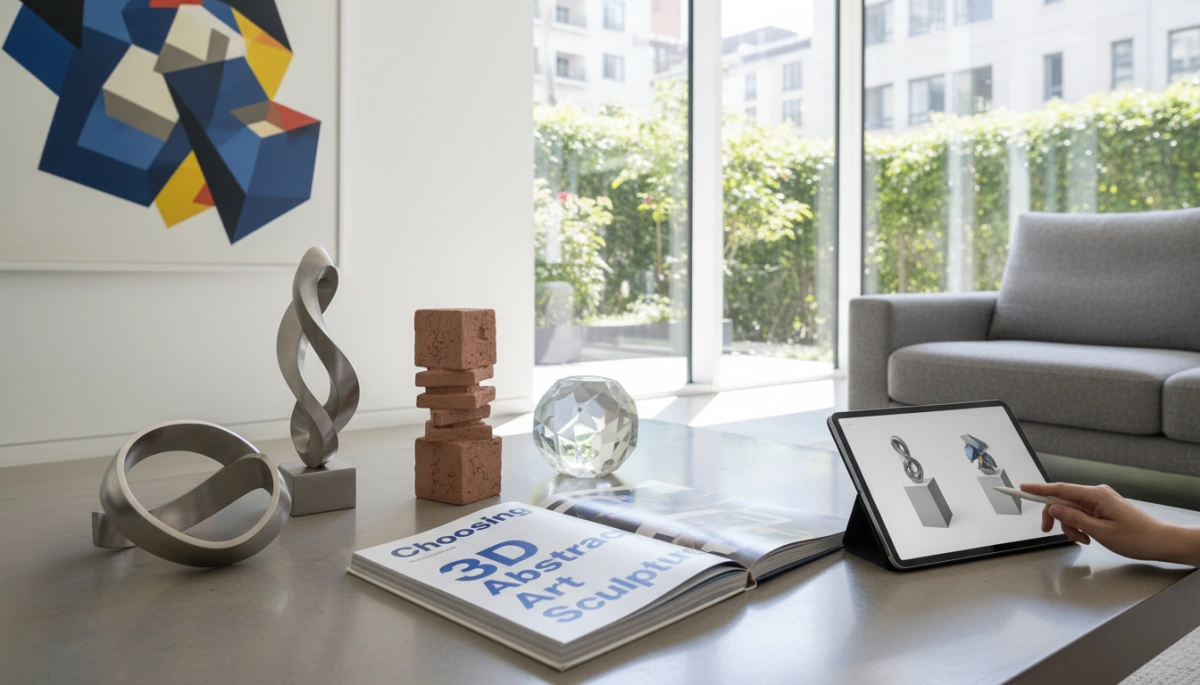
Key questions before you buy or commission
Before you commit to any 3D abstract art sculpture, ask yourself:
- Where will it go? Indoors, outdoors, wall, floor, table, lobby, garden?
- What do you want it to do? Calm, energize, be a quiet accent, or a bold focal point?
- How long should it last? Temporary decor, or a long-term art investment?
- Do you care more about brand-name artists or pure visual impact?
- Do you need custom sizes or can you work with standard dimensions?
Write these answers down – they’ll guide every decision.
Size, material, and style (quick guide)
| Factor | Home / Office Indoor | Garden / Outdoor Modern Sculpture |
|---|---|---|
| Size | Don’t exceed ⅓ of wall or ⅕ of room width | Go bold – large abstract statues work well in open space |
| Material | Resin, bronze, wood, glass, mixed media | Stainless steel, bronze, stone, weatherproof resin |
| Style | Minimalist geometric abstract sculpture, 3D wall art | Large organic abstract forms, modern metal abstract art |
| Finish | Smooth, matte, or polished, fits furniture | UV-resistant paint, patina, brushed or mirror metal finishes |
Tip: For small rooms, use slim floor standing abstract sculpture or 3D wall art sculpture to save floor space.
Budget ranges: decor vs investment abstract art
| Level | Typical Use | Notes |
|---|---|---|
| Low–Mid (under $800–$2,000) | Indoor abstract decor, small pieces | Great for 3D abstract art for living room or office |
| Mid–High ($2,000–$10,000+) | Large custom pieces, hotel lobbies | Ideal for abstract statue for hotel lobby or brand spaces |
| High-End / Investment (10k+) | Signature bronze abstract sculpture | Focus on artist, material, casting quality, edition size |
If you care about long-term value, prioritize bronze abstract sculpture and serious craftsmanship over size alone.
Ready-made vs custom sculpture studio
Ready-made abstract sculpture for sale
- Faster, cheaper, perfect if:
- You need decor now
- Standard sizes work
- You’re testing styles (geometric vs organic abstract forms)
Custom sculpture commission (bespoke)
- Best if:
- You need a specific size or site-specific piece
- You want unique abstract sculptures no one else has
- You’re designing for hotels, offices, or public abstract art installations
A good custom bronze sculpture studio can take a rough sketch and handle the full abstract sculpture design process, from 3D model to casting and finishing. If you want to see how we handle complex bronze work, check our guide on the complete make a bronze sculpture process at Artvision.
Common mistakes to avoid
- Going too small for big rooms or gardens – the sculpture gets visually lost.
- Ignoring maintenance: resin and low-grade metals outdoors can fade or crack fast.
- Choosing trend over fit – the piece should match your architecture, not just social media trends.
- Forgetting about light – 3D abstract art sculpture needs proper lighting to show textures and shadows.
- Not checking installation – large abstract statues and metal wall sculpture must be safely anchored.
If you’re unsure, start with a simple geometric abstract sculpture or a 3D wall art sculpture as a focal point, then build your abstract home decor art collection around it.
Custom and Bespoke 3D Abstract Sculpture Commissions
When custom 3D abstract art sculpture makes sense
A custom 3D abstract art sculpture is the better choice when:
- You need exact sizes for a lobby, garden, or feature wall
- You want your brand story, logo, or values echoed in the form
- You’re designing for a hotel, office, mall, or luxury home with strict style guidelines
- You want a one-of-a-kind statement piece, not mass-produced decor
How the commission process works (simple breakdown)
| Step | What happens | What you do |
|---|---|---|
| 1. Brief | Share space photos, dimensions, mood, budget | Tell us what feeling you want (calm, bold, dynamic) |
| 2. Concept | Sketches / 3D models of abstract sculpture ideas | Choose direction, give feedback |
| 3. Design | Finalize scale, materials, finishes, installation method | Approve design + quotation |
| 4. Fabrication | Casting, welding, polishing, 3D printing if needed | Wait for progress photos/videos |
| 5. Delivery & install | Crating, shipping, on-site install or guidance | Sign-off on final placement |
Working with artists and fabrication studios
With bespoke 3D abstract sculpture, art and engineering have to meet. I always focus on:
- Design: geometric minimalism, organic abstract forms, or bold sculptural statements
- Scale: tabletop pieces for private clients vs. floor standing abstract sculpture for lobbies
- Materials: bronze, stainless steel, brass, resin, glass, or mixed media
- Safety & durability: wind loads, anchoring, public interaction, and code compliance
You get creative freedom, but with technical support so the piece is beautiful and buildable.
Why bespoke abstract sculpture works for brands, hotels, and collectors
Custom and bespoke 3D abstract sculpture gives you:
- Clear identity – a recognisable feature guests remember and photograph
- Tailored fit – perfect proportions for your staircase void, reception desk, or garden axis
- Higher perceived value – luxury spaces feel “finished” with unique abstract modern art pieces
- Storytelling – form, color, and material reflect your culture, city, or landscape
How Artvision Sculpture Group supports custom projects
At Artvision Sculpture Group, I treat each custom abstract project like a small architecture job:
- Support from concept sketch to install-ready 3D abstract art sculpture
- Custom bronze sculpture studio services, including traditional bronze casting and modern patina work
- Large-scale stainless steel abstract sculpture options for malls, plazas, and hotel entrances
- In-house modeling, fabrication, and finishing for modern abstract sculpture and outdoor modern sculpture
If you’re planning a lobby centerpiece, a branded public plaza, or a large urban stainless steel sculpture, you can use our experience and fabrication capabilities to turn a rough idea into a precise, buildable and install-ready work of art. For example, our large urban stainless steel sculpture is a strong reference point for city-scale abstract installations.
3D Abstract Sculpture as an Art Investment
3D abstract art sculpture isn’t just decor – it can be a serious art investment if you choose wisely.
What makes a 3D abstract sculpture valuable?
A 3D abstract sculpture becomes collectible when a few things line up:
- Strong artistic identity – clear style, recognisable visual language, consistent body of work.
- Proven exhibition or sales record – galleries, fairs, public projects, online demand.
- Quality materials and build – durable metals, expert casting, clean welds, solid bases.
- Scarcity – few pieces available, limited production, or one-of-a-kind work.
Limited editions vs one-of-a-kind pieces
When you look at modern abstract sculpture for investment, you’ll mostly see:
- Limited edition sculptures
- Numbered and signed (for example, 1/8, 2/8)
- More affordable entry point
- Easier to resell because there’s a known market
- Unique one-of-a-kind sculptures (OOAK)
- Only one exists
- Higher price, higher prestige
- Strong long‑term upside if the artist’s career grows
Both can work. If you’re new, a limited edition bronze abstract sculpture is usually a safer first step than jumping straight into a very expensive unique work.
How materials and craftsmanship affect price
Three big drivers of price:
- Material
- Bronze, stainless steel, and stone hold value well because they last and feel “serious” to collectors.
- Resin, mixed media, and 3D‑printed abstract sculpture are usually lower in cost, better for entry‑level buyers and indoor abstract decor.
- Artist reputation
- Established sculptors, public abstract art installations, awards, and press coverage all push prices up.
- A lesser-known but clearly rising artist can be a smart value play.
- Craftsmanship
- Clean lines on geometric abstract sculpture, flawless welds on modern metal abstract art, and rich patinas on bronze show skill (and justify higher prices).
- If you’re investing in bronze, it’s worth understanding the abstract bronze casting process – this is where most of the long-term durability is decided. For example, pro studios follow a detailed multi-step method similar to the one in this guide to how to make a bronze sculpture: bronze casting process for fine art.
Long‑term value of bronze abstract sculpture
If you care about long-term value more than quick trends:
- Bronze abstract sculpture is still one of the safest categories in 3D abstract art.
- It has a long history in museums and public spaces, and serious collectors understand its value.
- High‑quality custom bronze sculpture fabrication with good patina and correct thickness can easily last generations, which matters for resale and inheritance.
Balancing taste with investment
You’re not buying a stock; you’re buying something you’ll live with. My rule:
- Buy with your eyes first, then with your head.
Before you commit to any 3D abstract art sculpture for investment:
- Make sure you genuinely like the piece – especially if it’s a large abstract statue or a floor standing abstract sculpture in your living room or office.
- Check the basics: edition size, material, dimensions, condition, and provenance.
- Decide your strategy:
- Decor-first – lower budget, focus on what fits your space and style.
- Investment-first – fewer pieces, higher quality, strong artist trajectory.
If you’re leaning toward a more serious portfolio, focus on:
- Fewer, better pieces in bronze or stainless steel
- Works from a custom bronze sculpture studio or sculptor with a solid record
- Limited editions or standout unique pieces that clearly show the artist’s signature style
Care, Maintenance, and Display Tips for 3D Abstract Art Sculpture
Keeping a 3D abstract art sculpture looking sharp is not complicated, but it does need a bit of consistent care and smart display choices.
Basic Cleaning for Bronze, Metal, Resin, and Stone
- Bronze abstract sculpture:
- Dust regularly with a soft microfiber cloth.
- If needed, wipe gently with a damp cloth and mild soap, then dry fully.
- Avoid harsh chemicals – they can damage the patina and finish.
- For investment-grade works (like a patina-finished abstract bronze figure sculpture), I always recommend professional waxing every 1–2 years.
- Stainless steel and metal wall sculpture:
- Use a soft cloth and glass cleaner or mild soap.
- Wipe in the direction of the grain; avoid abrasive pads.
- Resin and 3D-printed abstract sculpture:
- Dust with a dry cloth; use a slightly damp cloth for marks.
- Keep away from strong direct sunlight to reduce fading or warping.
- Stone (marble, granite, etc.):
- Dust and wipe with a damp cloth only.
- No acidic cleaners (like vinegar) – they can etch the surface.
Protecting Outdoor Modern Sculpture
For outdoor modern sculpture and abstract garden sculpture, weather protection is key:
- Choose durable materials: bronze, stainless steel, granite, properly sealed resin.
- Apply wax or clear protective coatings to bronze and metal every 6–12 months in harsh climates.
- Make sure there’s good drainage around floor standing abstract sculpture bases so water doesn’t pool.
- In coastal or extreme climates, consider slightly elevated plinths to keep sculptures off wet ground.
Positioning and Anchoring Large Abstract Statues
Large abstract statues and public abstract art installations must be secure and safe:
- Use proper anchors, bolts, and structural bases designed for the sculpture’s weight.
- For commercial spaces and hotel lobbies, I always work with engineers or installers for load-bearing checks.
- Avoid narrow walkways; keep enough space so people can move comfortably around the sculpture.
- Outdoor modern sculpture should be anchored against wind, accidental impact, and uneven ground.
Lighting 3D Abstract Forms
Lighting can transform modern abstract sculpture and 3D wall art sculpture:
- Use spotlights or track lights from the side to pull out texture and shadow.
- Warm white light (2700–3000K) gives a softer, luxury feel; cooler light suits minimalist abstract sculpture.
- For metal and stainless steel abstract sculpture, angled light creates dramatic reflections.
- Outdoors, combine ground uplights and subtle side lighting for strong nighttime impact.
Rotating and Curating for a Fresh Look
If you collect contemporary abstract art sculpture or use abstract sculpture for office and home décor:
- Rotate pieces between rooms every few months to keep spaces feeling new.
- Swap a 3D abstract art sculpture in the living room with a piece in the hallway or office.
- Re-layer with different paintings, rugs, and furniture to give each abstract interior sculpture a new context.
- For high-end bronze pieces and modern art sculpture for garden settings, I treat them as long-term anchors and rotate smaller tabletop or wall sculptures around them.
Handled right, your 3D abstract art sculpture will stay sharp, safe, and visually powerful for years, whether it’s a small indoor abstract decor piece or a large outdoor modern sculpture.
3D Abstract Sculpture Trends and Future Directions
3D abstract art sculpture is moving fast, and the gap between “gallery art” and “real-life decor” is getting smaller every year.
Current trends in modern abstract sculpture & 3D wall art
Right now, I see a few big directions:
- Minimalist geometric abstract sculpture – clean lines, simple shapes, matte or mirror finishes that work perfectly in modern homes, hotels, and offices.
- Textured 3D wall art sculpture – layered metal wall sculpture and bold 3D wall panels that turn a flat wall into a feature wall.
- Large abstract statues – oversize pieces for lobbies, plazas, and luxury villas that act as instant landmarks.
- Organic abstract forms – flowing curves and fluid shapes that soften hard architecture and add warmth to modern interiors.
Studios like ours are pushing abstract metal artwork in new directions, using advanced tools to shape how people feel in a space, as you can see in this overview of modern abstract metal art techniques.
3D printing, LEDs & interactive sculpture
Tech is reshaping contemporary abstract art sculpture:
- 3D‑printed abstract sculpture – lets us prototype complex shapes quickly, then scale up in bronze, stainless steel, or resin.
- LED‑lit modern metal abstract art – hidden lighting inside or behind the sculpture to create glow, color shifts, and dramatic shadows.
- Kinetic abstract sculpture – moving parts, rotating elements, and pieces that respond to touch, wind, or motion sensors.
- Interactive tech – sound, projection, and app-controlled lighting turning sculpture into an experience, not just an object.
Sustainability & recycled materials
Eco-aware buyers are pushing hard for sustainable abstract sculpture:
- Recycled metals (steel, aluminum, corten) and reclaimed wood are becoming mainstream for outdoor modern sculpture and abstract garden sculpture.
- Low-VOC coatings and durable finishes reduce maintenance and environmental impact.
- Weathered and patina finishes, like those used in corten steel sculpture projects, give a natural, time-worn look that blends with landscape design.
Interior design trends driving demand
Interior trends are directly changing what we design:
- Open-plan living and office spaces need bold floor standing abstract sculpture as focal points instead of just paintings.
- Neutral, minimalist interiors call for strong forms in black, white, bronze, or stainless steel to add character without visual noise.
- Biophilic and organic interiors pair perfectly with curved, nature-inspired organic abstract forms.
- Luxury residential and hospitality design wants bespoke sculpture design – custom bronze sculpture, modern stainless steel abstract sculpture, and 3D wall art tailored to brand colors, lobby scale, and lighting.
If you’re planning future-proof decor or a public installation, I’d focus on three things: clean form, smart materials, and subtle technology. That’s where 3D abstract sculpture is clearly heading.


 English
  German
  French
  Italian
  Panjabi
  Chinese
  Spanish
  Arabic
  Hindi
Hindi
Add a Comment