

If you’ve ever stood in front of a bronze sculpture and wondered, “How is this even made?”… you’re in the right place.
Behind every smooth curve and sharp detail is a precise, hands-on process called the lost-wax casting process—the same method master sculptors and fine art foundries have relied on for thousands of years.
At Artvision Sculpture, we take a sculpture from the very first clay model all the way through silicone mold making, wax casting, ceramic shell investment, bronze pouring, metal chasing, and finally, the rich, luminous patina on bronze sculpture you see in galleries and public spaces.
In this guide, you’ll see exactly how bronze sculpture is made—step by step—so you can understand what truly goes into a museum-quality piece: the planning, the heat, the craftsmanship, and the tiny details that separate a rough casting from a finished work of art.
Let’s get straight into the process, from clay to casting.
Concept and Design
Every bronze sculpture starts long before metal ever hits the mold. It begins with a clear concept, honest conversation, and a smart design plan. If you skip this stage or rush through it, the project will fight you at every step.
At Artvision Sculpture, I treat this phase as the foundation of everything that follows.
Defining the Idea and Purpose
First, I sit down with you—artist, collector, designer, or public client—and get very clear on why this bronze sculpture needs to exist.
We’ll talk about:
- Purpose: Is it a public monument, a private commission, an architectural feature, or a gallery piece?
- Message: What emotion, story, or idea should the sculpture communicate?
- Audience: Who will see it—museum visitors, city pedestrians, corporate guests, or family at home?
- Longevity: Is this meant to be a timeless landmark or a limited edition for serious collectors?
This step shapes everything: pose, style, size, surface detail, and even the bronze patina we’ll eventually choose.
From Idea to Sketches, Renderings, and Maquettes
Once the concept is clear, we translate it into visuals you can actually react to:
- Sketches: Loose drawings that explore pose, silhouette, and composition.
- Digital renderings: 3D mockups for clients who want to see different angles, lighting setups, or placement options.
- Maquettes: Small-scale clay or 3D-printed models that you can hold, rotate, and live with for a bit.
This is where:
- We test what works—and what doesn’t.
- You can request changes without expensive rework later.
- We catch design issues before we ever touch full-scale clay or bronze.
Planning Scale, Proportion, and Viewing Distance
A bronze sculpture that looks powerful in a studio can disappear on a busy city street if the scale is wrong. So we carefully plan:
- Size:
- Indoor bronze sculpture: Often more intimate, with finer detail that can be appreciated up close.
- Outdoor bronze sculpture: Usually larger, with strong forms that read clearly from a distance.
- Proportion: Exaggerated hands, faces, or gestures may be needed so the sculpture feels “right” at its final viewing distance.
- Viewing distance:
- Will people see it from 3 feet away, or 80 feet away across a plaza?
- Are they walking around it, passing by in cars, or looking from above?
This isn’t guesswork. I design with real-world scale in mind so the sculpture holds its power in the exact environment it will live in.
Thinking About Site, Lighting, and Environment
A bronze sculpture doesn’t exist in a vacuum. It lives in a specific place, under specific light, with specific conditions. During concept and design, we consider:
- Installation site:
- Museum lobby, corporate atrium, public square, garden, university campus, or private residence.
- Lighting:
- Natural light vs. artificial light
- Strong direct sun vs. soft, diffused interior lighting
- How shadows will fall across the form throughout the day
- Environment:
- Outdoor exposure to rain, UV, snow, and pollution
- Heavy public interaction (people touching, leaning, climbing)
- Safety and accessibility, especially for public art
Designing with the environment in mind ensures the sculpture doesn’t just look good in the studio—it looks right in its permanent home.
Designing for Structural Strength and Casting Feasibility
Not every beautiful sketch can be turned into a safe, long-lasting bronze. So early on, I adjust the design for structural strength and bronze casting reality:
- Support and balance:
- Avoiding weak, thin connections that can crack over time
- Designing hidden support points and internal armatures where needed
- Weight and thickness:
- Planning bronze wall thickness so it’s strong but not unnecessarily heavy
- Avoiding massive solid areas that create casting stress or warping
- Complex shapes:
- Simplifying or splitting overly complex forms into castable sections
- Designing forms that allow metal to flow properly during pouring
This stage saves you from costly surprises later—like discovering that a beautiful pose is physically impossible to cast safely.
Early Collaboration With the Bronze Foundry
Professional bronze sculpture is a team sport. One of the biggest mistakes I see is artists or clients designing in isolation and calling a bronze foundry only at the end.
At Artvision Sculpture, I insist on early foundry collaboration:
- We review the design together before final approval.
- We flag problem areas for molds, wax gating, and ceramic shell casting.
- We plan joins, sprues and vents, and assembly strategies from the start.
- We give you realistic feedback on cost, timelines, and technical risks.
By bringing the foundry into the conversation early, you:
- Avoid redesigns after the sculpture is already built.
- Reduce casting defects and structural issues.
- Get a smoother, faster, and more predictable bronze foundry process.
When the concept and design stage is handled with this level of care, everything that follows—clay modeling, mold-making, lost-wax casting, metal chasing, and patination—becomes more efficient, more controlled, and far more likely to deliver the bronze sculpture you actually envisioned.
2. Creating the Original Clay Sculpture – How Bronze Sculpture Is Made
When people ask how bronze sculpture is made, this is the part I always come back to: if the clay isn’t right, the bronze will never be right. Everything starts with a strong, clean original.
Choosing the Right Clay for Bronze
For bronze work, I’m careful about the type of sculpting clay I use, because it affects detail, drying, and mold-making.
Most common choices:
- Oil-based clay (plastiline)
- Doesn’t dry out, so I can work on the piece for weeks or months.
- Holds sharp details—perfect for faces, hands, and textures.
- Ideal for complex lost-wax casting projects and professional bronze foundry work.
- Water-based clay
- Feels more like traditional pottery clay—soft and responsive.
- Great for fast studies and large gesture work.
- Needs careful moisture control so it doesn’t crack before mold-making.
In my studio, I usually use oil-based clay for custom bronze sculpture commissions because it’s more stable through the bronze foundry process.
Building a Strong Armature
Before adding clay, I build a solid armature (steel or aluminum skeleton) to support the sculpture. This is critical for any serious bronze statue fabrication.
- For small pieces: I might use wire and pipe anchored into a wood base.
- For medium to large sculptures: I weld or bolt together a steel frame that matches the main gesture and weight points.
- I always plan:
- Balance and center of gravity
- Areas where bronze will be thick or heavy
- How the piece will eventually be mounted and cast
A strong armature keeps the clay from sagging or cracking and makes the later investment casting for sculpture much more reliable.
Blocking In the Main Forms
I never start with details. First, I block in the big shapes:
- Establish the overall pose and gesture
- Rough in head, torso, limbs, or main masses
- Check proportions and silhouette from 6–10 feet away (how most people will actually see the sculpture)
At this stage, the piece often looks rough, but it tells me if the sculpture has energy and presence before I commit to details.
Layering Clay and Refining Detail
Once the big forms feel right, I start layering clay gradually:
- Build up anatomy, folds in fabric, and large surface transitions
- Then refine:
- Facial expression
- Fingers, hair, or texture
- Edges and sharp transitions that will read well in bronze
I keep in mind how light will roll over bronze, so I design surfaces that catch highlights and shadows, not just close-up details.
Using Professional Sculpting Tools
To get the level of finish I want, I use professional sculpting tools:
- Loop tools for shaping and carving
- Rakes for smoothing planes
- Dental tools and fine picks for tiny lines and textures
- Soft brushes and sponges for subtle blending
This is where clay modeling for bronze separates a rough study from a gallery-ready bronze sculpture like the ones we finish at Artvision. If you want to see how refined bronze surfaces can look, take a look at our modern casting bronze face sculpture.
Checking From Every Angle
I never trust just one viewpoint. Throughout the process, I:
- Walk around the sculpture constantly
- Check it from eye level, low angles, and high angles
- View it under different lighting:
- Hard directional light to reveal planes and flaws
- Soft diffuse light to check subtle transitions
This step is key if the sculpture is eventually going into a public space or modern interior, like the ones we design for in our metal sculpting projects for long-lasting spaces.
Preparing the Clay for Mold-Making
Once I’m happy with the form, I prepare the clay specifically for mold-making and bronze casting:
- Fill undercuts that are too extreme or risky for silicone molds
- Clean up weak edges that might tear during demolding
- Sharpen or soften lines so they reproduce clearly in the wax model for bronze casting
- Make sure the sculpture is structurally ready to be divided (if needed) for large bronze sections
At this point, the clay sculpture becomes the master. Every step in the bronze foundry process—from silicone mold for sculpture to ceramic shell casting—will copy what I’ve done here. That’s why I treat this stage as the foundation of the entire how bronze sculptures are made step-by-step journey.
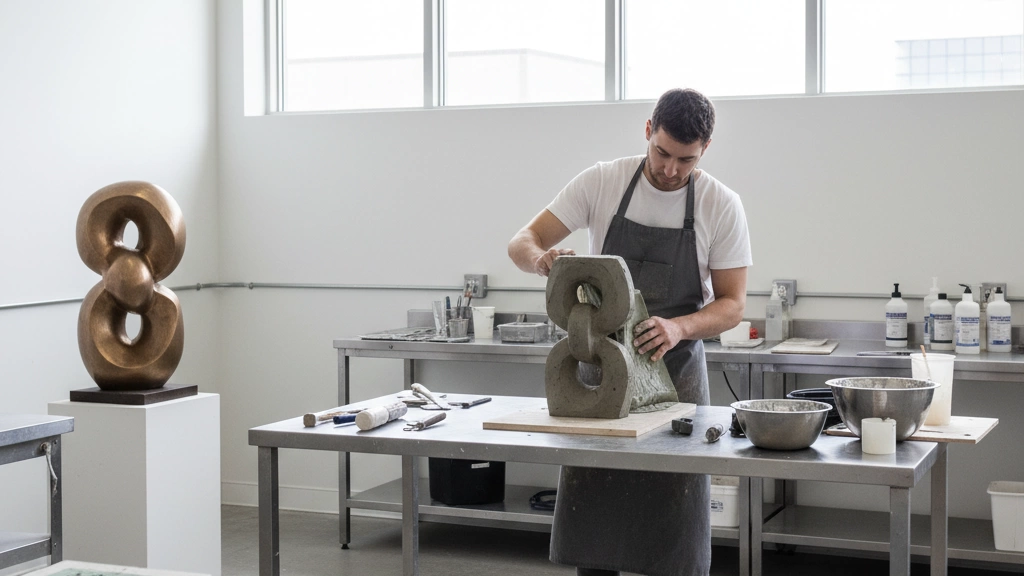
3. Making the Mold – How Bronze Sculpture Molds Are Made
Why a mold is needed for bronze sculpture
To turn a clay sculpture into bronze, I first need a high‑quality mold. The clay can’t go into the foundry—heat would destroy it. Instead, I capture every detail in a mold, then use that mold to create a wax model for the lost‑wax casting process.
A good mold must be:
- Accurate – it copies every pore, tool mark, and texture
- Durable – it can be used multiple times for limited editions
- Safe for the original – it doesn’t damage the clay sculpture
This is where professional bronze foundry process experience really matters.
Silicone rubber vs. plaster or fiberglass molds
For most bronze statue fabrication, I choose between:
Silicone rubber molds
- Flexible and highly detailed
- Great for complex textures and undercuts
- Ideal for professional investment casting for sculpture
- Higher material cost, but more precise and durable
Plaster or fiberglass piece molds
- Rigid molds built in multiple pieces
- Often used as a strong “mother mold” over a rubber layer
- Better for larger outdoor bronze sculptures where strength matters
- More labor to build and separate, but very stable
In my studio, silicone rubber is usually the first contact with the sculpture, while plaster or fiberglass becomes the supporting shell.
Planning part lines and sections
On large or complex bronze sculptures, I never mold it as one block. I carefully plan:
- Part lines – where the mold will split apart
- Sections – breaking the sculpture into manageable, castable parts
- Undercuts – areas that would trap the mold unless sectioned smartly
I place part lines:
- Along natural features (edges of clothing, hairlines, folds)
- Where seams will be easy to chase and hide later in metal
- To keep the mold easy to open and reassemble
This planning step saves a lot of time and prevents problems later at the bronze art foundry.
Protecting the original sculpture with release agents
Before I put anything on the clay, I protect it. I apply:
- Release agents (like specialized mold releases or wax)
- Thin, even coats so they don’t blur details
- Products that won’t react with the clay or rubber
This keeps the silicone mold for sculpture from sticking and lets me remove everything cleanly without tearing the clay.
Building the flexible rubber mold layer
Once the sculpture is prepped, I start the rubber:
- First layer (detail coat)
- Brushed on very thin
- Worked into every texture and crevice
- This layer captures the true surface the bronze will copy
- Subsequent layers
- Brushed or troweled on thicker
- Often reinforced with fabric or mesh in stress areas
- Built up to a strong but flexible shell
The goal is a rubber “skin” that:
- Follows every curve
- Can flex without tearing
- Holds shape when supported by the mother mold
Adding a rigid mother mold for support
Rubber alone would flop and distort, so I add a rigid mother mold over it using:
- Plaster, fiberglass, or resin
- Multiple sections that match the part lines on the rubber
The mother mold:
- Holds the rubber in the exact shape of the original
- Keeps things aligned during wax pours
- Protects the mold for repeated use in making a bronze statue from clay
For larger or outdoor work, I typically lean on fiberglass because it’s strong and lightweight, similar to structural methods we use in other durable pieces like our sheet steel sculpture work.
Labeling and keying the mold sections
To make sure every part lines up perfectly later, I build in:
- Registration keys – bumps and sockets in the rubber and mother mold so pieces lock into position
- Labels and marks – numbers, arrows, and notes for each section
This prevents distortion and guarantees that the wax model for bronze casting is an accurate replica of the original clay.
Safely removing the mold
Once everything is cured and marked, I carefully remove the mold:
- Gently separate the mother mold sections first
- Slowly peel back the rubber layer, watching for any sticking areas
- Work methodically so sensitive areas (fingers, thin edges, fine textures) stay intact
When done right:
- The clay original remains safe and ready if I need it again
- I’m left with a professional, production-ready mold for ceramic shell casting for bronze
This mold is what makes it possible to produce a single one‑of‑a‑kind bronze or a limited edition bronze sculpture series with consistent quality, which is a big part of why bronze work carries both artistic and long‑term collector value in the U.S. market.
The Lost-Wax Process Begins – How Bronze Sculpture Is Made
When people ask me how bronze sculpture is made, this is the stage I always point to. The lost-wax casting process is where your clay design becomes a precise wax copy that’s ready for bronze. Every decision here affects detail, strength, weight, and the final look of the piece.
What “lost-wax casting” means
In simple terms, lost-wax casting means we:
- Create a detailed wax model of your sculpture
- Cover that wax in a heat-resistant shell
- Heat it so the wax melts out and is “lost”
- Pour molten bronze into the empty space left behind
The better the wax, the better the bronze. That’s why we treat this step as the true final version of your sculpture.
Creating the hollow wax replica
We start by making a wax replica from the mold of your original clay:
- For most pieces, we do wax slush casting: rotate liquid wax inside the mold so it coats the walls evenly
- For some forms, we pour solid wax, then carefully hollow it out to the right thickness
For U.S. clients, this matters for shipping, installation, and handling. We usually target a consistent wall thickness that’s strong enough for long-term display, but not so heavy that it becomes costly to move or mount.
Controlling wax thickness and quality
Getting the wax thickness right is a big part of professional bronze statue fabrication:
- Too thin: weak walls, higher risk of defects
- Too thick: unnecessary weight, higher material and installation costs
- Just right: durable, efficient, and easier to mount safely
We inspect the wax under strong light, looking for thin spots, bubbles, and missed details.
Wax chasing, sprues, and vents
Once the wax comes out of the mold, we repair and refine it, a step called wax chasing:
- Clean seams where the mold came apart
- Rebuild sharp edges, textures, and small details
- Fix dents, air bubbles, and surface flaws
Then we add the wax sprues, gates, and vents – think of them as a temporary plumbing system for the bronze:
- Sprues and gates: channels where molten bronze flows into the sculpture
- Vents: pathways for air and gases to escape so you don’t get air pockets
A well-designed gating system is key to a clean pour with fewer casting defects. This is one of the places where experienced bronze art foundry work really shows. If you care about longevity and finish, this is the foundation of a bronze statue sculpture that’s built to last.
Assembling the full wax pattern
For larger bronze sculptures, we usually cast the wax in sections:
- Each section is molded in wax, chased, and gated
- We then assemble the wax sections into a complete, accurate wax pattern
- Joints are blended so the sculpture reads as one unified form
Before we move to investment, I walk the piece like a client would in a gallery:
- Inspecting the wax from every angle
- Checking proportions, edges, and critical details
- Confirming there’s nothing left we’d “fix later” in metal
At this stage, the wax model for bronze casting is treated as the final version of the sculpture. Once we move forward, the wax will be gone and replaced by bronze, so we don’t compromise here.
5. Ceramic Shell Investment
What ceramic shell investment is (and why it matters)
Once I’m happy with the wax model, I move into ceramic shell investment. This is where I build a tough, heat-resistant shell around the wax so it can handle 1,100–1,200°C bronze during the pour.
In plain terms:
- The wax model is the core.
- The ceramic shell becomes the final mold.
- The wax later melts out, leaving a clean cavity for the bronze.
Ceramic shell investment is the standard in modern bronze foundry process work because it:
- Captures sharp detail from the wax model
- Handles extreme heat without collapsing
- Gives a smoother bronze surface and more reliable results than older plaster-only molds
If you want a deeper dive into why this matters for longevity and quality, I’ve written about it in our guide to making a bronze sculpture that will last on Artvision Sculpture’s bronze casting process.
Dipping the wax in ceramic slurry
I start by dipping the entire wax sculpture (including sprues and vents) into a liquid ceramic slurry.
- This first dip is very thin and smooth.
- Its main job is to capture every fine line, texture, and tool mark from the wax model for bronze casting.
I make sure:
- The wax is clean and dry
- The slurry is well-mixed and at the right thickness
- No air bubbles stay trapped on the surface
Any bubble at this stage will show up as a flaw in the final bronze.
Adding silica sand: stuccoing the shell
While that first coat is still wet, I sprinkle fine silica sand (called stucco) over the surface.
- Fine sand = great detail and a strong bond
- It builds the shell layer by layer without losing shape
Then I let it dry completely. Once dry, I repeat the steps using slightly coarser sand in later layers for strength.
Building up 7–10+ ceramic shell layers
A professional ceramic shell casting for bronze usually needs 7–10 layers or more, depending on:
- Sculpture size
- Bronze wall thickness
- Where the metal will hit hardest during the pour
Each layer repeats the same cycle:
- Dip the wax into slurry
- Stucco with sand
- Hang to dry in a controlled area
I don’t rush this. If the shell isn’t fully dry between coats, it can crack later in the burnout kiln or during bronze pouring.
Watching drying time and humidity
Ceramic shell is sensitive. In the U.S., especially in more humid regions, I watch:
- Humidity – high humidity = longer dry time
- Airflow – steady airflow helps prevent soft or weak spots
- Temperature – extreme cold or heat can stress the shell
I adjust workflow around the local climate so the shell cures evenly and doesn’t warp or split.
Reinforcing fragile areas
Any thin or fragile areas on the wax—like:
- Outstretched arms
- Thin legs
- Delicate details
- Connection points for mounting systems
get extra shell buildup or external bracing. I might:
- Add more ceramic layers in stress zones
- Build small supports or gussets
- Reinforce attachment points that will later carry weight or be welded
This keeps the shell from breaking when it’s heated or when molten bronze hits it.
Creating a high-strength mold for molten bronze
By the time all layers are done and fully dry, I have a high-strength, heat-resistant ceramic mold that can take the impact of molten metal without failing.
A good ceramic shell mold:
- Holds sharp detail from the original clay and wax work
- Stands up to bronze pouring temperature
- Minimizes casting defects like warping, cracking, or metal leaks
That solid ceramic shell is what lets me turn a delicate wax model into a durable, professional bronze sculpture that’s built to last, whether it’s going in a private home, a public park, or a commercial space.
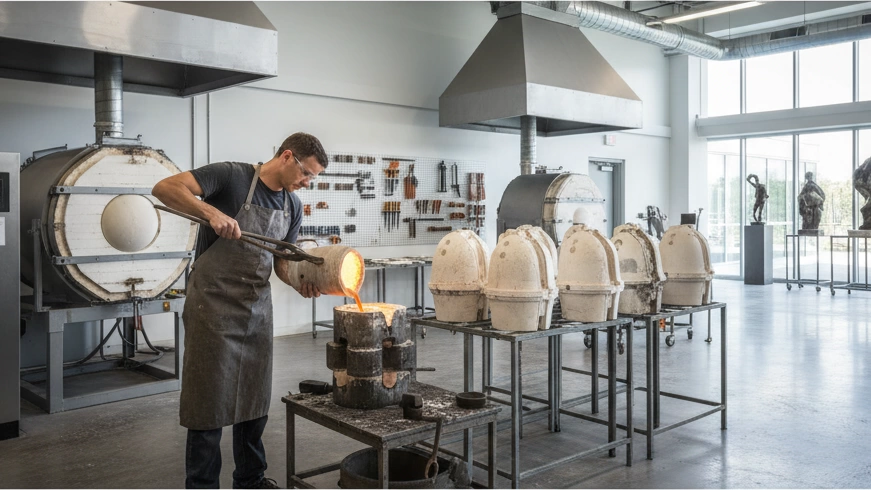
6. Burnout and Casting – How Bronze Sculpture Is Made
Once the wax and ceramic shell are ready, this is where the real heat starts. In the burnout and casting stage, we turn that fragile wax model into solid bronze that can last for generations.
Burnout in the Kiln
We start by placing the ceramic‑coated wax sculpture into a high‑temperature burnout kiln.
- The kiln is heated to around 700–800°C (about 1,300–1,470°F).
- At this temperature, the wax melts, drains out, and burns away – this is the “lost-wax” phase.
- At the same time, the ceramic shell cures and hardens, so it can handle the shock of molten bronze later.
What we’re left with is a hollow ceramic mold that’s an exact negative of the original sculpture, ready for metal.
Melting the Bronze Alloy
While the shells are in the kiln, we melt the bronze alloy in a crucible. For sculpture, we typically use a blend of:
- Copper
- Tin
- Zinc
- Sometimes small amounts of lead, depending on the alloy and finish
We bring the metal up to the right bronze pouring temperature, usually around 1,100–1,200°C (2,000–2,200°F). At this point, the bronze flows smoothly enough to fill every detail, but isn’t overheated to the point of damaging the mold.
Foundry Safety and Teamwork
Pouring molten bronze is no joke. In my studio and at any serious bronze art foundry, we follow strict bronze casting safety procedures:
- Full protective gear: face shields, leather coats, gloves, boots
- Clear roles for each team member during the pour
- Controlled lifting and tilting of the crucible
- Clean, organized floor and paths around the molds
That discipline is one reason professional bronze foundry services are worth the investment—especially for larger work that demands tight control and consistency.
Pouring the Bronze
With the ceramic shell still hot from the kiln, we move quickly:
- Position the shell molds securely in sand or another support bed.
- Lift the crucible and carefully pour molten bronze into the ceramic shells through the main sprue.
- Let gravity do its job as the metal flows through the sprues and vents and fills the whole cavity.
Once the molds are full, they’re left to cool and solidify under controlled conditions. Cooling too fast can cause cracks or stress in the bronze; cooling too slowly can affect the surface. Getting this part right is key to a clean, strong casting.
This is the moment where the design finally becomes real metal – the heart of the lost-wax casting process that has kept bronze sculpture valuable and enduring for centuries in both indoor and outdoor settings, much like the durability we rely on in our own outdoor bronze sculpture work.
Devesting and Cleanup in How Bronze Sculpture Is Made
Once the bronze has cooled, devesting is where I finally see how the bronze sculpture is made beneath all that ceramic shell. I break away the shell carefully to reveal the raw bronze casting, working methodically so I don’t chip edges or delicate textures.
For stubborn ceramic shell, I use:
- Hammers and chisels for the thicker investment
- Air tools or small hand tools around fine details and undercuts
Next, I cut off all the bronze sprues, gates, and vents that were used to feed metal and release gases during the lost-wax casting process. This is a key part of the bronze foundry process, because it shapes how clean the piece will be for chasing and welding later.
To remove the last traces of shell and oxidation, I sandblast or bead blast the surface. This gives me a clean, even bronze skin so I can clearly see every line, plane, and transition. At this stage I:
- Inspect the casting for pits, misruns, and thin spots
- Mark any areas that need metal build-up or repair
- Sort and label separate bronze sections for assembly
This devesting and cleanup step sets the standard for the final finish you’ll see in our gallery-ready bronze and in many of our recent sculpture projects and installations.
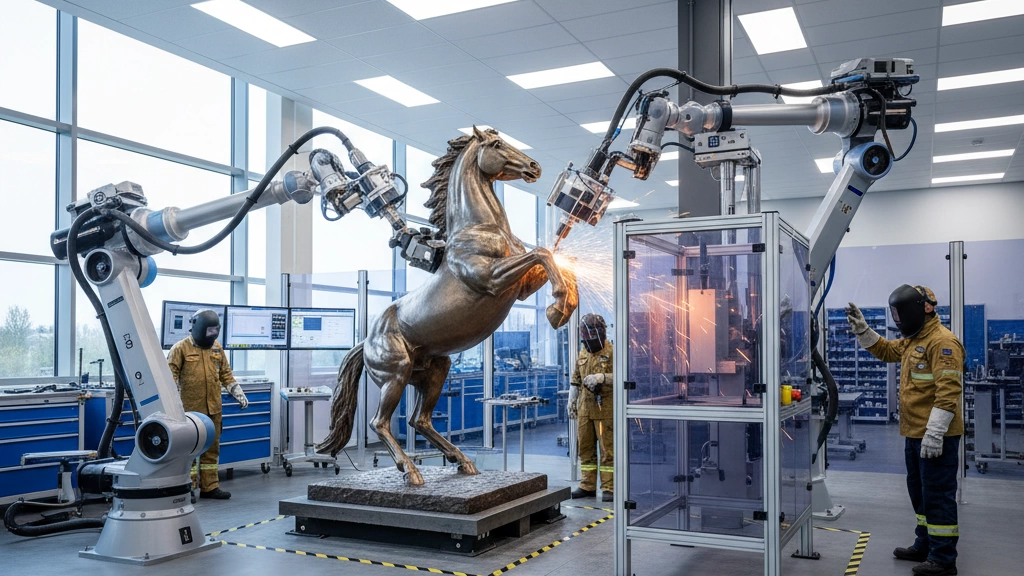
8. Metal Chasing and Welding in How Bronze Sculpture Is Made
Why Metal Chasing Matters
Once the bronze comes out of the mold, it’s not ready for a gallery or a home yet. It looks rough, with visible seams, sprues, and vent marks. Metal chasing is the stage where we turn that raw casting into a clean, professional bronze sculpture.
Chasing is critical because it:
- Removes all casting marks and flaws
- Restores the original detail from the clay and wax
- Makes separate bronze parts look like one solid sculpture
- Takes the piece from “foundry raw” to gallery-ready
If you’ve ever compared a rough casting to a finished piece of bronze art, you know exactly how big that difference is.
Grinding and Smoothing the Casting
After devesting, we start by grinding and smoothing the areas where sprues and vents were cut off. These are the bronze channels that carried metal into the sculpture during the pour.
We:
- Use angle grinders and cut-off wheels to remove excess bronze
- Flatten high spots and smooth down rough edges
- Shape transitions so they match the original forms and curves
The goal is simple: no one should be able to see where the metal used to flow.
Rebuilding Texture and Lost Detail
During casting and cleanup, some fine details can soften or get slightly damaged. This is where precision chasing comes in.
We carefully rebuild textures and lines, including:
- Skin, hair, and fabric folds
- Tool marks and intentional surface patterns
- Sharp edges, creases, and crisp transitions
This is detailed, hands-on work. It’s how we honor the original sculpture and keep every nuance the artist intended.
Tools for Precision Chasing
To get a professional bronze sculpture finish, we mix old-school craftsmanship with modern tools:
- Hand tools – chasing hammers, punches, files, rasps
- Rotary tools – Dremel-style tools with carbide bits for fine control
- Air tools – pneumatic grinders and die grinders for efficient metal removal
Each tool has a job: some are for smoothing, some are for cutting in detail, and some are for adding back texture so the surface doesn’t look “machine-perfect” and lifeless.
Assembling Large Bronze Sculptures
Most larger bronze sculptures are cast in multiple sections to control shrinkage, detail, and cost. In that case, metal chasing and welding go hand in hand.
We:
- Align separate bronze parts using jigs, clamps, and internal supports
- Make sure anatomy, flow, and gesture line up perfectly
- Prepare edges for welding so the join is both clean and strong
If the alignment is off even a little, you’ll see it in the posture, balance, or silhouette. We don’t ship or install until everything reads correctly from all viewing angles.
TIG Welding and Brazing for Clean Joints
For structural joins, we typically use TIG welding (tungsten inert gas) or brazing, depending on the thickness and detail.
- TIG welding bronze sculpture gives clean, controlled welds
- Brazing can be ideal for thinner sections or sensitive areas
The priority is both strength and invisibility. Welds need to hold up long-term, especially for outdoor or public bronze sculpture installations, but they shouldn’t distract from the artwork.
Blending Welds Into the Sculpted Surface
After welding, we go back in with grinders, burrs, files, and chasing tools to blend welds so they disappear.
This includes:
- Grinding weld beads flush with the surface
- Re-carving folds, muscles, or textures that cross the weld
- Matching the surrounding surface so the eye never catches a “scar”
When we’re done, the sculpture should look like it was never in pieces at all.
Rough “As-Cast” vs. Fully Chased Bronze
There’s a huge visual jump between an as-cast bronze and a fully chased, gallery-ready sculpture:
- As-cast bronze:
- Visible seam lines and sprue areas
- Rough, uneven textures
- Little or no rebuilt detail
- Fully chased bronze:
- Smooth transitions and invisible joins
- Sharp, intentional detail restored
- Clean, consistent surface ready for patina
If you’re collecting bronze art or commissioning a custom piece, this stage is one of the key reasons high-end bronze sculptures cost more—they’re not just cast, they’re carefully finished by skilled metal artists.
If you’re interested in owning finished bronze or metal artwork rather than making it yourself, you can see how this level of finishing translates into real pieces on our site, where we also offer handcrafted metal art for the home that goes through a similar refinement process as our sculptures, just like the work showcased in our bronze and metal art collections.
Patination – The Art of Color in How Bronze Sculpture Is Made
When people ask how bronze sculpture is made, the step that really defines the personality of the piece is the patina. This is the controlled color and surface finish created by reacting chemicals with the bronze. It’s not just “paint”—it’s a chemical bond with the metal that affects how the sculpture feels, ages, and reads in a space.
What Is a Patina and Why It Matters
A patina is the thin, colored layer that forms on bronze through oxidation and chemical reactions. It can happen naturally over years outdoors, or we can create it on purpose in a matter of hours.
Why it matters:
- It sets the mood of the sculpture (classic, modern, rustic, dramatic).
- It helps unify the surface, so welds and chased areas blend together.
- It adds depth and visual richness, catching light in different ways.
- It offers a first layer of protection against the elements when sealed correctly.
For US collectors, designers, and public art clients, patina is often the make-or-break factor in how “expensive” or “museum-quality” a bronze feels.
How Artists Control Color on Bronze
To control patina, we adjust three things:
- Chemicals – different solutions react differently with copper in the bronze.
- Heat – heat speeds up reactions and changes color intensity.
- Application – spray, brush, sponge, or dab create different patterns and layers.
The bronze is cleaned, slightly heated, and then patina chemicals are applied in controlled passes. We watch the color shift in real time and build it up slowly instead of trying to nail it in one coat.
Common Patina Chemicals Used in Bronze Sculpture
In professional bronze foundry work, a few chemicals show up over and over because they’re reliable and predictable:
- Ferric nitrate – gives warm browns, amber, and rich golden tones.
- Cupric nitrate – creates greens and blue-greens, especially classic verdigris.
- Liver of sulfur – produces deep browns, blacks, and smoky tones.
By mixing and layering these, we can dial in anything from subtle museum browns to bold, high-contrast finishes for public art.
If you want to see how traditional and modern approaches blend, we walk through this in our own process overview on making bronze sculptures with combined old and new crafts.
Hot Patina Techniques: Heat, Brush, and Spray
Most professional bronze sculpture techniques use a hot patina:
- We heat the bronze with a torch to a controlled temperature (warm, not glowing).
- While it’s hot, we brush or spray patina chemicals onto the surface.
- The heat triggers and speeds up the chemical reaction with the metal.
- We build color in thin, repeatable layers instead of flooding it.
This method gives:
- Stronger, more durable color.
- Better bond to the bronze.
- More control over gradients and transitions, especially on faces, hands, or drapery.
Classic Bronze Patina Finishes
When people picture “bronze statues,” they’re usually thinking of these classic patina looks:
- Warm brown patina
- Ferric nitrate-based.
- Great for indoor sculptures, portraits, and fine art pieces.
- Reads as refined and timeless.
- Deep black bronzes
- Often built with liver of sulfur.
- Perfect for strong silhouettes, modern interiors, and high contrast with stone or wood bases.
- Verdigris green patina
- Cupric nitrate and related blends.
- Iconic for outdoor bronze sculptures, fountains, and public monuments.
- Can be subtle moss-green or bold turquoise.
- Layered tones
- Combining browns, blacks, and greens in layers.
- High points may be warm brown, recesses go dark, specific areas pick up green.
- This layered approach adds depth, realism, and movement when the light changes.
Adding Highlights and Depth
Once the base patina is in place, we refine it:
- Polishing high points slightly to reveal hints of raw bronze or warm metal under the patina.
- Selective patina removal in targeted spots to create:
- Highlights on noses, fingers, folds in clothing.
- Stronger edge definition on hair, fabric, or structural lines.
- Re-layering patina after light polishing to soften transitions and keep a natural look.
This is where the piece really starts to feel alive—shadows get deeper, edges catch light, and the sculpture reads clearly from normal viewing distance.
Sealing the Patina for Protection and Sheen
To lock in the patina and get the right surface sheen, we seal the bronze:
- Wax (commonly museum-grade microcrystalline wax)
- Applied warm, then buffed.
- Gives a soft satin to semi-gloss finish.
- Easy to maintain for indoor bronze sculptures and many sheltered outdoor pieces.
- Lacquer or clear coat
- Used when clients want a more durable barrier, especially in harsh climates or high-touch public settings.
- Can be matte, satin, or gloss.
In the US, where climates range from coastal salt air to dry desert and snowy winters, we choose sealing systems with local conditions in mind, especially for outdoor bronze sculpture care and long-term maintenance.
How Patina Ages Outdoors Over Time
Even a well-sealed patina will evolve naturally outdoors:
- UV, rain, pollution, and salt air slowly affect the surface.
- Browns may deepen; greens may become softer or more mottled.
- High-touch areas (hands, noses, edges) naturally polish brighter as people interact with the sculpture.
- In coastal or very wet areas, you may see more natural verdigris developing over many years.
With basic maintenance—gentle cleaning and occasional rewaxing—outdoor bronzes can age gracefully and stay structurally sound for generations. When the patina eventually shifts beyond what you like, a professional repatination and sealing can reset the look while preserving the original sculpture.
If you’re considering a custom bronze commission or want to understand the full bronze foundry process from clay to patina, our studio at Artvision Sculpture can walk you through finishes that truly fit your space, climate, and long-term plans.
Mounting and Final Presentation – How Bronze Sculpture Is Made
When I finish a bronze sculpture, the mounting and final presentation are what make it feel complete. This last stage is where the piece turns from “artwork in progress” into a finished, collectible bronze sculpture that’s ready for a home, gallery, or public space.
Choosing the right base material
The base isn’t just decoration—it affects balance, safety, and how the sculpture reads in a room or outdoor setting.
Common options I use:
- Marble – Classic, elegant, great for indoor bronze sculptures and formal spaces.
- Granite – Very durable, ideal for outdoor bronze statues and public installations.
- Wood – Warm, contemporary, works well for interior design projects and residential clients.
- Steel or custom metal – Clean, modern look; pairs well with both bronze and pieces like our large bronze sculpture for public spaces.
- Custom bases – Shaped, layered, or integrated into architecture for site-specific commissions.
I size and weight the base to:
- Keep the center of gravity low
- Prevent tipping in high-traffic areas
- Match the sculpture’s style and finish
Internal mounting systems and armatures
For stability and safety, I design a hidden structure that locks the bronze to the base:
- Internal pins drilled into the bronze feet or underside
- Threaded rods anchored with epoxy or mechanical fasteners
- Armatures that run inside hollow sections of the sculpture
- Reinforced mounting plates for heavy or tall pieces
The goal is simple: once installed, the sculpture should feel rock-solid, even if people walk close, brush past, or in public spaces, sometimes touch it.
Engineering for outdoor durability
Outdoor bronze sculpture has to handle real-world conditions: wind, temperature swings, and public interaction.
I plan for:
- Wind loads – Wider bases, deeper anchors, and stronger internal armatures
- Foot traffic and kids – Extra reinforcement at attachment points and potential “grab spots”
- Drainage – Avoiding water traps that can speed up corrosion
- Vandal resistance – Heavy-duty fasteners and concealed mounting where needed
When a project calls for it, I work with engineers to make sure the sculpture and base meet local standards and building codes, especially for public art and commercial properties.
Positioning for viewing and safety
Where and how the sculpture is placed matters as much as the sculpture itself.
I look at:
- Primary viewing angles – Where people will first see it and how it reads from a distance
- Height – Eye level for portraits and busts; elevated for monuments and figurative works
- Traffic flow – Keeping pathways clear and avoiding trip hazards from bases or plinths
- Lighting – Using natural light, spotlights, or landscape lighting to highlight form and texture
For clients who want a strong statement piece at an entrance or courtyard, we design placement much like we do for our vintage bronze statues created for lasting elegance: the sculpture should feel intentional, not “dropped” into the space.
Cleaning and final waxing
Before delivery or installation, I give every bronze sculpture a final finish check:
- Careful cleaning to remove dust, fingerprints, and polishing residue
- Final wax coat over the patina to add a soft sheen and extra protection
- Detail inspection of edges, textures, and transitions so nothing distracting shows up under good lighting
This is usually the same microcrystalline or museum-quality wax that I recommend for ongoing bronze sculpture maintenance.
Signing and numbering limited edition bronze sculptures
For limited edition bronze sculptures, I keep everything strict and consistent:
- Edition numbers (for example: 3/25) are marked discreetly on the bronze or base
- Signature is either engraved, cast into the wax before casting, or stamped into the final bronze
- Foundry marks may be included for professional bronze foundry work and future authentication
Once an edition is closed, it’s closed—no extra castings, no new “versions” that dilute value.
Certificates of authenticity and edition information
To protect your investment and make future appraisal or resale easier, I provide:
- A certificate of authenticity with:
- Title of the sculpture
- Artist name
- Edition size and your specific edition number
- Year of casting
- Foundry or studio information
- Material details (bronze alloy, base material)
- Care recommendations for indoor and outdoor display
For collectors in the U.S., this paperwork is important for insurance, estate planning, and long-term value. Between the engineering, mounting, finish work, and documentation, the final presentation is what turns a bronze casting into a finished artwork you can proudly live with, display, or install as a long-term focal point.
Frequently Asked Questions About How Bronze Sculpture Is Made
How long does it take to make a bronze sculpture?
It depends on size, detail, and foundry schedule, but here’s a realistic range for professional lost-wax casting:
| Sculpture Size / Complexity | Typical Timeline* |
|---|---|
| Small tabletop (under 12 in) | 6–10 weeks |
| Medium sculpture (1–3 ft) | 2–4 months |
| Large sculpture (3–6 ft) | 4–8 months |
| Monumental outdoors (6+ ft) | 6–18+ months |
*From approved design to finished bronze, assuming no major design changes.
Key time drivers:
- Design approvals and revisions
- Mold-making and wax work
- Metal chasing, welding, and patina schedules
- Foundry workload and shipping/installation timing
Why are bronze sculptures expensive?
Bronze sculpture is labor-heavy and material-heavy. Cost is driven by:
- Materials
- Bronze alloy is expensive, especially for large pieces
- Silicone, rubber, wax, ceramic shell, sands, gases, patina chemicals
- Skilled labor
- Clay modeling, mold-making, wax chasing
- Investment casting, metal chasing, TIG welding
- Patination and final finishing
- Foundry and equipment
- Industrial kilns, burnout ovens, crucibles, hoists
- Safety systems, ventilation, specialized tools
- Overhead and logistics
- Engineering and installation for public works
- Crating, freight, insurance, and on-site mounting
You’re paying for a permanent art form that can last centuries, not just a quick décor item. That’s why serious collectors and public projects treat bronze as a long-term investment, similar to high‑end bronze sculpture in Western art.
Can bronze sculptures stay outdoors year-round?
Yes—bronze is one of the best outdoor materials you can choose.
- Pros
- Handles heat, cold, rain, and snow
- Naturally forms a stable oxide layer (patina)
- With basic care, can last generations outdoors
- Considerations
- Color will slowly change over time (especially near oceans)
- You’ll want regular cleaning and waxing to slow down corrosion
- For public pieces, engineering for wind and public contact is critical
Limited edition vs. one-of-a-kind bronze
| Type | What It Means | Collecting Impact |
|---|---|---|
| One-of-a-kind (OOAK) | Single original casting, no editions planned | Highest uniqueness, usually higher cost |
| Limited edition | Fixed number of casts (e.g., 1/12, 2/12…) | More accessible, still collectible |
| Open edition | No fixed limit, cast as demand continues | Lowest rarity, often lower price |
Key points:
- Limited edition numbers (e.g., 3/25) are usually marked on the bronze and on the certificate.
- Artist’s proofs (A/P) may exist in tiny numbers, often kept or sold at a premium.
How do I care for indoor bronze sculptures?
Indoor bronze is low-maintenance if you keep it clean and dry.
Basic routine:
- Dust regularly
- Soft microfiber cloth or feather duster
- Avoid rough cloths that can scratch wax or patina
- Light cleaning (every few months)
- Wipe with a damp, soft cloth (water only or tiny bit of mild soap)
- Dry completely
- Waxing (1–2 times per year)
- Use a high-quality neutral or microcrystalline wax
- Apply a thin layer, let haze, buff softly
- This protects patina and adds subtle sheen
Avoid:
- Abrasive cleaners or pads
- Harsh chemicals, ammonia, or metal polishes
- Direct HVAC blasts or sitting in constant damp areas
Basic outdoor bronze sculpture care
Outdoors, bronze needs a bit more attention, but nothing crazy.
Seasonal care (1–2 times per year):
- Rinse with clean water to remove dust, pollen, and bird droppings
- Wash gently with mild soap and a soft brush or sponge
- Rinse thoroughly and dry with a soft cloth
- Apply a thin coat of exterior-safe wax, then buff lightly
Things to watch:
- Heavy green or crusty white buildup (especially near coastal air)
- Deep scratches exposing bright metal
- Areas where water sits or drains constantly
A simple, regular routine dramatically slows down corrosion and keeps the patina attractive for years.
When should I call a professional for restoration or repatination?
Bring in a bronze restoration or art foundry pro when you see:
- Severe color loss or patchy, uneven patina
- Active corrosion (flaky green, powdery white, or pitting)
- Cracks, broken welds, or loose parts
- Graffiti, vandalism, or chemical damage
- A desire for a full color change (new patina), especially on public or high‑value work
Professionals can:
- Strip and re‑patina the bronze
- Rebuild missing details in metal
- Re-wax and seal the surface
- Re-engineer mounts and anchors for safety
If you’re commissioning a new piece or planning long-term maintenance for a public work, it’s smart to work with a studio or bronze art foundry that offers both fabrication and ongoing care, similar to how we structure our own professional bronze sculpture services for U.S. clients.

 English
  German
  French
  Italian
  Panjabi
  Chinese
  Spanish
  Arabic
  Hindi
Hindi