
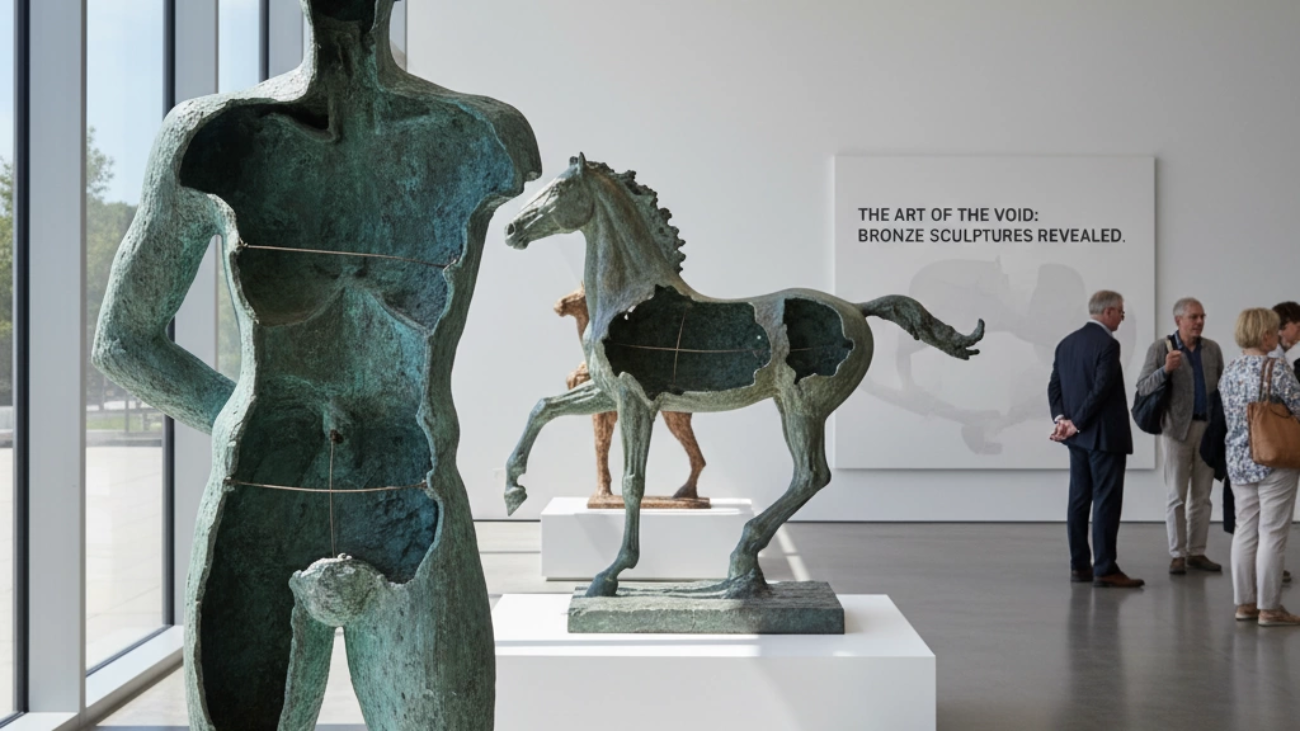
Why Are Most Bronze Sculptures Hollow?
When people first pick up or see a bronze statue, they often ask: “Are bronze sculptures hollow?” In most cases, yes—especially medium and large pieces. And that’s not a shortcut or a trick; it’s exactly how professional bronze has been made for thousands of years.
Technical Reasons: Weight, Cost, and Casting Reality
Casting a large statue in solid bronze is usually impractical and unnecessary. Here’s why:
| Factor | Hollow Bronze | Solid Bronze |
|---|---|---|
| Weight | Much lighter, easier to engineer | Extremely heavy, needs overbuilt support |
| Bronze Cost | Efficient use of material | Very expensive, bronze cost skyrockets |
| Cooling | Cools evenly, less risk of cracking | Thick mass cools unevenly, cracks easily |
| Shrinkage | Controlled, predictable | High internal stress and warping risk |
Key technical points:
- Weight: Bronze is dense. A life-size solid bronze figure could weigh well over a ton. Hollow casting keeps it strong but manageable.
- Cost of Bronze: Bronze is a premium alloy. Hollow walls (typically a few millimeters thick) give you the same visual impact with far less metal.
- Cooling & Shrinkage: In casting, molten bronze must cool and shrink. Thick, solid masses can crack or deform. Hollow forms cool more evenly and safely.
From a foundry perspective, hollow is the correct engineering choice, not a cost-cutting gimmick.
Practical Reasons: Transport, Installation, and Outdoor Use
For real-world use—especially in the US market where pieces must ship long distances—hollow bronze is the only logical solution.
- Transport: Lighter sculptures reduce freight cost, equipment needs, and damage risk.
- Installation: A hollow bronze sculpture is far easier to crane, anchor, and level on-site.
- Handling: Galleries, municipalities, and private collectors need to move statues without specialized heavy-industry gear.
- Wind Load: Large outdoor bronze sculptures are engineered with a hollow core, proper anchoring, and internal support, so they resist wind without tearing themselves or their base apart.
In short, hollow bronze is safer, more efficient, and easier to own.
Historical Use: Hollow Bronze Is the Tradition
Hollow bronze is not a modern shortcut—it’s the classical standard used by master sculptors:
- Ancient Greek bronzes: Major Greek statues were hollow-cast, then assembled from sections.
Solid vs Hollow Bronze Sculptures
When Are Bronze Sculptures Solid?
Most solid bronze sculptures are small pieces where weight and metal cost stay reasonable. I usually recommend solid bronze for:
- Mini figurines and small collectibles (palm-size or smaller)
- Medals, coins, and plaques
- Jewelry (pendants, charms, belt buckles, cufflinks)
- Small tabletop decor (paperweights, small animals, logo pieces)
On this scale, a solid bronze sculpture feels dense, heavy in the hand, and premium, which many U.S. buyers like for gifts and awards.
Key Differences: Solid vs Hollow Bronze
Here’s a clear breakdown of solid vs hollow bronze and how they behave in real use:
| Feature | Solid Bronze Sculpture | Hollow Bronze Sculpture |
|---|---|---|
| Typical Size | Small – jewelry, mini figures, small decor | Medium to large – busts, life-size, monuments |
| Weight | Very heavy for its size | Much lighter for same size |
| Material Cost | Higher (more bronze used) | Lower per piece (less bronze) |
| Price Range | Higher per ounce, but smaller overall pieces | Wider range: garden pieces, public art, monuments |
| Best Use Cases | Gifts, awards, fine jewelry, collectibles | Outdoor statues, public art, large interior pieces |
| Feel in Hand | Dense, solid “brick-like” feel | Still substantial, but not excessively heavy |
| Risk for Large Sizes | Can crack, sag, or be impossible to move | Safer structurally, easier to transport/install |
Weight, Price, and Durability in Real Life
For U.S. buyers, the main trade-offs between solid and hollow bronze sculptures are:
- Weight
- Solid: Great for small, high-touch items where weight feels luxurious.
- Hollow: Essential for anything medium or large so it doesn’t become a safety or installation problem.
- Price
- Solid: You’re paying for more raw bronze in a smaller package.
- Hollow: More cost-effective for larger decor and outdoor art, since wall thickness can be controlled.
- Durability
- Both solid and hollow real bronze are extremely durable if cast correctly.
- Solid doesn’t automatically mean “better.”
- Proper wall thickness and professional casting matter more than whether it’s hollow.
In my own production, I use solid bronze for small items where weight adds to the perceived value, and hollow bronze for any sculpture that needs to be displayed, installed outdoors, or shipped safely across the U.S.
How Hollow Bronze Sculptures Are Made (Lost-Wax Casting)

Lost-Wax Bronze Casting Overview
Most hollow bronze sculptures are made with the traditional lost-wax bronze casting process. It’s precise, repeatable, and perfect for high-detail outdoor and indoor art pieces.
Here’s how we do it in our foundry:
1. Sculpting the Original Model
We start with an original sculpture in:
- Clay, oil clay, or sometimes 3D printed material
- Sized to match the final bronze or scaled for enlargement
This is where the artist defines all the details that will later show in the bronze.
2. Making the Silicone or Rubber Mold
Next, we cover the original with:
- Silicone or rubber mold for capturing every detail
- A plaster or fiberglass “mother mold” to hold its shape
Once cured, we remove the original and now have a reusable mold to cast wax copies.
3. Wax Positive and Hollow Core
We pour or brush molten wax into the mold:
- For hollow bronze, we slush-cast wax to form a thin, even wax shell
- We then add a core (often plaster, grog, or refractory material) inside for stability
This wax positive is an exact hollow version of the future bronze sculpture.
4. Building the Ceramic Shell (Investment)
We add sprues and vents (wax channels) to allow bronze and air to flow, then:
- Dip the wax sculpture repeatedly in ceramic slurry
- Coat with fine sand, layer by layer
- Dry between layers until we have a strong ceramic shell
This shell will become the mold for the molten bronze.
5. Burnout: Creating the Hollow Cavity
The shell goes into a kiln:
- The wax melts and burns out, leaving a hollow cavity inside the ceramic
- This is why it’s called “lost-wax” casting—the wax is sacrificed
What’s left is a perfect hollow mold ready for bronze.
6. Pouring the Molten Bronze
We heat bronze to around 1,900–2,100°F (1,040–1,150°C) and:
- Pour the molten metal into the hot ceramic shell
- Bronze fills the hollow space where the wax used to be
Once cooled, the bronze takes the exact form of the original wax.
7. Breaking the Shell, Welding, and Finishing
After cooling:
- We break off the ceramic shell
- Cut away sprues and vents
- Weld multiple sections together for large sculptures
- Chase (grind, file, and refine) the surface so all seams disappear
This is where the piece starts to look like a finished bronze sculpture.
8. Patina and Protective Coatings
To get the final look:
- We apply chemical patinas with heat for color and tone
- Finish with wax or clear sealers for protection, especially for outdoor bronze
Patina adds character and also helps protect the metal from the elements.
Why Lost-Wax Casting Produces Hollow Bronze Sculptures
By nature, lost-wax bronze casting is ideal for hollow bronze sculptures because:
- The wax layer is made
Bronze Sculpture Wall Thickness
Typical Wall Thickness for Hollow Bronze Sculpture
For most hollow bronze sculptures, good foundries follow clear wall thickness standards:
| Sculpture Size | Typical Wall Thickness | Notes |
|---|---|---|
| Small (under 18″) | ~3–4 mm (about 1/8″) | Tabletop, small indoor statues |
| Medium (2–5 ft) | ~4–5 mm (1/8″–3/16″) | Garden, entryway, lobby pieces |
| Large (5–12 ft) | ~5–7 mm (3/16″–1/4″) | Outdoor public or commercial work |
| Monumental (12+ ft) | 6 mm+ (1/4″+) + ribs | Often reinforced with internal structure |
That’s the range we stick to in our own bronze casting. It balances strength, weight, and cost for U.S. buyers who expect long-term durability, not disposable décor.
How Thickness Affects Strength, Weight, and Longevity
Wall thickness directly controls performance:
- Strength
- Thicker walls resist dents, bending, and vandalism.
- Thin castings flex more and can crack at welds or seams.
- Weight
- More thickness = more bronze = more weight.
- For outdoor installations, you want enough weight to feel secure, but not so heavy that crane and foundation costs blow up.
- Longevity
- Thicker bronze handles:
- Freeze–thaw cycles
- Minor impacts (lawn equipment, crowds, kids, pets)
- Decades of patina and cleaning
- Thin bronze may pinhole or wear through faster, especially in coastal or high-traffic locations.
- Thicker bronze handles:
For most U.S. clients—cities, schools, churches, developers—the sweet spot is “as thick as needed for 30+ years, as light as possible for shipping and installation.”
Cheap Imports vs Premium Foundry Bronze
Not all hollow bronze statues are created equal. Here’s the real difference you’ll feel:
| Feature | Cheap Thin Imports | Premium Foundry Bronze (What We Do) |
|---|---|---|
| Wall Thickness | Often 1–2 mm or inconsistent | Controlled 3–7 mm, size-dependent |
| Surface Feel | “Tinny”, flexes when pressed | Solid, rigid, no give |
| Sound | High-pitched, “ringy” | Deep, controlled ring |
| Durability | Prone to dents, cracks, pinholes | Built for long-term outdoor use |
| Price | Lower upfront, higher long-term risk | Higher upfront, much better lifecycle value |
A lot of low-cost imports cut metal where you can’t see it: inside the walls. That’s where we refuse to compromise. For public art, hotel, corporate, and residential projects across the U.S., wall thickness is exactly where quality starts.
How to Check Bronze Sculpture Wall Thickness Yourself
You don’t need a lab to get a good idea of thickness. Use these simple checks when you’re buying a hollow bronze sculpture:
1. Sound Test
- Lightly tap with:
- A wooden dowel
- Your knuckle
- Listen for:
- Good thickness: Deep, full, “bell-like” tone
- Too thin: Sharp, high, “tin can” sound
2. Weight Comparison
- Pick up the piece (if small) or check listed weight (for large statues).
- Compare size vs weight:
- A 3–4 ft “bronze” that two people can lift easily is probably thin or not real bronze.
- Real bronze is heavy, even when hollow.
3. Visual Checks
Look for access points or openings:
- Drain holes under the base
- Openings where you can see the edge of the bronze
- At those points, you can often see the edge thickness directly.
4. Magnet Test (Material Check, Not Thickness)
- Use a small magnet:
- Real bronze: Non-magnetic (magnet will not stick)
- Steel or iron: Magnet sticks
- Some cheap “bronze” pieces are just painted or plated steel. If the magnet grabs strongly, it’s not solid bronze.
If you’re investing in a large outdoor piece for a park, campus, hotel, or private estate, we can quote and document target wall thickness in advance, so you know exactly what you’re paying for.
Does Being Hollow Affect Quality or Value?

Common Myths About Hollow Bronze Sculptures
A lot of people in the U.S. still think “solid = better” when it comes to bronze. That’s not how real bronze foundries work.
Here are a few common myths about hollow bronze sculpture:
- Myth: Hollow bronze is cheap or fake.
Hollow bronze is the standard for serious sculpture, from ancient Greece to today. It’s still real bronze, just engineered smarter. - Myth: Solid bronze statues are always stronger.
Above a certain size, solid bronze becomes structurally risky because of internal stress, uneven cooling, and cracking. A well-designed hollow bronze with proper wall thickness is more stable long term. - Myth: Heavier always means higher quality.
Weight comes from volume, not craftsmanship. A poorly cast solid piece can be heavy and low quality. A museum-quality hollow bronze will be lighter but far superior in detail, patina, and longevity.
If you’re buying bronze art for a home, business, or public space in the U.S., the fact that it’s hollow is not a red flag—it’s a sign the foundry knows what it’s doing.
Why Hollow Bronze Is Standard for Larger Statues
Most large bronze statues you see in plazas, campuses, churches, and parks are hollow cast by design. There are clear reasons:
- Engineering: Hollow bronze lets us control wall thickness so the piece can flex slightly with temperature changes and wind, instead of cracking.
- Weight: A solid 6–10 ft bronze figure would be insanely heavy and nearly impossible to move or install safely.
- Casting quality: Hollow casting through the traditional lost-wax bronze casting process reduces defects, shrinkage, and warping in big sculptures.
- Installation & safety: Cities and commercial clients in the U.S. need predictable loads for foundations and pedestals. Hollow bronze gives us that control.
So when you see a large outdoor bronze sculpture, assume it’s hollow—if it were solid, that would actually be the problem.
Structural Strength: Hollow vs Solid Bronze
From a structural point of view, hollow vs solid is about smart design, not cutting corners.
Hollow bronze advantages for strength and stability:
- Controlled wall thickness gives the best balance of strength and weight. For outdoor bronze sculptures, this is critical.
- Less internal stress while the metal cools, which means fewer hidden cracks.
- Better wind performance for tall or slender shapes when combined with internal ribs or armatures.
- Easier reinforcement inside the hollow core if needed (steel supports, anchoring points, etc.).
Solid bronze makes sense only when:
- The sculpture is small (figurines, desk pieces, small religious statues).
- The design is simple enough that internal stress is not an issue.
- You want a very heavy, compact object such as awards, medals, or paperweights.
For anything medium to large—especially over 24–30 inches—hollow bronze is the stronger long-term choice.
How Hollow Bronze Affects Price, Perceived Value, and Collectability
Yes, using less bronze metal lowers raw material cost, but that doesn’t mean hollow bronze is “cheap.” Here’s what actually affects value:
- Labor & craftsmanship dominate the price.
The lost-wax bronze casting process, mold making, welding, chasing, and patina work take far more time and skill than the bronze material itself. - Complex hollow pieces can cost more than simple solid ones.
A large, detailed hollow bronze statue with many welds and hand finishing is much more expensive to produce than a small solid piece. - Collectors care about design, casting quality, and patina—not just weight.
Serious U.S. collectors look at:- Signature and edition size
- Foundry reputation
- Surface detail and patina
- Structural integrity and installation quality
- Perceived value vs real value.
Some buyers equate “heavier” with “better,” but once they understand the reality of bronze sculpture construction, they usually prefer properly engineered hollow bronze, especially for outdoor use.
So yes, hollow bronze sculptures are often still expensive—because you’re paying for art, engineering, and longevity, not just metal.
Famous Hollow Bronze Sculptures and Monuments
If you’re wondering whether hollow bronze is “lesser,” look at the most famous bronze sculptures in the world. Many of them are hollow:
- “Statue of Liberty” (New York, USA) – Copper sheets over an iron framework; a classic example of hollow metal construction on a monumental scale.
- Ancient Greek hollow bronzes – Most surviving ancient Greek bronze sculptures were hollow cast using a very early form of lost-wax bronze casting.
- Renaissance bronzes by artists like Donatello – Major works were hollow for structural and technical reasons.
- Large public bronzes across the U.S. – War memorials, presidential statues, campus sculptures, and city monuments are almost always hollow bronze with internal supports.
In other words: the standard for museum-quality and public bronze art is hollow construction. When you choose a hollow bronze sculpture, you’re in line with what museums, cities, and serious collectors have trusted for centuries.
Hollow Bronze vs Resin, Fiberglass, and Cold Cast Bronze
What Real Hollow Bronze Is (vs Bronze Resin / Cold Cast)
When I say “real bronze,” I mean a metal alloy (usually copper + tin, sometimes small amounts of other metals) that’s melted and poured using the traditional lost-wax bronze casting process. Even when it’s hollow, it’s still 100% real bronze.
By contrast:
- Bronze resin / cold cast bronze
- Powdered bronze mixed into resin (plastic) and poured into a mold
- Looks like bronze on the surface but is not a solid metal piece
- Fiberglass
- Layers of glass fiber cloth + resin
- Can be painted or finished to look like metal, stone, or anything else
- Plain resin statues
- Fully plastic, often painted to look like bronze or stone
- Common in budget décor and mass-produced items
Real hollow bronze sculptures are metal all the way through, not just coated or tinted. That’s a big deal for weight, durability, and long-term value.
Weight, Feel, and Surface Detail
You can usually tell the difference between hollow bronze and resin/fiberglass in a few seconds:
Weight & Density
- Hollow bronze sculpture
- Feels heavy for its size (even hollow)
- Thick, solid “presence” when you lift it
- Resin / cold cast bronze
- Much lighter than real bronze
- Sometimes surprisingly light for a big piece
- Fiberglass
- Very light, especially in large outdoor forms
- Great when you need big size without structural load
Feel & Sound
- Real bronze:
- Cool to the touch
- Makes a clear, ringing sound when tapped
- Resin / fiberglass:
- Feels warmer, more like plastic
- Dull “thud” when tapped
Surface Detail
- Real hollow bronze:
- Takes incredibly crisp detail from the lost-wax bronze casting
- Ages into a natural patina, not just a painted color
- Resin / cold cast:
- Can hold good detail, but edges often look slightly softer
- Color is usually painted or tinted, and it can chip or fade
- Fiberglass:
- Detail depends heavily on the mold and finishing
- Often used for large, bold forms rather than ultra-fine detailing
Weather Resistance and Longevity
For U.S. customers putting art outside (yard, garden, ranch, hotel, church, public plaza), this part matters a lot.
Bronze (hollow or solid)
- Extremely durable outdoors
- Builds a stable patina over time instead of failing
- Handles:
- Sun
- Rain / snow
- Coastal air (with basic maintenance)
- Can last decades to centuries with normal care
Resin / Bronze Resin / Cold Cast Bronze
- Not ideal for long-term outdoor use
- Common issues:
- Fading from UV exposure
- Cracking in freeze–thaw conditions
- Warping under extreme heat
- Best for indoor or covered outdoor locations
Fiberglass
- Better than plain resin outdoors, especially with good gel coat and paint
- More resistant than resin, but still:
- Paint and finishes
How to Tell If a Bronze Sculpture Is Hollow
When customers in the U.S. ask me, “Are bronze sculptures hollow or solid?” they usually want a quick way to tell what they actually bought. Here’s how I check our own hollow bronze sculptures and how you can check yours at home.
Simple Tests: Hollow vs Solid Bronze Sculpture
You can usually tell if a bronze sculpture is hollow with a few quick checks:
- Tap test: Lightly tap the piece with your knuckle or a wooden stick.
- Hollow bronze sculpture: Clear, ringing, slightly “echoey” sound.
- Solid bronze sculpture: Duller, heavier “thud.”
- Lift test: Carefully pick it up. If it’s large but lighter than you’d expect for its size, it’s almost certainly hollow.
Visual Cues: Openings, Seams, Base Details
Real hollow bronze statues almost always show clues if you know where to look:
- Look under the base:
- Small holes, access ports, or unfinished areas often mean hollow bronze.
- Check seams and joints:
- Weld lines, separate cast sections, or patch plates are common on hollow lost-wax bronze.
- Drain holes:
- You may see tiny holes used for casting gases or drainage—these are normal on hollow bronze sculptures.
Weight-to-Size Ratio
For real bronze, weight tells you a lot:
- Solid bronze sculpture: Very heavy for its size, even for small pieces.
- Hollow bronze sculpture: Still has good weight, but not “brick-heavy” for its volume.
- Resin, fiberglass, or cold cast “bronze”: Often much lighter than you’d expect; can feel “toy-like” compared to real metal.
If you’re in the U.S. and shopping online, always ask the seller for dimensions + weight. A size/weight mismatch is a big red flag.
Sound Test and Magnet Test
To separate real bronze from fake metal or resin:
- Sound test:
- Gently tap with a wood stick or fingernail.
- Real bronze (hollow or solid): Bright, metallic ring.
- Resin / fiberglass: Dull plastic sound.
- Magnet test:
- Use a small fridge magnet.
- Real bronze: Non-magnetic – the magnet should not stick.
- If it sticks strongly, you’re likely dealing with iron, steel, or a bronze-plated steel core.
When to Use Professional Tools or X-Ray
For large or expensive bronze sculptures, especially public or corporate projects in the U.S., I recommend going professional if you need absolute certainty:
- When to call a pro:
- Museum-level or investment-grade bronzes
- Large outdoor bronze statues
- Insurance, appraisal, or restoration work
- Tools experts may use:
- Ultrasound thickness gauges to measure wall thickness
- X-ray imaging to see internal structure, armatures, and welds
For everyday buyers, the tap, weight, visual, and magnet tests are usually enough to tell if a bronze sculpture is hollow, solid, and whether it’s real bronze or just bronze-colored resin.
Advantages of Hollow Bronze Sculptures for Outdoor Use
When I design and cast hollow bronze sculptures for outdoor spaces in the U.S., I’m doing it that way on purpose. Hollow construction solves a lot of real‑world problems that come with large metal artwork.
Lighter Weight = Easier Shipping & Installation
A hollow bronze sculpture can weigh 30–70% less than a solid one of the same size. That makes a big difference when you’re installing on a patio, rooftop, public plaza, or in front of a building.
Key benefits of lighter weight:
- Lower freight and crating costs
- Simpler rigging with smaller equipment (lifts, cranes, manpower)
- Safer installs on decks, balconies, and landscapes with weight limits
- Easier to move if you renovate or relocate
| Size (Approx.) | Solid Bronze Weight* | Hollow Bronze Weight* | Notes |
|---|---|---|---|
| 24 in garden statue | 150–200 lb | 45–80 lb | One or two people can handle |
| 6 ft outdoor figure | 1,000+ lb | 300–550 lb | Lighter crane, simpler anchoring |
| 10 ft public monument | 3,000+ lb | 900–1,800 lb | Lower foundation requirements |
*Typical ranges. Actual weight varies by design and wall thickness.
Less Stress, Cracking, and Metal Fatigue
Outdoor bronze lives through years of heat, cold, sun, and movement. A solid block of metal fights itself as it expands and contracts. Hollow bronze handles that stress better.
- Hollow walls flex slightly with temperature swings
- Lower internal stress means less risk of cracking or warping
- Reduced weight puts less load on legs, arms, and narrow sections
- Better long-term stability for tall, dynamic poses
For big outdoor pieces, hollow bronze isn’t a shortcut – it’s the stronger engineering choice.
Better Wind Resistance and Stability
Wind is a real issue for tall statues in open areas, especially in coastal states or the Great Plains. A hollow bronze sculpture has several stability advantages:
- Less overall weight = lower overturning force in strong wind
- Easier to anchor properly to pedestals, plinths, or concrete pads
- Internal design can include reinforcing ribs or armatures for extra strength
- Better balance between weight, center of gravity, and base size
When we engineer a large hollow bronze, we match the statue weight, base, and anchors to your actual site conditions.
Easier Maintenance, Relocation, and Long-Term Care
Outdoor art needs maintenance over decades. Hollow bronze makes that much more practical for homeowners, businesses, and cities.
Maintenance advantages:
- Lighter pieces are easier to:
- Rotate or move for cleaning
- Bring down for restoration or re-patina
- Reinstall if you change landscaping or building layout
- Hollow forms are ideal for:
- Running internal supports
- Adding lightning protection
- Accessing interior for inspections on large monuments
Over the life of the sculpture, hollow bronze gives you lower lifecycle costs and more flexibility without sacrificing authenticity or durability.
Artvision Sculpture Bronze Casting Standards
Traditional Lost-Wax Hollow Bronze Casting
At Artvision Sculpture, I only use traditional lost-wax bronze casting for our hollow bronze sculptures. This method gives you:
- Sharp detail and accurate reproduction of the original design
- Even, controlled wall thickness instead of random thin spots
- A true museum-quality bronze finish, not a sprayed-on imitation
Every piece is cast in real bronze, not resin, not “cold cast,” and not fiberglass.
Standard Wall Thickness & Quality Control
For the U.S. market, I keep bronze statue wall thickness in a range that balances strength, weight, and cost:
- Typical hollow bronze wall thickness: 3–6 mm (about 1/8″–1/4″)
- Outdoor public work and large monuments: often thicker, depending on engineering needs
My quality checks include:
- Visual inspection for pinholes, thin spots, and warping
- Sound test and hammer tap to confirm consistent thickness
- Weld and seam review to make sure the sculpture is structurally sound
You get a hollow bronze sculpture that feels solid, stable, and built to last.
Structural Reinforcement for Large Bronze Statues
For very large outdoor bronze sculptures, I design in structural reinforcement from the start:
- Internal armatures and steel frames where needed
- Load-bearing ribs or cross-bracing inside large hollow sections
- Anchorage points designed for U.S. code-compliant foundations and pedestals
This keeps big hollow bronze statues safe in wind, reduces long-term fatigue, and makes installation more predictable for your contractor or city team.
Custom Sizing, Scaling, and Design Options
Because my sculptures are hollow-cast bronze, I can scale and customize for your project:
- Scale up or down from tabletop to monumental size
- Adjust wall thickness for heavy-use public spaces vs. private homes
- Integrate logos, text, portraits, or site-specific features for cities, schools, churches, memorials, and corporate campuses
Hollow construction means you get more size and impact without insane weight or shipping costs.
Warranty, Durability & Long-Term Performance
I build hollow bronze sculptures for decades of outdoor use in U.S. climates:
- Real bronze with professional patina and clear protective coatings
- Recommended maintenance: simple wash + wax schedule depending on location (coastal, dry, humid, freeze-thaw)
- Warranty coverage on casting defects and structural issues under normal use
When you buy from Artvision Sculpture, you’re getting true lost-wax hollow bronze, engineered for long life, safe installation, and serious visual impact—not a disposable garden ornament.
Bronze Sculpture FAQs
Are all bronze sculptures supposed to be hollow?
No. Not all bronze sculptures are hollow, but most medium and large statues are.
In the US market, anything larger than a small tabletop piece is usually hollow cast using the lost-wax method. Smaller items like:
- Mini figurines
- Desk-size bronzes
- Medals, coins, jewelry
are often solid bronze because the size and metal cost are manageable.
If you’re buying a life-size or monumental piece and it’s real bronze, you should actually expect it to be hollow. That’s the correct, traditional way to build it.
Why are hollow bronze sculptures still expensive?
Even when they’re hollow, real bronze sculptures are labor- and material-heavy. The cost comes from:
- High copper-based alloy cost (bronze is not cheap metal)
- Skilled work: modeling, mold-making, wax work, casting, welding, chasing, patina
- Foundry equipment: kilns, furnaces, safety systems
- Finishing and patina for weather resistance and looks
A hollow bronze sculpture can still weigh hundreds of pounds and requires a full team and foundry to produce. That’s why a real hollow bronze statue will always cost more than resin, fiberglass, or “cold cast bronze.”
Can bronze sculptures be made completely solid?
Yes, bronze sculptures can be fully solid, but it’s practical only when the piece is small. Once you go past a certain size, solid bronze becomes:
- Extremely heavy
- Very expensive in material
- Risky to cast because of cooling and shrinkage issues
For that reason, serious foundries in the US and overseas cast large bronze statues with a hollow core and controlled wall thickness. If someone promises a “solid life-size bronze” at a cheap price, it’s almost always not real solid bronze.
Expected weight ranges for large hollow bronze statues
Here’s a rough weight guide for hollow bronze (real bronze, lost-wax cast), assuming normal wall thickness:
| Size / Type | Typical Weight Range (Hollow Bronze) |
|---|---|
| 24–30 in (tabletop statue) | 25–80 lbs |
| 4–5 ft standing figure | 150–400 lbs |
| Life-size adult (5.5–6.5 ft) | 250–800 lbs |
| Large outdoor figure (8–10 ft) | 800–2,500+ lbs |
| Monumental public sculpture | 1,500–10,000+ lbs |
Actual weight depends on pose, thickness, and internal armature, but if a “life-size bronze” feels surprisingly light, it may be resin, fiberglass, or thin sheet metal, not foundry bronze.
Is a heavier bronze statue always better quality?
No. Heavier doesn’t automatically mean better. What matters more is:
- Even, consistent wall thickness
- Clean welds and joints
- Good chasing and surface detail
- Proper alloy and high-quality patina
Overly thick bronze can actually cause stress, cracking, or poor casting. A well-made hollow bronze with the right wall thickness will:
- Last outdoors for decades (or longer)
- Be easier to install, move, and maintain
- Perform better in US climates with freeze/thaw cycles
A smart buyer in the US market looks for quality of casting and finish, not just “heavier = better.”

 English
  German
  French
  Italian
  Panjabi
  Chinese
  Spanish
  Arabic
  Hindi
Hindi