
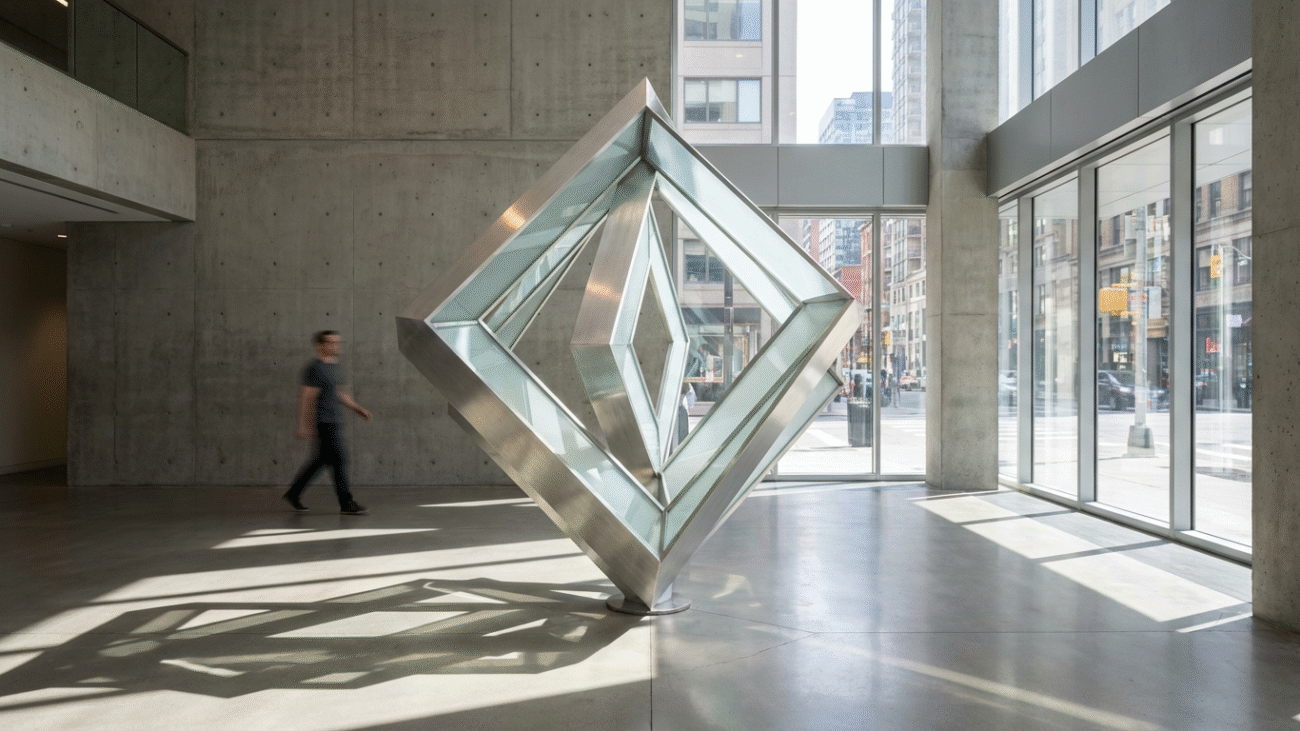
What Is Kinetic Art Sculpture?
When people ask me about kinetic art sculpture, they usually want to know one simple thing: is it just a fancy wind spinner? The answer is no. It’s much more ambitious than that.
Definition and Core Principles
A kinetic art sculpture is a three‑dimensional artwork that is designed to move as an essential part of its identity. Movement isn’t an extra effect – it’s the core of the piece.
Most kinetic sculptures rely on one or more of these forces:
- Wind – wind powered kinetic sculpture and garden wind sculpture
- Motors – motorized kinetic art, indoor or outdoor
- Water – flowing, dripping, or pressure‑driven systems
- Gravity and balance – counterweights, levers, and slow rotations
- Light – projection, reflection, and interactive light effects
The goals are usually:
- Continuous, smooth movement (not random shaking)
- Predictable behavior under wind and weather
- Visual rhythm – repeating patterns, loops, or cycles
- Durability – especially for large outdoor kinetic sculpture in public spaces
Kinetic Sculpture vs Mobiles, Wind Sculptures, and Spinners
You’ll see a lot of terms: moving metal garden sculpture, modern wind spinner sculpture, kinetic garden sculpture, and so on. They’re related, but not identical.
How kinetic art sculpture differs:
- Mobiles
- Light, hanging structures that move freely in air
- Often smaller in scale and used indoors
- Classic example: Calder’s mobiles
- Many mobiles are kinetic art, but not all kinetic art is a mobile
- Wind sculptures & wind spinners
- Designed primarily to catch the wind
- Common in gardens as metal wind spinner art
- Many are decorative; true kinetic sculpture focuses more on engineered motion, balance, and artistic concept
- Architectural kinetic artwork
- Integrated with buildings or landscapes
- Movement interacts with light, shadow, and space
- Often large outdoor kinetic sculpture for plazas, lobbies, and facades
In short, a kinetic art sculpture is defined by intentional, engineered movement plus strong artistic concept, not just by spinning in the breeze.
Brief History and Evolution
Kinetic art has roots in early 20th‑century experiments, when artists started asking: what if the artwork itself moves?
Key phases:
- 1910s–1930s – Early mechanical and motorized experiments in Europe
- 1940s–1960s – Kinetic art recognized as a movement; mobiles, mechanical works, and optical kinetic art emerge
- 1970s–1990s – Larger outdoor kinetic sculpture appears in public spaces; more engineering and industrial materials
- 2000s–Today – Weather resistant garden sculpture, kinetic stainless steel sculpture, and huge public art kinetic installation projects using advanced bearings, motors, and 3D design
Modern kinetic art combines:
- Fine art
- Structural engineering
- Product design
- Environmental design (wind load, corrosion, safety)
This is exactly where my workshop lives: between art, physics, and fabrication.
Key Kinetic Art Pioneers and Modern Artists
A few names always come up when we design or discuss kinetic pieces:
- Alexander Calder – Father of the modern mobile; his Calder mobiles and stabiles defined the
Main Types of Kinetic Art Sculptures
Wind Powered Kinetic Art Sculpture
Wind powered kinetic art sculpture is the most common style people know: moving metal garden sculpture, modern wind spinner sculpture, and large outdoor kinetic sculpture for parks and plazas.
- Works purely with natural wind, no power needed
- Ideal as weather resistant garden sculpture and coastal landscape features
- Often made in 316 stainless steel outdoor sculpture or bronze for long life
If you like the look of Lyman Whitaker wind sculptures or want a large kinetic wind sculpture for sale for a public space, this is usually the category you’re in.
Motorized and Electrically Driven Kinetic Art Sculpture
Motorized kinetic art uses quiet motors and smart controls to keep the movement stable and predictable.
- Perfect for corporate lobby kinetic art, hotel kinetic sculpture features, and indoor architectural kinetic artwork
- Allows programmable motion, speed control, and timed operation
- Often combined with lighting and sensors for interactive kinetic sculpture
We build this type a lot for commercial kinetic sculpture projects where the client wants movement every day, regardless of wind.
Water Driven Kinetic Art Sculpture
Water driven kinetic art sculpture uses falling, flowing, or circulating water to create motion.
- Works well in resorts, public plazas, and courtyards with fountains
- Combines sound, reflection, and movement for a calm experience
- Can be integrated with pools and water features, similar to hybrid pieces we do alongside mirror polished stainless steel water‑inspired sculptures
This type adds both motion and atmosphere, especially in hot climates where water features are popular.
Balance and Gravity Based Kinetic Art Sculpture
Balance and gravity based kinetic art sculpture relies on counterweights, pivot points, and a carefully tuned center of gravity.
- Moves with very light wind or even a gentle touch
- Often seen as outdoor metal art that moves with slow, poetic motion
- Great as a kinetic garden sculpture or subtle landscape kinetic sculpture
Think of work in the style of a George Rickey kinetic sculpture: precise engineering, minimal energy, maximum elegance.
Light Interactive and Projection Based Kinetic Sculpture
Here, movement works together with light, shadow, and reflection.
- Uses LEDs, projection, or mirror polished metal to “paint” moving patterns on walls and ground
- Strong choice for public art kinetic installation in urban nightlife areas, malls, and airports
- Can be passive (light reflecting off mirror polished metal sculpture) or active (programmed projection mapping)
These are perfect when you want a statement piece that transforms from day to night and turns a standard space into a memorable experience.
How Kinetic Art Sculptures Work
Basic mechanics behind kinetic art sculpture movement
Most kinetic art sculptures are simple physics in a beautiful shell. Movement usually comes from:
- Wind (for wind powered kinetic sculptures and modern wind spinner art)
- Motors (for motorized kinetic art and indoor installations)
- Water flow or gravity (for balance-based and fountain-style pieces)
Arms, discs, and blades are balanced on a main axis so they can move with very little force. On large outdoor kinetic sculptures, I always design for smooth, slow, continuous motion instead of fast spinning – it looks better and is safer long term.
Bearings, counterweights, and center of gravity
The “magic” is in the engineering:
- Bearings – We use sealed, outdoor‑rated bearings so the sculpture spins or rocks easily with minimal friction.
- Counterweights – Hidden weights balance each moving arm so even a light breeze can move a big piece of stainless steel kinetic art.
- Center of gravity – Every element is calculated so the load stays stable on the main mast or column, even under strong wind. This is critical on tall landscape kinetic sculptures and public art kinetic installations.
Outdoor rated materials for kinetic sculptures
For permanent outdoor kinetic art installations, material choice decides how long the piece will actually last:
- 316 stainless steel near the coast (salt air, high humidity)
- 304 stainless steel for most garden wind sculpture for sale projects
- Bronze, brass, and copper for a warmer, classic look
- UV‑stable powder coat and mirror‑polished surfaces to resist fading and corrosion
If you’re comparing finishes, this article on modern metal wall art and surface treatments gives a good idea of how we control reflection and texture.
Weather resistance and durability
A proper kinetic wind sculpture factory designs for:
- Wind load – Structural supports and arm lengths are calculated to handle local wind speeds.
- Temperature changes – Joints and shafts allow for expansion and contraction.
- Rain and dust – Motors (when used) are sealed to outdoor IP standards; bearings are shielded.
With the right engineering, a large kinetic wind sculpture for sale can run outdoors for decades with only basic care.
Maintenance and care myths
There are a lot of myths around moving metal garden sculpture. Here’s the reality:
- Myth: “Kinetic sculptures need constant lubrication.”
Truth: Sealed bearings are designed to run dry; adding oil often attracts dust and shortens life. - Myth: “Stainless steel never needs maintenance.”
Truth: It resists rust, but still benefits from a quick wash a few times a year, especially in coastal or polluted areas. - Myth: “More moving parts means more problems.”
Truth: Problems come from poor engineering, not from movement itself. A well‑designed custom wind sculpture can have many elements and still be low‑maintenance.
We keep maintenance simple: rinse, mild soap if needed, check fasteners yearly. That’s it for most outdoor metal art that moves.
Famous Kinetic Art Sculptures Around the World
Iconic Calder Kinetic Art Sculpture
Alexander Calder basically put kinetic art sculpture on the map.
His hanging mobiles and standing stabiles turn simple shapes into floating, moving architecture:
- Mobiles: delicately balanced arms that shift with the slightest breeze or air flow.
- Stabiles: large outdoor steel forms that feel static but often include moving elements or create a kinetic feel as you walk around them.
Calder’s work set the standard for modern wind spinner sculpture and every serious kinetic stainless steel sculpture designer still studies his balance and proportion.
George Rickey Kinetic Sculpture Landmarks
George Rickey took precision engineering and pushed kinetic art sculpture into public space:
- Slender stainless steel arms that swing in slow, controlled arcs
- Works that respond to tiny wind changes, creating calm, meditative movement
- Installed on campuses, plazas, museums, and civic centers worldwide
If you’re planning a large outdoor kinetic sculpture in front of a corporate HQ or city hall, Rickey’s landmarks are the benchmark for elegance, durability, and wind performance.
Lyman Whitaker Wind Sculpture Collections
Lyman Whitaker is famous for moving metal garden sculpture that feels organic and handmade:
- Vertical “forests” of copper and stainless wind forms
- Rotors that spin in opposite directions for a hypnotic effect
- Ideal for private gardens, wineries, and boutique hotels
His approach proves that a garden wind sculpture for sale doesn’t need to be huge to be powerful; it just needs smart balance and weather‑resistant materials.
Contemporary Public Kinetic Art Installations
Today’s contemporary kinetic artists combine engineering, coding, and architecture:
- Motorized kinetic art with programmable movement
- Interactive kinetic sculpture that responds to touch, sound, or sensors
- Architectural kinetic artwork integrated into façades, bridges, and transit hubs
These public art kinetic installations turn regular spaces into destinations, similar to how high‑impact steel sculptures bring both strength and visual drama to modern environments (you can see that balance of structure and aesthetics in our approach to steel sculpture design).
Recent Large-Scale Kinetic Art Sculpture Projects
In the last few years, we’ve seen a strong push toward monumental kinetic public art commissions:
- 10–20m tall large kinetic wind sculptures for sale for city gateways and waterfronts
- 316 stainless steel outdoor sculpture for coastal locations with harsh salt air
- Motorized outdoor sculpture used as signature features in malls, airports, and resorts
As a custom kinetic sculpture manufacturer and overseas outdoor sculpture supplier, I focus on large projects where we design, prototype, and fabricate bespoke kinetic sculpture design directly in our factory China setup. This direct model keeps quality tight and pricing competitive for global clients who need reliable, long‑life outdoor metal art that moves.
Benefits of Large Outdoor Kinetic Sculptures

Why choose a large outdoor kinetic art sculpture
A large outdoor kinetic art sculpture isn’t just decoration – it’s a moving landmark. It:
- Catches attention from far away
- Creates a strong identity for a space
- Works day and night with changing light and weather
- Becomes a natural meeting point and photo spot
For many of our clients, one iconic moving piece does more than dozens of static artworks.
Kinetic sculpture for gardens and private landscapes
In private gardens, a wind powered kinetic sculpture or modern wind spinner sculpture turns a quiet yard into a living scene:
- Soft, continuous motion calms the mind
- Reflective stainless steel surfaces echo sky, clouds, and trees
- Vertical movement adds drama without taking much footprint
- You can choose subtle motion or bold, high-contrast shapes
Homeowners often start with one moving metal garden sculpture and then build a whole kinetic garden sculpture line over time.
Kinetic art sculpture for corporate campuses and lobbies
For corporate spaces, a large outdoor kinetic sculpture or motorized kinetic art piece sends a clear message: innovation, momentum, and confidence.
Typical corporate uses:
- Campus plazas: large kinetic wind sculpture as the centerpiece
- Lobbies and atriums: motorized kinetic stainless steel sculpture with slow, controlled motion
- R&D and tech hubs: interactive kinetic sculpture that reacts to visitors
Many companies pair kinetic art with mirror polished metal sculpture elements to reflect branding colors and architecture. You can see how refined surfaces work in projects similar to our mirror-polished stainless steel sculptures.
Hotel, resort, and public park kinetic sculpture installations
Hotels, resorts, and parks use kinetic public art to create “Instagram moments” that they don’t have to pay to advertise:
- Resorts: wind driven metal art at pools and entry drives
- Hotels: lobby or courtyard kinetic art as a signature feature
- Parks: large kinetic wind sculpture for community events and festivals
Because these locations run 24/7, we design for:
- High durability (316 stainless steel outdoor sculpture near the sea)
- Low maintenance (sealed bearings, weather resistant finishes)
Emotional and psychological impact of moving sculpture
Moving sculpture hits people on a deeper level than static art:
- Calming: slow movement helps people relax, similar to watching waves
- Engaging: motion pulls the eye and keeps people looking longer
- Connecting: families and visitors naturally talk about “how it moves”
In busy urban sites, a gentle kinetic wind sculpture can quietly reduce visual stress and create a small mental “reset” for passersby.
ROI and placemaking value of kinetic public art
For cities, developers, and brands, kinetic public art is a clear investment, not just a cost.
How kinetic art drives ROI:
| Value | What it does in real life |
|---|---|
| Foot traffic | Draws people in, especially on social media |
| Place branding | Turns a site into “that place with the moving sculpture” |
| Longer dwell time | People stay, sit, and spend more nearby |
| Media & PR | Easy feature for press, tourism boards, and bloggers |
As a kinetic sculpture manufacturer and supplier, I design large outdoor kinetic sculpture projects to hit both sides: strong visual impact and long-term placemaking value. Many clients now include kinetic public art commission costs directly in their marketing and branding budgets because the return is visible in visitor numbers, bookings, and tenant demand.
Custom Kinetic Art Sculpture Process
How to turn a kinetic sculpture idea into reality
I usually start with a simple conversation: where will the kinetic art sculpture go, what size you need, how you want it to move, and what emotion you want it to create. From there, I translate your rough ideas, sketches, or reference photos into a clear design brief for a custom kinetic wind sculpture, an indoor motorized kinetic piece, or a large outdoor kinetic sculpture.
Concept development and design consultation
Next, we run a structured design consultation. We define:
- Type of movement (wind powered kinetic sculpture, motorized kinetic art, gravity-based, or light interactive)
- Materials (stainless steel kinetic art, bronze kinetic sculpture, mixed metals, mirror polished or painted finishes)
- Budget and timeline for a bespoke kinetic sculpture design
Based on that, my team delivers concept sketches and mood boards that match your architecture, landscape, or brand.
3D modeling and rendering
Once you approve a concept, we build detailed 3D models and renderings:
- Simulate how the moving metal garden sculpture responds to wind
- Check balance, center of gravity, and safety
- Preview colors, finishes, and reflections in your actual space
We use these renderings to lock in final proportions for corporate lobby kinetic art, hotel kinetic sculpture features, or public art kinetic installations. For projects that combine static and kinetic elements, we often reference our painted stainless steel steel sculptures as a starting point for color and finish options.
Prototyping, fabrication, and workshop production
For complex kinetic stainless steel sculptures or bronze kinetic pieces, we usually build a scale prototype or key modules first to test:
- Bearing performance and wind response
- Noise level and vibration
- Maintenance access
After that, we move to full fabrication in our kinetic wind sculpture factory: precision cutting, welding, polishing, patina, assembly, and dynamic testing in-house.
Shipping, logistics, and on-site installation support
We design every custom metal art project with shipping and installation in mind:
- Crated by modules for safe sea or air freight
- Clear assembly drawings and hardware included
- Optional on-site supervision or full installation team for large outdoor kinetic sculptures or commercial kinetic sculpture projects
Our goal is simple: minimal disruption on site, maximum impact once the sculpture is up.
Why working direct with a kinetic sculpture factory matters
Working directly with an art sculpture factory in China like ours gives you:
- Factory-level pricing for monumental kinetic public art commissions
- Tighter quality control on bearings, motors, and weather-resistant finishes
- Faster changes and engineering support during the design phase
- One responsible partner for design, fabrication, and installation
You’re not dealing with layers of agents or resellers. You talk directly to the people who actually build the kinetic art sculpture.
Case study snapshots of kinetic sculpture projects
Some typical custom kinetic projects we deliver worldwide:
- Landscape kinetic sculpture for a resort: large wind driven metal art in 316 stainless steel for coastal wind and salt air
- Corporate lobby kinetic art: quiet motorized outdoor sculpture brought indoors with slow, meditative movement for brand storytelling
- Kinetic garden sculpture series: a group of modern wind spinner sculptures for a private residence, all coordinated in height, finish, and motion
Each project follows the same core process: clear idea, smart engineering, clean fabrication, and reliable long-term performance.
Best Materials for Kinetic Art Sculptures
When you’re investing in a kinetic art sculpture, the material choice is what decides how it looks, how it moves, and how long it lasts outdoors. I focus on metals and finishes that can handle real-world weather while still looking sharp in high-end gardens, hotels, and public spaces.
Stainless steel kinetic art sculpture options
For most clients, stainless steel kinetic art is the best all-round choice:
- Strong, rigid, and lightweight enough for smooth motion
- Naturally corrosion resistant for year-round outdoor use
- Ideal for moving metal garden sculpture and large outdoor kinetic sculpture in both residential and commercial projects
For more detail on durability and finish options, you can see how we engineer stainless steel outdoor sculpture for long-term use in our projects (for example, the approach shown in this article on stainless steel outdoor sculpture as a strong and artistic mix).
Marine grade 316 stainless steel for coastal kinetic art
If your kinetic garden sculpture is going near the ocean or in high-humidity regions, I always recommend 316 marine grade stainless steel:
- High resistance to salt, moisture, and chemical exposure
- Perfect for coastal kinetic wind sculpture installations on hotel decks, resort gardens, and seafront plazas
- Less rust risk, less maintenance, and a longer service life
Bronze and patina finishes for kinetic sculptures
For clients who want a warmer, more classic look, bronze kinetic sculpture is still the benchmark:
- Deep, rich color that pairs well with stone, wood, and greenery
- Natural or controlled patina gives each piece a unique character
- Suitable for public art kinetic installation where you want a timeless, museum-quality feel
We also produce bronze art sculpture wholesale and custom bronze work; you can see how bronze changes a space in this breakdown of a bronze statue adding a modern, classy look.
Copper and mixed metal kinetic sculpture designs
Copper and mixed metal kinetic art works well when you want more color and character:
- Copper develops a green or brown patina over time, ideal for natural landscapes
- Mixing copper with stainless steel or bronze creates strong contrast and layered textures
- Great for modern metal sculpture that moves in boutique hotels, resorts, and design-led private gardens
Mirror polish, brushed, and powder coated finishes
The finish changes how a kinetic stainless steel sculpture reads in a space:
- Mirror polished: High reflection, strong visual impact, great for luxury lobbies and plazas
- Brushed / satin: Softer, premium feel, hides fingerprints and minor dust better outdoors
- Powder coated: Solid colors, UV-resistant, perfect for bold, graphic modern wind spinner sculpture and playful public spaces
We can combine finishes on different elements to highlight motion and depth.
Weatherproof motors and sealed bearings for kinetic art
The moving parts matter as much as the metal:
- Sealed bearings protect against dust, moisture, and corrosion, keeping motion smooth for years
- Weatherproof motors (for motorized kinetic art and motorized outdoor sculpture) are fully enclosed and rated for continuous or timed operation
- Stainless or coated hardware ensures every joint and pivot in your outdoor metal art that moves is built for real outdoor conditions
When I design a custom kinetic sculpture, I always match material, finish, and mechanics to your climate, wind conditions, and usage so the sculpture moves beautifully and keeps that look long term.
Kinetic Art Sculpture Pricing Guide

When people ask me “how much does a kinetic art sculpture cost?”, the honest answer is: it depends on size, materials, complexity, and where it’s going. Here’s a clear breakdown so you can budget with confidence.
Typical price ranges for small garden kinetic sculptures
For small kinetic garden sculpture and modern wind spinner sculpture pieces:
- Small moving metal garden sculpture / kinetic garden sculpture
- Height: 0.8–1.5 m
- Price range (retail): $200 – $2,000+
- Perfect if you want weather resistant garden sculpture for residential gardens, balconies, or small courtyards.
- Mass‑produced pieces are cheaper, while bespoke kinetic sculpture design with stainless steel or bronze costs more but lasts much longer.
Cost of medium statement kinetic sculptures
Medium landscape kinetic sculpture pieces designed as focal points:
- Medium outdoor metal art that moves
- Height: 2–4 m
- Price range: $3,000 – $25,000+
- Often used as corporate lobby kinetic art, boutique hotel features, and high‑end garden wind sculpture for sale.
- Adding motorized kinetic art systems, lighting, or custom finishes quickly moves the budget to the higher end.
Investment level for monumental public kinetic sculptures
Large outdoor kinetic sculpture and public art kinetic installation projects are true investments:
- Monumental kinetic public art commission
- Height: 5–15+ m
- Price range: $40,000 – $500,000+ depending on scale, engineering, and installation complexity
- Includes commercial kinetic sculpture for plazas, airports, corporate campuses, and resort entries.
- Complex architectural kinetic artwork with engineering approvals, foundations, and long warranties can reach seven figures.
Key factors that affect kinetic sculpture pricing
What makes one large kinetic wind sculpture for sale cost 5x more than another?
- Size & height – more material, heavier structure, deeper foundations.
- Movement complexity – multi‑axis moving parts, counterweights, custom bearings.
- Drive type – wind powered kinetic sculpture vs motorized outdoor sculpture with control systems.
- Location & safety – coastal, typhoon, or high‑snow areas need stronger engineering.
- Design originality – custom kinetic sculpture manufacturer work vs catalog design.
- Brand / artist – a George Rickey kinetic sculpture, Lyman Whitaker wind sculptures, or a well‑known contemporary kinetic artist will always command a premium.
How material choice impacts kinetic art sculpture cost
Material is one of the biggest cost drivers—and also what decides how long your piece lasts:
- 316 stainless steel outdoor sculpture
- Best for coastal and harsh climates
- Higher cost, but top corrosion resistance and low maintenance
- Standard stainless steel kinetic art (304)
- Ideal for most urban and inland sites
- Great balance of price and durability
- Bronze kinetic sculpture
- Premium, timeless, especially for clients already investing in life‑size bronze sculpture with lasting value
- Higher material and casting cost
- Mirror polished metal sculpture vs brushed vs powder coated
- Mirror polish: more labor, higher price, stunning impact
- Brushed: hides fingerprints/scratches, mid‑range pricing
- Powder coated finishes: flexible colors, good UV resistance, fair cost
Budgeting tips for custom kinetic sculpture projects
If you’re planning a custom kinetic public art commission or working with a kinetic wind sculpture factory in China, this is how I suggest you structure your budget:
- Decide your maximum installed budget, not just “artwork only.”
- Reserve 15–30% for:
- Foundation and structural support
- Crane, lifting, and on‑site installation
- Shipping and customs (for international projects)
- Use material smartly:
- Go 316 stainless only where it truly matters (marine zones)
- Consider mixing stainless with painted elements to control cost
- Ask for 2–3 price options from your outdoor sculpture supplier:
- Same design in different materials/finishes
- Wind powered vs motorized versions
- Think lifecycle, not just purchase price:
- Weatherproof motors and sealed bearings cost more upfront, but save you thousands over 10–20 years.
- If you’re already investing in premium bronze or stainless, aligning it with durable, long‑term design—similar to how we approach making bronze sculptures built to last—protects your investment.
If you tell me your target size, location, and budget range, I can suggest a realistic price band and spec for your kinetic stainless steel sculpture or custom wind sculpture project.
Choosing a Kinetic Art Sculpture Manufacturer
Picking the right kinetic art sculpture manufacturer is the difference between a showpiece that runs smoothly for 20+ years and a headache that never stops.
What to Look For in a Kinetic Sculpture Manufacturer
When I pick a kinetic art partner, I focus on:
- Material expertise: 304 / 316 stainless steel, bronze, copper, durable coatings
- Engineering capacity: wind load, bearings, structural bases, motor specs
- In‑house fabrication: welding, polishing, machining, assembly, test running
- Custom design support: 3D modeling, structural drawings, install guidance
- Export experience: packing, freight, installation manuals, global standards
| Key Point | What You Want to See |
|---|---|
| Materials | 316 stainless, bronze, quality coatings |
| Drawings & 3D | Detailed 3D + shop drawings |
| Testing | Spin tests, motor tests, balance checks |
| Export Projects | Photos + references from overseas clients |
Green Flags When Sourcing Kinetic Art Sculpture Suppliers
Good kinetic wind sculpture factories usually show:
- Real case studies of large outdoor kinetic sculpture projects
- Clear maintenance guidance for bearings, motors, finishes
- Transparent pricing with itemized materials and installation options
- Long warranties on structure and moving parts
- Open workshop media: videos, photos of fabrication and test runs
Red Flags to Avoid With Kinetic Art Sculpture Factories
I walk away fast if I see:
- Only generic catalog photos and no real production shots
- No understanding of wind speed, foundations, or safety
- Very low prices with no mention of material grade
- No sample finishes, no test reports, no site-install support
- Slow, unclear replies to basic technical questions
Why China Leads in Kinetic Art Sculpture Manufacturing
China leads this niche for a few practical reasons:
- Mature metal fabrication ecosystem (cutting, welding, polishing, CNC)
- Experienced outdoor sculpture suppliers used to large export orders
- Competitive labor + material costs = better scale for big projects
- Strong OEM/ODM culture for custom kinetic sculpture manufacturing
For example, our team has used the same polishing and patina workflows we developed for high-end bronze art projects to upgrade the finishes on kinetic pieces.
Benefits of Working With Artvision Sculpture Group
As Artvision Sculpture Group, I design and build kinetic stainless steel sculptures and bronze kinetic sculpture pieces end‑to‑end:
- Direct factory pricing (no middlemen)
- Custom kinetic solutions: from small garden wind sculpture for sale up to monumental public art commissions
- Engineering + design: 3D, structure, wind load, foundations
- Global install support: base drawings, anchor plans, remote guidance
- Finish control: mirror polished metal sculpture, brushed, patina, powder coat
You get one team responsible for design, fabrication, packing, and performance.
Questions to Ask Before Ordering a Kinetic Art Sculpture
Use these questions to qualify any kinetic garden sculpture or commercial kinetic sculpture supplier:
- What material grade will you use? 304 or 316 stainless? Any bronze or mixed metal?
- How do you calculate wind load and design the base / foundation?
- What type of bearings and motors do you use, and how are they sealed?
- What’s the warranty on structure and moving parts?
- Can you share drawings, 3D views, and at least 3 similar past projects?
- How do you pack and ship large kinetic wind sculpture for export?
- What maintenance is actually required each year?
If you want a custom wind sculpture or architectural kinetic artwork that’s built to last, these answers will tell you very quickly who is serious and who is not.
Installation and Maintenance of Kinetic Art Sculptures
Site Planning & Location
When I place a large outdoor kinetic art sculpture, I always start with three checks:
- Wind access – Open, unobstructed airflow for wind powered kinetic sculpture, but not in extreme wind tunnels between high-rises.
- Viewing angles – Clear sight lines from key paths, windows, and gathering spots.
- Clearance & safety – Enough space so moving elements never reach walkways, benches, or parked cars.
For hotel entries, corporate lobbies, and public parks, I aim to position the kinetic sculpture where people naturally pause and look up—entrances, plazas, and focal points in landscapes.
Foundation & Structural Support
A moving metal garden sculpture needs a solid base, not guesswork.
Typical foundation setup includes:
- Concrete footing sized to sculpture height, weight, and wind load
- Embedded anchor bolts or steel base plate
- Engineered connection between pedestal and sculpture column
For tall stainless steel kinetic art or commercial kinetic sculpture, I always recommend a local structural engineer to sign off on the foundation details.
Wind Load & Safety
Every large kinetic wind sculpture must be designed with wind in mind:
- Defined maximum design wind speed (often 80–120 km/h depending on region)
- Balanced arms and blades to avoid vibration and fatigue
- Proper bearing selection and stops to prevent over-rotation
In coastal or typhoon-prone areas, I use heavier structural sections, 316 stainless steel, and sometimes lockable or removable elements for extreme storms.
Daily & Seasonal Maintenance
A well-built kinetic garden sculpture shouldn’t be high maintenance. My routine is simple:
- Monthly visual check – loose bolts, unusual noise, wobble
- Quarterly bearing check – smooth, silent rotation, no grinding
- Seasonal review – after heavy storms or temperature swings
Motorized kinetic art may need a quick test of power, timer settings, and waterproof junction boxes once every few months.
Cleaning & Surface Care (Stainless Steel)
For mirror polished metal sculpture or brushed stainless steel kinetic art:
- Rinse with clean water to remove dust and salt
- Use a mild soap and soft cloth; avoid harsh chemicals and steel wool
- For fingerprints or light stains, a non-abrasive stainless cleaner works well
On projects where we mix stainless with bronze or copper, I treat each material differently and follow the same long-life logic used in our bronze sculpture finishing process.
Long-Term Performance Tips
To keep outdoor kinetic art installations running smoothly for years:
- Choose marine grade 316 stainless steel in coastal zones
- Use sealed bearings and weatherproof motors from the start
- Keep irrigation sprinklers away from bearings and joints
- Log a simple maintenance record (date, checks, any adjustments)
Done right, a kinetic stainless steel sculpture becomes a low-hassle, high-impact feature—moving day after day with only light, planned care.

 English
  German
  French
  Italian
  Panjabi
  Chinese
  Spanish
  Arabic
  Hindi
Hindi