
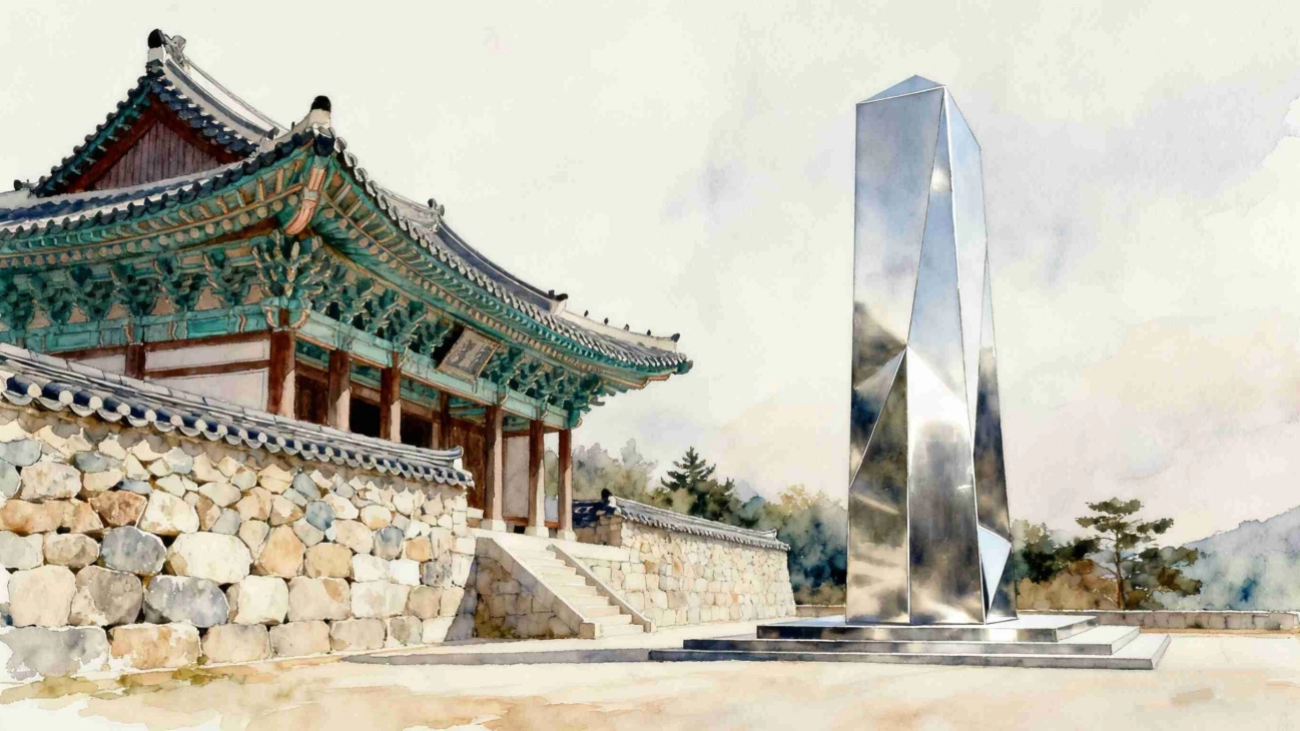
Stainless steel sculpture factory The Foundation: 3D Design and Structural Engineering
When commissioning a monumental piece, the primary concern for architects and developers is not just aesthetics—it is structural integrity. Will the piece withstand hurricane-force winds? Is it safe for public interaction? At our Artvision™ OEM/ODM sculpture factory, we believe successful fabrication begins long before the first sheet of metal is cut. It starts with rigorous 3D design and structural engineering. We bridge the gap between artistic vision and physical reality, ensuring that every curve is not only beautiful but mathematically sound.
From Sketch to CAD: Precision Modeling
We utilize advanced 3D modeling and rendering services to translate abstract artistic concepts into precise manufacturing data. Using industry-standard software like Rhino and SolidWorks, we convert hand-drawn sketches, photos, or small clay maquettes into exact digital twins.
- Digital Accuracy: We define every surface and angle mathematically, eliminating guesswork on the factory floor.
- Visual Verification: High-fidelity renderings allow you to see exactly how the light will hit the surface before production begins.
- File Conversion: We accept a wide range of file formats (OBJ, STL, 3DM, STEP) and optimize them for CNC machining and laser cutting.
Safety First: Engineering the Internal Armature
For large-scale outdoor sculpture fabrication, the internal skeleton is just as critical as the visible surface. We do not rely on estimation; we rely on physics. Our engineering team designs robust internal armatures tailored to the specific environmental conditions of the installation site.
- Wind Load Calculations: We analyze surface area and aerodynamics to ensure the sculpture remains stable in high-velocity winds, a necessity for coastal or open-plaza installations.
- Seismic Testing: For projects in earthquake-prone zones, we engineer the internal structure to absorb and withstand ground movement without catastrophic failure.
- Load Bearing Analysis: We perform structural engineering calculations to guarantee the armature can support the weight of the stainless steel skin without warping or buckling over decades.
3D Optimization for Efficiency
Material costs are a significant portion of any sculpture budget. We use 3D optimization to minimize waste and ensure precise scaling. By digitally flattening complex 3D shapes into 2D cutting patterns (unrolling), we optimize how parts are nested on raw stainless steel sheets. This process reduces scrap metal, lowers material costs, and ensures that the final monumental structure maintains the exact proportions of the original design.
Material Selection: Why Grade Matters (304 vs. 316L)
At our stainless steel sculpture factory, we believe that the beauty of a sculpture is meaningless if it cannot withstand the elements. Choosing the right grade of steel isn’t just a technical detail; it is the difference between a monument that lasts centuries and one that develops tea-staining rust within months. We don’t guess when it comes to durability—we rely on metallurgical science.
The Metallurgy of Longevity: Nickel and Molybdenum Explained
To the naked eye, a polished sheet of 304 looks identical to 316L marine-grade stainless steel. However, the chemical composition tells a different story. Both grades contain Chromium (which creates the passive layer that prevents rust) and Nickel (which adds toughness and luster).
The game-changer is Molybdenum.
- 304 Stainless Steel: Contains roughly 18% Chromium and 8% Nickel. It is strong and versatile but lacks specific resistance to chlorides (salt).
- 316L Stainless Steel: Adds 2-3% Molybdenum. This specific element drastically increases resistance to pitting and crevice corrosion caused by salt air and industrial pollution.
When we create a modern stainless steel metal sculpture designed to last for generations, understanding these chemical properties ensures the artwork retains its pristine finish without constant maintenance.
Environment Dictates Material
We always analyze the installation site before recommending a material. A rust-proof surface treatment starts with the base metal itself.
- Inland and Indoor: For hotel lobbies, corporate offices, or parks far from the coast, Standard 304 is a cost-effective choice that maintains brilliance.
- Coastal and Urban High-Traffic: If your project is within 20 miles of the ocean or in a city with heavy pollution, we strictly mandate 316L marine-grade stainless steel. The salt in the air will attack 304, but 316L remains impervious.
The Artvision Standard: Verifying Quality with Mill Certificates
There is a “price trap” in this industry where factories swap 316L for 304 to save on raw material costs. At Artvision Sculpture Group, transparency is non-negotiable. We provide Mill Test Certificates (MTC) for every batch of steel we procure.
These documents track the steel from the foundry to our floor, verifying the exact chemical composition (Nickel, Chromium, and Molybdenum percentages). We also use handheld XRF analyzers on the factory floor to double-check materials before cutting, ensuring your large-scale outdoor sculpture fabrication is built exactly to specification.
The Fabrication Process: Where Craftsmanship Meets Technology
At our stainless steel sculpture factory, fabrication is the bridge between a digital 3D model and a tangible reality. This is where raw sheets of metal are transformed into custom metal art fabrication pieces that define spaces. We don’t just rely on machines; we rely on the seasoned hands of artisans who understand how metal moves, heats, and flows.
Hand Forging vs. Lost Wax Casting
Choosing the right production method is the first critical decision we make on the production floor. It usually comes down to the complexity of the surface texture and the overall size of the piece.
- Hand-Forging Process: This is the go-to for large-scale outdoor sculpture fabrication. Artisans beat cold or heated stainless steel sheets over a skeleton or mold to achieve smooth, flowing curves. It is ideal for contemporary abstract shapes.
- Lost Wax Casting Process: When the design demands intricate details—like the texture of skin, fur, or complex geometric patterns—we pour molten steel into a ceramic shell.
Method Comparison:
| Feature | Hand Forging | Lost Wax Casting |
|---|---|---|
| Best For | Large, smooth, abstract curves | High detail, textures, figurines |
| Material Form | Sheet metal (2mm – 4mm) | Molten liquid metal |
| Weight | Lighter (hollow structure) | Heavier (thicker walls) |
| Cost | Lower for large sizes | Higher due to mold complexity |
The Art of Welding: TIG Techniques
Once the panels are shaped, they must be joined. We strictly utilize TIG welding techniques (Tungsten Inert Gas) for our sculptures. Unlike standard MIG welding, TIG allows for extreme precision and heat control.
We focus on full penetration welding. This means we aren’t just tacking the surface; we are fusing the metal sheets all the way through. This creates a joint that is stronger than the base material itself. The goal is a seamless, invisible joint. After grinding and polishing, the sculpture should look like it was birthed as a single, solid object, not a patchwork of metal plates.
Surface Treatment Options
The surface finish is what interacts with the light and the viewer. As a premier stainless steel sculpture factory, we offer several distinct finishes to match the environment.
- Mirror Polished Finish: This is the most popular choice for modern art. We polish the steel to an 8K standard, creating a reflective surface that acts like a mirror, making the sculpture blend into its surroundings.
- Matte/Brushed: A directional grain is applied to the steel. This offers a sophisticated, industrial look and is excellent for hiding fingerprints or minor scratches in high-traffic areas.
- Electroplating & Painting: For clients wanting color, we use electroplating for metallic hues (gold, rose gold) or automotive-grade fluorocarbon paint for vibrant, solid colors.
Whether you are looking to add some classic modern art to your space with a stainless steel sculpture or commission a massive landmark, the finish you choose will define the piece’s character for decades. regarding sculpture art, the surface treatment is just as vital as the shape itself.
OEM & ODM: Customization Without Limits
As a premier stainless steel sculpture factory, we bridge the gap between artistic imagination and industrial precision. Our Artvision™ OEM/ODM sculpture factory capabilities allow us to tackle everything from unique museum pieces to large-scale commercial rollouts. We don’t just manufacture; we partner with you to refine and realize complex geometries that standard workshops simply cannot match.
Collaborating with Artists: IP Protection
Trust is the currency of the art world. When we collaborate with artists on a monumental sculpture commission, protecting your creative assets is our priority. We understand that your design is your intellectual property, and we take rigorous steps to safeguard it.
- Strict NDAs: We execute Non-Disclosure Agreements before reviewing any files or sketches.
- Exclusive Tooling: Molds, digital assets, and patterns created for your project are never reused for other clients.
- Fidelity to Vision: We utilize advanced 3D design and structural engineering to ensure the final steel structure matches your original maquette perfectly, preserving the soul of the artwork.
Commercial Mass Production
For hotels, luxury resorts, and municipalities, consistency is just as critical as creativity. We specialize in scaling contemporary public art for bulk orders without sacrificing quality. Our production line is optimized to deliver uniform finishes—whether it’s a mirror polish or a brushed look—across dozens of units simultaneously. This capacity ensures that large-scale developments receive their custom metal art fabrication orders on schedule and within budget, avoiding the variations often seen with smaller shops.
The Turnkey Solution
We eliminate the headache of managing multiple vendors by offering a complete lifecycle solution. From the moment you provide a concept, we handle the technical heavy lifting.
- Concept Optimization: Converting sketches into buildable CAD models.
- Engineering: Internal armature design and wind load analysis.
- Fabrication: Precision cutting, hand forging, and TIG welding.
- Final Mile: We coordinate logistics and provide site installation services guidance to ensure a seamless setup.
Logistics and Installation: The Final Mile
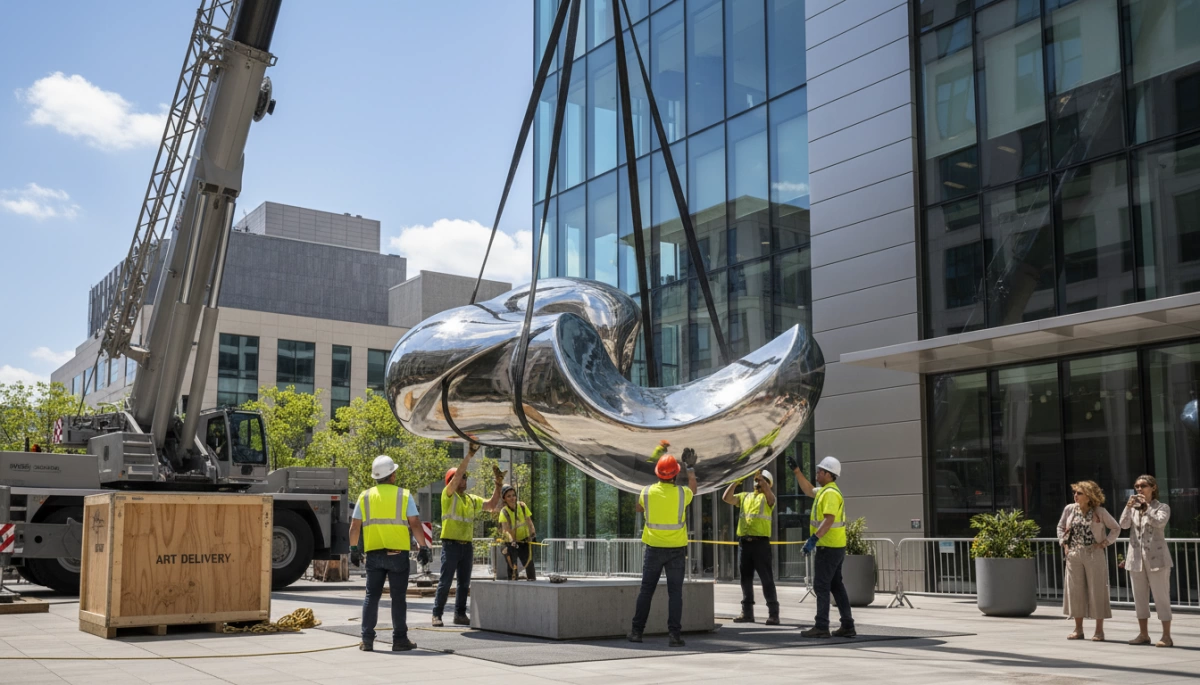
Manufacturing a masterpiece is only half the battle. As a premier stainless steel sculpture factory, we know that the project isn’t finished until the artwork is safely anchored at its destination. We handle the complex logistics so you don’t have to worry about international freight or on-site surprises.
Packaging for Global Transit
Shipping high-finish metal art requires more than just a wooden box. We treat every crate like a vault to protect the finish during weeks of ocean transit. Whether it is a massive public monument or a delicate mirror polishing stainless steel bull sculpture, the packaging protocol remains rigorous.
- Protective Layers: We wrap the entire surface in thick soft foam and pearl wool. This prevents friction and micro-scratches that could ruin a mirror polish.
- Shock Absorption: The sculpture is not just placed in a box; it is suspended and braced within a custom-welded steel-framed crate.
- External Shell: The steel frame is covered with plywood to protect against external impact and moisture.
Trial Assembly: The Pre-Shipping Check
Nothing is worse than a crane holding a massive sculpture in the air while the installation crew realizes the bolt holes don’t line up. To prevent this nightmare, we perform a complete trial assembly in our factory yard before packing.
We assemble the sculpture and its internal structure to verify that every connection point is precise. We check the alignment of the base plate with the provided templates. If we find a variance of even a millimeter, we correct it immediately. We document this process with photos and videos, proving that the piece fits together perfectly before it ever leaves our facility.
Site Installation Services and Support
We provide different levels of support depending on the scale of the project. For private collectors enhancing your garden with unique sculptures, we typically supply detailed CAD foundation drawings and step-by-step installation manuals. These guides allow local contractors to install the piece easily without specialized training.
For a monumental sculpture commission, we offer comprehensive site installation services. We can deploy our own technical team to your location in the United States to oversee the process. Our experts handle the critical tasks:
- Supervising crane operations and rigging.
- Ensuring precise alignment with the concrete foundation.
- Performing final on-site TIG welding and seamless polishing to hide assembly joints.
We ensure the “final mile” is as smooth as the fabrication process itself.
Red Flags: How to Spot a “Middleman” vs. A Real Factory
In the digital age, anyone can set up a slick website and claim to be a premier stainless steel sculpture factory. However, inadvertently hiring a middleman or trading company often results in inflated costs, communication delays, and a total loss of quality control. Here is how I distinguish a legitimate art fabrication studio from a reseller.
Lack of In-Process Photos
If a supplier only displays perfectly lit, finished images, be skeptical. Real manufacturing is messy, loud, and gritty. I always look for the “ugly” photos—the sparks flying during welding, the dull grey of unpolished steel, and the chaotic workshop floor.
- Proof of Life: A real factory should be able to send you raw photos of the internal armature or the hand-forging process from the same day.
- Video Verification: If they hesitate to do a quick live video walk-through of the shop floor, they likely don’t own the facility.
Vague Engineering Answers
When you ask specific questions about structural engineering calculation or wind load ratings, a middleman usually stalls. They often have to forward your questions to the actual manufacturer and wait for a reply, leading to vague or delayed answers.
- Immediate Expertise: A true manufacturer knows exactly what size internal armature is needed for a 20-foot sculpture without needing to “check with the team” for three days.
- Technical Depth: When vetting commercial stainless steel sculpture manufacturers, direct technical knowledge regarding load-bearing points and foundation requirements is the biggest differentiator between a sales agent and a fabricator.
The Price Trap
If a quote seems significantly lower than the market average, corners are likely being cut on materials that aren’t visible from the outside.
- Material Swapping: Unethical sellers may substitute 316L marine-grade stainless steel with cheaper 304 or even 201 grades, which will rust within months in coastal environments.
- Thin Gauges: To save money, they might use 1.5mm sheet metal instead of the industry-standard 2mm or 3mm. Thin material leads to “oil canning” (visible waviness) and makes the sculpture prone to denting.
FAQ: Common Questions About Stainless Steel Sculpture Fabrication
As a dedicated stainless steel sculpture factory, we understand that commissioning a custom art piece involves many technical decisions. Below are the answers to the most frequent inquiries we receive from artists, architects, and project managers.
What is the difference between 304 and 316L stainless steel?
The main difference lies in corrosion resistance and chemical composition.
- 304 Stainless Steel: This is the industry standard for indoor sculptures or outdoor pieces located in dry, inland climates. It offers excellent durability and a high-quality finish but is less resistant to chlorides.
- 316L Marine-Grade Stainless Steel: This alloy contains molybdenum, which significantly increases resistance to salt and chemical corrosion. We strictly recommend 316L marine-grade stainless steel for any installation near the ocean (within 10 miles of the coast), in humid environments, or for public art exposed to road salts.
How do you ensure large outdoor sculptures are safe in high winds?
Safety is our non-negotiable priority. For large-scale outdoor sculpture fabrication, we do not rely on guesswork. Every monumental piece undergoes a rigorous structural engineering calculation process.
- Internal Armature: We design a heavy-duty carbon steel sub-structure (treated for rust resistance) that anchors the stainless steel skin.
- Wind Load Analysis: Our engineers calculate stress points based on local wind speeds and seismic activity requirements of the installation site.
- Certified Drawings: We provide stamped engineering drawings to satisfy local municipal safety codes.
Can you manufacture a sculpture from a simple sketch or photo?
Yes. You do not need to be a CAD expert to work with us. We specialize in custom metal art fabrication starting from the most basic concepts.
- Concept: You send us a hand sketch, a photo, or even a verbal description.
- Digitization: Our design team utilizes 3D modeling and rendering services to convert your idea into a precise digital model.
- Approval: We share the 3D file with you for review, allowing you to see the proportions and details from every angle before we cut a single piece of metal.
Do you provide installation services for international projects?
We offer flexible options depending on the project’s complexity and budget.
- Full Service: For complex or monumental works, we can dispatch our experienced team to handle the site installation services globally.
- Guided Support: For standard projects, we provide detailed foundation drawings and step-by-step installation manuals, allowing local contractors to install the piece easily.
- Supervisor Option: We can send a lead engineer to oversee your local crew, ensuring the sculpture is mounted correctly without the cost of flying out an entire team.

 English
  German
  French
  Italian
  Panjabi
  Chinese
  Spanish
  Arabic
  Hindi
Hindi