
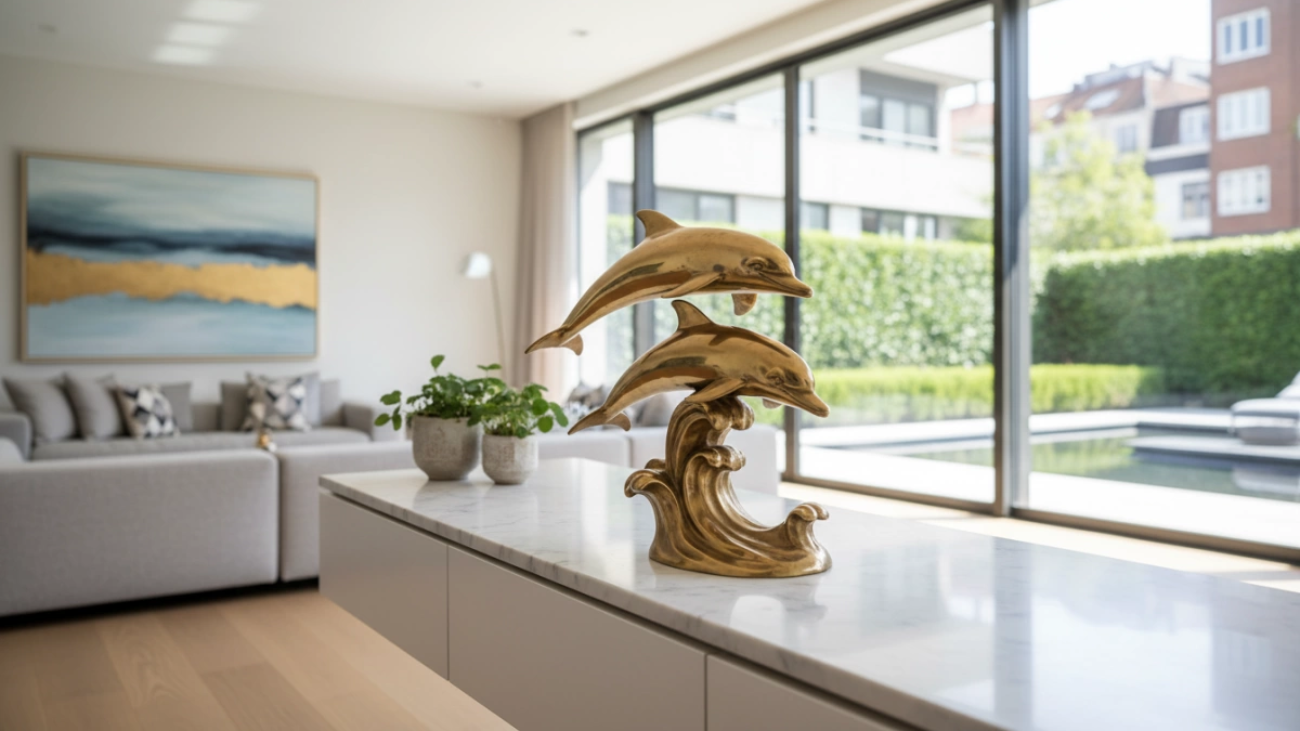
Defining the Aesthetic: Styles of Dolphin Sculptures
When you are on the hunt for the perfect brass dolphin sculpture, you aren’t just looking for a piece of metal; you are looking for movement frozen in time. The aesthetic you choose dictates whether the piece feels like a souvenir or a high-end investment. At Art Vision, we find that collectors generally gravitate toward three distinct artistic visions, each bringing a different energy to a room.
Mid-Century Modern (MCM) Revival
The 1950s and 60s embraced warm gold tones and sleek, aerodynamic lines. This style is seeing a massive resurgence in mid-century modern nautical decor.
- The Look: Simplified forms with smooth, untextured surfaces.
- The Finish: High-polish gold or polished bronze that mimics the classic brass warmth.
- Why It Works: It feels vintage yet timeless. Our polished bronze pieces capture this vibe perfectly, offering that nostalgic “brass” glow but with the substantial weight and durability of gallery-quality casting.
Realism and Anatomical Accuracy
For the purist, the goal is capturing nature exactly as it is. Marine life metal art in this category focuses on the biological details—the exact curve of the dorsal fin, the muscle tension in the tail, and the texture of the skin.
- Detail Oriented: Every aspect is true to life.
- Dynamic Posing: Often depicts the dolphin mid-breach or interacting with a realistic wave base.
- The Vibe: Educational and respectful of the animal’s natural power.
Contemporary & Abstract Interpretations
This is where fine art truly shines. Instead of a literal copy of a dolphin, we focus on the spirit of the animal.
- Fluidity Over Features: We strip away the details (like eyes or blowholes) to emphasize the curve, speed, and grace of the subject.
- Minimalist Design: Uses negative space and elongated lines to suggest motion.
- Luxury Appeal: These pieces serve as sophisticated focal points rather than just “animal figurines.”
By utilizing the lost-wax casting method, we can achieve the intricate fluidity required for abstract work or the sharp precision needed for realism, ensuring the final brass dolphin sculpture—or more accurately, our superior bronze alternative—stands the test of time.
Material Matters: Solid Brass vs. Bronze vs. Plated
When you are in the market for a brass dolphin sculpture, understanding the metal composition is critical to determining value and longevity. Many collectors search for that warm, golden aesthetic, but not all metal art is created equal. The distinction between a gallery-quality piece and mass-produced decor lies entirely in the materials used during fabrication.
The “Brass Look” Reality Check: Plated vs. Solid
There is a significant difference between solid brass vs. brass-plated items. Much of the “brass” decor found in retail stores is actually pot metal or zinc that has been electroplated with a thin layer of brass. While these pieces may look shiny initially, the plating often peels, pits, or tarnishes irreversibly, especially when used as coastal interior design accents. Solid brass is superior to plated metal, offering substantial weight and durability, but it is often softer and less capable of holding the intricate textures required for high-end marine life metal art.
Fine Art Bronze: The Superior Choice
At Art Vision, we prioritize bronze for our marine collections. While brass is an alloy of copper and zinc, bronze is primarily copper and tin. This composition makes bronze harder, more corrosion-resistant, and better suited for capturing fine details. A polished bronze sculpture offers the same luxurious, warm tone as brass but with the structural integrity of an investment-grade material. Before adding a piece to your collection, it is helpful to understand the cost of bronze before you invest to appreciate why this material remains the standard for museum-quality work.
The Lost Wax Casting Method Explained
We produce our sculptures using the traditional lost wax casting process (cire perdue), a technique that dates back thousands of years. This involves creating a detailed wax model, encasing it in a ceramic shell, melting the wax away, and pouring molten metal into the void. This labor-intensive method allows our fine art foundry to capture the fluid, streamlined motion of a dolphin with precision that sand casting or machining cannot match. The result is a solid, enduring sculpture that retains its value. Ultimately, a bronze statue gives a room a modern and classy look that transcends the temporary nature of plated decor.
The Art of the Finish: Patinas and Polishing
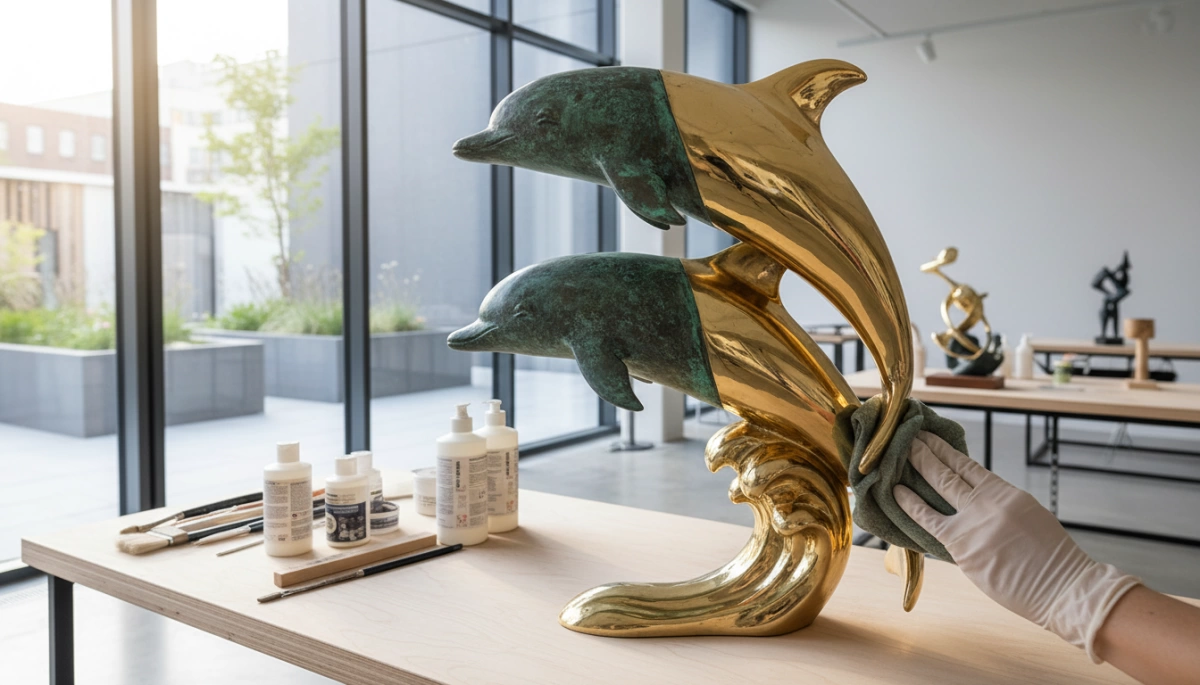
The final character of any marine sculpture is defined by its surface treatment. While the casting provides the form, the finish dictates the emotion and style of the piece. We use time-honored techniques to ensure every brass dolphin sculpture or bronze equivalent captures the specific aesthetic our clients envision, from modern luxury to nautical tradition.
High-Polish: The “Gold” Standard
When collectors search for a brass dolphin sculpture, they are often looking for the warmth and radiance of a gold-toned metal. We achieve this “gold” standard through high-polished bronze. Unlike plated items that can peel, our process involves labor-intensive buffing of the solid metal surface until it achieves a mirror-like quality.
- Reflectivity: Captures and reflects ambient light, creating a sense of movement.
- Durability: A solid surface that won’t chip away like faux-brass coatings.
- Aesthetic: Delivers a sleek, contemporary look ideal for modern interiors.
Polished bronze statues offer the visual appeal of bright brass but with the superior weight and investment value of fine art bronze.
Verdigris and Aged Patinas
For coastal interior design accents, a high-gloss finish isn’t always the right fit. We utilize traditional patina finish techniques to create depth and color that mimics the ocean environment. By applying heat and specific chemicals (such as cupric nitrate) to the bronze, we induce a controlled oxidation process.
This results in:
- Verdigris Greens and Blues: Evoking the natural aging of metal near the sea.
- Antique Browns: Highlighting the texture and muscle definition of the dolphin.
- Custom Blends: Unique colorations that make every limited-edition piece distinct.
Maintenance for Coastal Environments
Placing metal art near the ocean exposes it to salt air, which accelerates oxidation. While bronze is inherently resistant to structural corrosion, the finish requires care to maintain its intended look. A brass dolphin sculpture left unprotected in a marine environment will eventually turn dark or green.
To preserve the finish:
- Regular Cleaning: Rinse with fresh water to remove salt deposits.
- Waxing: Apply a high-quality paste wax annually to seal the surface.
- Inspection: Check for pitting or unusual discoloration early.
For large-scale installations or collectors unsure about the specific needs of their location, we provide a professional sculpture maintenance consultation to help you preserve the integrity and value of your artwork against the elements.
Placement Guide: Elevating Spaces with Marine Sculpture
Placing marine life metal art requires an understanding of light, flow, and scale. Whether you are working with a compact piece for a private office or a monumental installation for a public plaza, the goal is to capture the fluid motion of the ocean within a static environment.
Interior Styling: Executive Desks and Foyers
For interior spaces, a brass dolphin sculpture—or preferably a high-polished bronze equivalent—serves as a focal point of sophistication. In my experience, these pieces work best where light can play off the curves of the metal, mimicking sunlight hitting the water.
- The Executive Desk: A streamlined, mid-sized dolphin on a black granite base conveys agility and intelligence without cluttering the workspace. It acts as a conversation starter for clients and partners.
- The Foyer: A taller, vertical composition draws the eye upward. Placing a sculpture here sets a tone of elegance immediately upon entry.
When you elevate your space with a vintage bronze sculpture, you are adding a layer of permanence that mass-produced décor cannot match. We recommend positioning these coastal interior design accents against neutral walls or on pedestals to maximize their visual impact.
Outdoor & Architectural Integration
Moving outdoors, the material quality becomes critical. While a standard brass dolphin sculpture might tarnish unevenly or corrode in salty air, our solid bronze pieces are cast to withstand the elements, eventually developing a distinguished verdigris patina.
- Poolside & Gardens: Ocean-themed art installations naturally complement water features. The reflection of the sculpture in a pool doubles its aesthetic value.
- Architectural Statements: For large estates or commercial fronts, architectural marine art needs to be substantial enough to not get lost in the landscape.
Much like how steel garden sculptures bring strength to outdoor design, a large-scale outdoor sculpture of a dolphin pod anchors the space, providing a sense of movement and life to static gardens or courtyards.
Bespoke Solutions: When “Off-the-Shelf” Isn’t Enough
The Limitation of Retail Sizes
When designing a grand foyer, a corporate courtyard, or a luxury hotel lobby, standard retail options rarely fit the bill. Most commercial brass dolphin sculpture options found online are mass-produced in fixed, tabletop dimensions—typically under 20 inches. These sizes inevitably get lost in expansive environments and lack the visual weight required for architectural focal points. Furthermore, retail pieces often rely on thin plating or hollow casts, which compromise durability in high-traffic or outdoor settings.
The Artvision Advantage: Customization and Project-Based Fabrication
We operate differently because we own the foundry and manage the entire production line. We specialize in Artvision project-based marine sculpture fabrication, meaning we are not limited to existing molds or standard catalog sizes.
- Scaling: We can enlarge existing designs to monumental scales suitable for outdoor plazas or fountains.
- Modifications: We adjust poses, patina finishes, or base materials to align perfectly with your interior design board.
- Commissioning: We work directly with architects and designers to execute entirely new bespoke metal sculpture concepts from scratch.
Understanding the hidden factors that determine a sculpture’s value is crucial when commissioning custom work. We ensure every piece, regardless of size, retains the museum-quality detail and structural integrity characteristic of custom bronze fabrication.
Cost-Efficiency of Factory-Direct Buying
Custom work often carries a reputation for being prohibitively expensive, but this is largely due to gallery and dealer markups. By engaging with Artvision bespoke brass nautical decor solutions directly, you bypass the middleman entirely. We offer Artvision factory-direct pricing for architectural art, making high-end custom marine sculptures accessible for developers and private collectors. You pay for the raw materials, the artist’s labor, and the technical casting expertise—not the showroom overhead.
Frequently Asked Questions About Brass Dolphin Sculptures
What is the difference between brass and bronze dolphin sculptures?
While both alloys are copper-based, the difference lies in the secondary metal and the resulting properties. Brass is a mix of copper and zinc, typically resulting in a brighter, yellow-gold color. Bronze is copper and tin, known for its superior strength, corrosion resistance, and warmer, reddish-gold tones.
At Art Vision, we primarily utilize bronze for our marine life collection because it flows better into the mold during the lost wax casting process, capturing intricate details that brass casting sometimes misses. Bronze is the standard for investment-grade fine art, offering greater longevity and value.
Can brass dolphin sculptures be displayed outside?
Yes, metal marine art is excellent for outdoor settings, but the finish will evolve. Both brass and bronze react to oxygen and moisture—especially in coastal environments—developing a greenish-blue layer known as verdigris.
- Natural Aging: Many collectors appreciate this living finish as it blends naturally with garden landscapes.
- Polished Look: If you prefer the gleaming “gold” aesthetic outdoors, the sculpture requires a high-grade clear coat sealant and regular maintenance to prevent oxidation.
How do I clean a tarnished brass sculpture?
Maintenance depends on the finish. For high-polish surfaces that have dulled, a gentle non-abrasive metal polish can restore the shine. However, for pieces with a specific artistic finish, like our handcrafted patina sculptures, you should avoid harsh chemicals.
Simple cleaning routine:
- Dust with a soft, dry microfiber cloth.
- Wash with mild soap and water if there is heavy grime, then dry immediately.
- Apply a thin coat of clear paste wax annually to seal the surface and protect against humidity.
Does Artvision create custom-sized marine sculptures?
Absolutely. Because we operate our own foundry, we are not limited to retail inventory. We specialize in bespoke metal sculpture projects for interior designers, architects, and developers. Whether you need a scaled-down dolphin figurine for corporate gifts or a monumental ocean-themed art installation for a hotel lobby, we provide project-based marine sculpture fabrication directly from the factory floor.


 English
  German
  French
  Italian
  Panjabi
  Chinese
  Spanish
  Arabic
  Hindi
Hindi
Add a Comment