
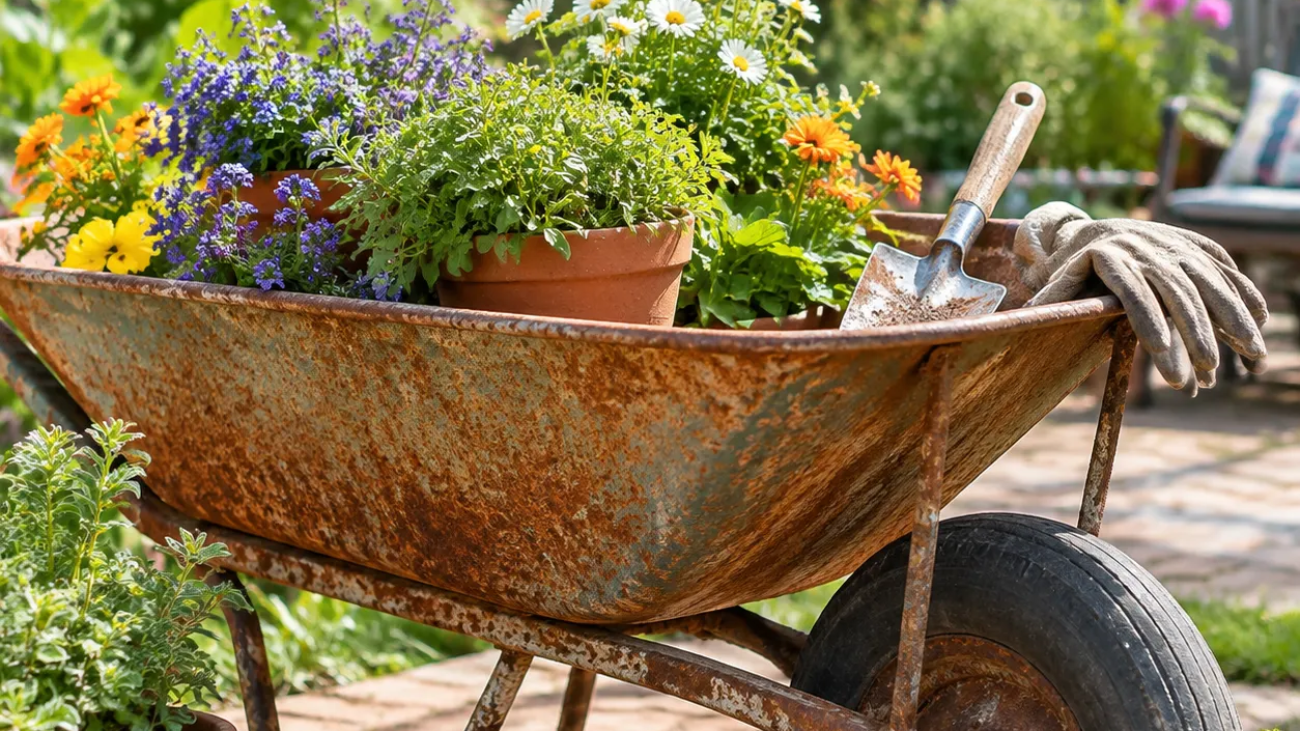
Material Metallurgy: Choosing the Best Metal for Outdoor Longevity
Selecting the right alloy is the most critical decision when manufacturing and installing enduring arte de jardín en metal. Outdoor environments subject sculptures to extreme thermal shifts, UV radiation, moisture, and chemical exposure. We engineer our outdoor metal pieces using metallurgical profiles tailored to specific climate zones and aesthetic requirements.
Corten Steel: Self-Protecting Oxide Barriers
Corten (weathering steel) forms a dense, self-healing oxide patina when exposed to natural wet-dry atmospheric cycles.
- Resistencia a la corrosión: The surface rust layer acts as a permanent, impermeable barrier against deeper structural oxidation.
- Aesthetic Evolution: Transitions from raw steel gray to warm amber, shifting into a deep, rich bronze-brown over 6 to 24 months.
- Best Use: Corten steel garden sculptures positioned in open-air landscapes with consistent atmospheric cycling.
Marine-Grade Stainless Steel: Grade 304 vs. 316
For high-modernist lines and mirror-polished profiles, stainless steel delivers unmatched strength and structural resilience.
- Grado 304: The standard industry benchmark for inland architectural installations. Provides robust resistance to freshwater, humidity, and routine environmental exposure.
- Grade 316 (Marine-Grade): Formulated with 2% to 3% molybdenum to combat pitting and crevice corrosion caused by airborne chlorides and coastal salt spray. Essential for shoreline estates and poolside locations.
- Finish Capabilities: Supports directional brushing, high-gloss mirror polishing, or custom electroplated treatments for weatherproof yard art.
Cast Bronze, Brass, and Copper: Living Verdigris Patinas
Non-ferrous metals provide organic warmth, structural density, and natural weathering behaviors.
- Cast Bronze & Brass: Deliver heavy structural integrity and classic weight. They develop rich, multi-layered patinas without losing wall thickness.
- Cobre: Highly malleable for complex fluid shapes. When left unsealed, it oxidizes through deep brown tones before developing its signature blue-green verdigris coat.
Powder-Coated Aluminum vs. Heavy-Gauge Mild Steel
Choosing between coated metals requires balancing weight considerations with structural mass.
Metal TypeDensity & WeightCorrosion MechanismIdeal ApplicationArchitectural AluminumLightweight; non-magneticNaturally forms an invisible protective aluminum oxide layer; zero red rustKinetic art, suspended structures, and precision-cut geometric panels with powder-coat finishes.Heavy-Gauge Mild SteelHigh mass; structural rigidityProne to continuous oxidation unless sealedMonumental forms and bold silhouettes requiring thick-walled steel protected by multi-stage baked powder coating.
Curating Metal Yard Art by Architectural Style

We curate metal yard art to anchor outdoor spaces, framing sightlines and bridging the gap between structural hardscaping and soft plantings. Choosing the right design requires balancing visual weight, structural profiles, and ambient environmental conditions.
Modern Minimalist and Geometric Metal Sculptures
Modern minimalist pieces utilize crisp edges, sharp angles, and monolithic geometry. We design these bold shapes to mirror contemporary architectural lines, contrasting smooth poured concrete, limestone pavers, and dark gravel beds.
- Key Forms: Polyhedral monoliths, interlocking geometric bands, abstract minimalist prisms.
- Best Placements: Courtyards, minimalist entryways, and expansive paved terraces.
Biophilic Forms and Botanical Silhouettes
Biophilic sculptures soften rigid outdoor zones by introducing nature-inspired motifs. Fluid steel stems, laser-cut botanical screens, and hammered bronze leaves mirror organic planting beds while maintaining structural durability in all seasons.
- Key Forms: Sprouting seed pods, stylized fern fronds, flowing aquatic waves.
- Best Placements: Dense perennial borders, ornamental grass beds, and woodland garden margins.
Kinetic Wind Sculptures and Dynamic Movement
Movement transforms static yards into living, responsive environments. By incorporating precision-balanced counterweights and dual-axis bearings, dynamic designs capture subtle breezes to create fluid, non-repetitive motion. Installing copper wind sculptures that move and dance in the wind delivers continuous visual rhythm across open lawns and exposed hillsides.
Functional Art: Privacy Screens and Water Features
Metal art also serves crucial functional roles across residential estates and commercial grounds. Laser-cut architectural panels define outdoor rooms, shade exposed seating, and mask mechanical equipment. Much like how structural wrought iron sculptures blend old and new art forms, integrated metal water walls and custom weir fountains introduce soothing acoustic shielding along property boundaries.
Architectural Style and Placement Matrix
Sculpture StylePrimary MaterialsKey Structural FeaturesOptimal Garden PlacementGeometric Modern316 Stainless Steel, CortenSharp angles, monolithic volumeConcrete hardscapes, gravel courtyardsBiophilic BotanicalPatinated Bronze, Mild SteelOrganic curves, perforated leaf motifsPerennial borders, shrub clustersKinetic ElementsCopper, Marine AluminumSealed bearings, counterweighted vanesOpen ridge lines, expansive turfFunctional ScreensLaser-Cut Powder-Coated SteelPerforated panels, integrated channelsPerimeter walls, patio dividers, water runs
Landscape Placement and Spatial Composition Techniques

Properly placing arte de jardín en metal transforms a standard outdoor area into a curated landscape. Without intentional positioning, even high-end pieces create visual clutter instead of serving as true focal points. We approach placement through architectural composition, balancing scale, line of sight, material contrast, and lighting.
Mastering Scale and Architectural Sightlines
Scale dictates how an outdoor piece interacts with its environment. A delicate accent gets lost in an expansive turf area, while oversized large outdoor metal sculptures can crowd a compact courtyard.
- Align with Primary Axes: Position sculptures directly along central sightlines—such as the view from your main living room window, garden entry gates, or the end of a stone walkway.
- Establish Negative Space: Maintain a clear perimeter around architectural garden focal points. Give the eye room to rest before taking in the piece.
- Proportion to Surroundings: Keep vertical elements scaled to nearby structures. Match taller columnar sculptures with mature trees or high perimeter walls to preserve spatial balance.
Placement AreaRecommended Sculpture ProfileDesign PurposeOpen Lawn / MeadowLarge, broad abstract metal landscape artGrounds open expanses and anchors wide viewsGarden Pathway TerminusTall, slender vertical silhouettesDraws the eye forward through the landscapeCourtyard / Patio CornerMedium-scale geometric or biophilic formsCreates an intimate, localized focal point
Pairing Metal Textures with Living Backdrops
The dynamic between raw metal and living nature drives great outdoor design. We combine hard metallic surfaces with organic shapes and natural stone to build depth:
- Warm Patinas and Soft Foliage: Weathered Corten and rich bronze stand out cleanly against feathery ornamental grasses, boxwoods, and deep green evergreen hedges. Custom cast elements produced at fundición de escultura de bronce donde el arte y la metalurgia se encuentran offer earthy tones that naturally harmonize with textured bark and river rock.
- Polished Finishes and Dark Stone: Mirror-polished stainless steel provides a sharp, reflective contrast when set against dark slate, basalt pavers, or dense shadow plantings.
- Monochromatic Schemes: Powder-coated black or charcoal metal pieces ground colorful floral borders without competing for visual attention.
Strategic Landscape Lighting for Dimensional Depth
Metal surfaces react distinctively to light. Strategic fixture placement turns three-dimensional metal yard art into a striking feature at night:
- Cross-Spotting: Aim two low-voltage LED spotlights at the sculpture from 45-degree angles. This eliminates flat, harsh shadows and highlights subtle curves and welds.
- Silhouetting: Place a wide-beam floodlight behind open-framework or laser-cut metal accents directed at a light-colored wall. This projects an architectural silhouette after dark.
- Grazing: Position uplights close to the base of textured bronze or oxidized steel panels to emphasize surface patinas and dimensional reliefs.
Metal Sculpture Installation Methods: Engineering and Ground Stability
When we position large outdoor metal yard art, structural anchoring is just as critical as the artwork itself. Open-air installations face constant lateral force from high winds, shifting soil, and thermal expansion. Ensuring that your arte de jardín en metal remains permanently anchored requires precise site preparation and structural engineering.
+————————+———————————–+————————————+ | Sculpture Weight/Scale | Recommended Anchoring System | Primary Application Target | +————————+———————————–+————————————+ | Heavy / Large-Scale | Sub-grade concrete with J-bolts | Exposed open lawns, commercial sites| | Medium-Weight Accent | Helical ground augers & rebar | Compacted soil, landscaped borders | | Modular / Hardscape | Concrete expansion anchors / studs| Patios, stone pads, deck surfaces | +————————+———————————–+————————————+
Sub-Grade Concrete Footings and Concealed Baseplates
For large outdoor metal sculptures, poured concrete footings provide uncompromised ballast. Unlike mounting arte mural moderno en metal abstracto against interior studs, free-standing outdoor sculptures require below-ground ballast to counter extreme wind shear:
- Frost-Line Depth: We pour concrete footings extending below your region’s frost line to prevent ground heaving during freeze-thaw cycles.
- Cast-in-Place J-Bolts: High-tensile steel J-bolts are set directly into the wet pour using a template matching the sculpture’s mounting footprint.
- Concealed Baseplates: Baseplates sit flush with the sub-grade, allowing grass, turf, or decorative stone aggregate to completely cover the mounting hardware for a clean, floating aesthetic.
Ground Augers and Stakes for Medium Garden Accents
For medium-weight metal yard art and dynamic kinetic pieces where concrete isn’t required, mechanical soil anchors offer robust stability:
- Helical Earth Augers: Screwed deep into dense soil, these offer high pull-out resistance against directional gusts.
- Cross-Driven Rebar Stakes: Heavy-gauge steel stakes driven at opposing 45-degree angles through welded collar tabs lock the sculpture firmly into compacted earth.
Preventing Galvanic Corrosion in Hardware
Direct contact between dissimilar metals triggers galvanic corrosion, leading to rusted bolts and structural failure. We eliminate electrochemical degradation through proactive barrier isolation:
- Non-Conductive Washers: Place high-density neoprene, EPDM, or nylon isolation washers between mounting baseplates and concrete anchors.
- Matched Fasteners: Pair stainless steel anchors with stainless steel bases, or use hot-dip galvanized hardware when anchoring heavy structural Corten and carbon steels.
- Anti-Seize Barrier Pastes: Coat anchor threads with marine-grade anti-seize lubricants to prevent cold welding and ensure long-term serviceability.
Maintenance and Long-Term Metal Yard Art Preservation Protocols
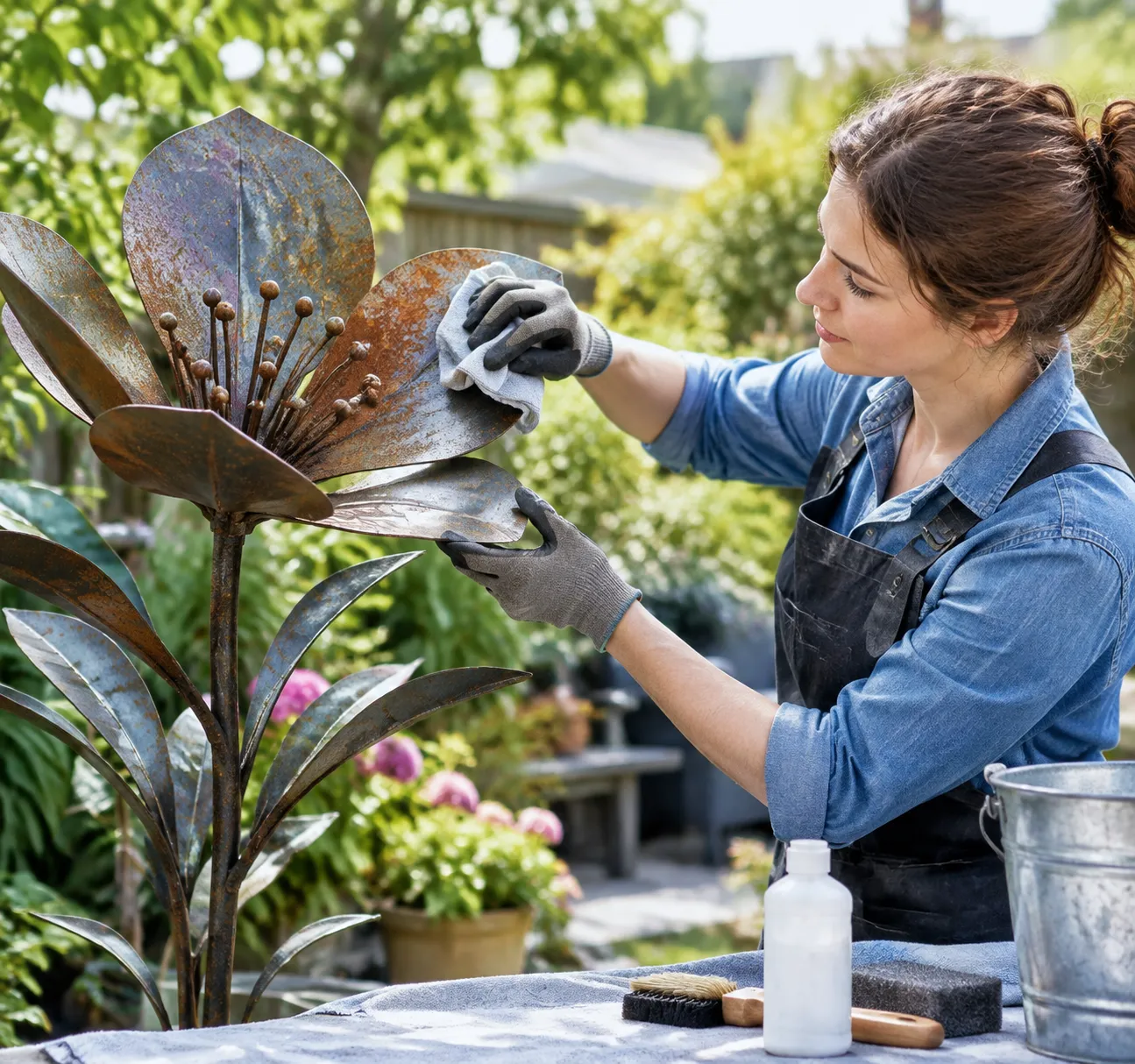
Outdoor environments constantly expose metal yard art to airborne salts, acid rain, bird droppings, and UV radiation. Preserving structural integrity and surface aesthetics requires proactive care rather than reactive repairs. Implementing targeted maintenance protocols ensures your investment maintains its visual impact across all seasons.
Seasonal Cleaning Routines to Clear Pollutants and Organic Buildup
Dirt and organic grime trap moisture against metal surfaces, accelerating surface pitting and finish degradation. I recommend a thorough cleaning twice a year:
- Enjuague a fondo: Wash down the surface with low-pressure fresh water to dislodge loose grit and atmospheric salts.
- Use pH-neutral soap: Scrub gently using a soft microfiber cloth or non-abrasive sponge paired with mild, biodegradable dish soap.
- Avoid harsh chemicals: Never use abrasive scouring pads, wire brushes, or bleach-based solvents on coated or patinated surfaces.
- Secar completamente: Wipe the piece down with a clean, lint-free towel to prevent mineral spotting from hard water.
Applying Microcrystalline Architectural Waxes and Clear Sealants
To extend the lifespan of high-end finishes, barrier protection is essential. For cast bronze, brass, copper, and bare steel accents, microcrystalline architectural wax provides superior moisture resistance and UV stabilization without yellowing over time.
- Cera microcristalina: Apply thin coats annually with a soft rag, let it haze, and buff lightly to create an impermeable barrier against moisture.
- Polyurethane or Acrylic Clear Coats: Ideal for high-gloss stainless steel and painted pieces to lock out corrosive environmental elements. If you invest in high-grade arte metálico personalizado para el hogar y decoración exterior, a factory-grade sealant significantly reduces ongoing maintenance demands.
Protection MethodBest Suited ForMaintenance FrequencyKey BenefitMicrocrystalline WaxBronze, Brass, Raw Steel1–2 times per yearBreathable, easy to spot-repairArchitectural Clear SealantPainted & Polished MetalsEvery 2–4 yearsHigh UV resistance, hard shellPenetrating Rust ConvertersWeathering/Mild SteelAs needed for spot controlHalts deep corrosion cycles
Managing Natural Oxidation Cycles vs. Locking in Custom Patinas
Corten steel and bronze react to their environment through natural oxidation, but you must actively manage how these surfaces mature:
- Natural Weathering: For Corten steel, ensure adequate airflow and avoid standing water so the protective oxide patina can stabilize evenly without flaking.
- Locking Patinas: When a piece reaches your preferred color depth—whether a rich rust tone or a vibrant verdigris—apply an exterior-rated metal sealer to halt the oxidation process completely.
- Isolating Runoff: During the initial stabilization phase of rusting metals, clear any runoff from underlying stone or concrete immediately to avoid permanent surface staining.
Commissioning Bespoke Metal Yard Art: Custom Fabrication Standards
When investing in large-scale installations, the difference between commercial-grade sculpture and off-the-shelf garden decor comes down to structural integrity. Cheap, mass-market pieces consistently fail at thin spot-welds, lightweight joint crimps, and stamped sheet seams that buckle under wind shear or trap standing water. In contrast, our approach to custom metal yard art focuses on solid-weld engineering, heavy-gauge plate selection, and integrated internal bracing.
Structural Integrity: Mass-Market Decor vs. Custom Fabrication
- Material Thickness: Mass-market accents typically rely on 18-to-24 gauge sheet metal prone to warping; custom pieces use heavy 10-to-12 gauge sheet, plate steel, or thick-wall structural tubing.
- Weld Quality: Mass decor relies on superficial tack welds that crack under thermal expansion. Solid-weld fabrication employs full-penetration continuous welds that form a single, unified load-bearing structure.
- Resistencia a la corrosión: Mass-produced decor often leaves raw edges inside hollow cavities; custom fabrication seals all internal voids or incorporates engineered weep holes to eliminate interior water collection.
The Custom Fabrication Pipeline
We turn architectural concepts into physical landmarks through a precision, multi-stage manufacturing workflow:
- 3D CAD & Structural Modeling: We map out scale, weight distribution, and anchor points to verify balance and wind load resistance before cutting any material.
- High-Precision Laser Cutting: CNC fiber lasers profile the metal with clean, dross-free edges for exact geometric fitment.
- TIG and MIG Welding: Skilled artisans hand-fit and TIG weld every seam, ensuring smooth joint transitions and maximum mechanical strength.
- Surface Refining and Sealing: We finish each piece according to the design brief, whether through controlled accelerated weathering, fine brushing, or multi-stage powder coating.
Explore our portfolio of arte metálico personalizado para el hogar y decoración exterior to see how precision engineering translates across diverse design styles.
Tailoring Sculptures for Diverse Architectural Settings
- Private Estates & Residential Gardens: Scaled to blend with mature plantings, outdoor living rooms, and private driveways without overpowering the surrounding home design.
- Commercial Hardscapes & Corporate Plazas: Built with high-traffic impact durability, vandal-resistant anchoring, and low-maintenance industrial finishes.
- Public Parks & Civic Developments: Engineered to meet strict municipal safety codes, featuring tamper-proof sub-grade foundation mounts and certified structural calculations.
Frequently Asked Questions About Metal Yard Art
What is the most durable metal for outdoor yard art in harsh climates?
Marine-grade 316 stainless steel and heavy-gauge Corten steel deliver the highest structural lifespan outdoors. Marine-grade alloys resist chloride pitting in coastal environments, making them our top recommendation for arte abstracto de metal exposed to salt air. For high-humidity or freeze-thaw zones, thick powder-coated aluminum offers exceptional longevity without any risk of rust.
How do you prevent Corten steel from staining patio pavers and concrete?
Corten steel releases iron oxide runoff during its initial weathering phase. To protect surrounding hardscapes: Pre-weather the sculpture: Allow the steel to complete its initial 2 to 6-month oxidation cycle over gravel, soil, or grass before placing it on finished paving. Seal the stabilized patina: Apply a breathable clear rust sealer to lock the surface once the rich amber-brown hue forms. Design runoff zones: Install a dedicated river rock or gravel border directly underneath the sculpture base to catch and filter drainage.
What is the best way to secure large metal yard art against theft and high winds?
The most reliable method for heavy installations—including architectural escultura de chapa metálica designs—involves pouring sub-grade concrete footings with embedded stainless steel J-bolts.
Key anchoring standards we use include: Baseplate anchoring: Securing concealed baseplates to concrete pads using tamper-proof shear nuts to deter theft. Ground augers: Utilizing heavy-gauge helical earth anchors driven 24 to 36 inches deep for medium-weight installations in turf or garden beds. Vibration dampening: Installing neoprene isolation washers between mounting hardware and baseplates to prevent wind rattle and galvanic corrosion.
How often should protective wax or clear coat be reapplied to outdoor sculptures?
Maintenance intervals depend directly on climate exposure and the base alloy: Bronze and coated mild steel: Apply a fresh coat of high-grade microcrystalline architectural wax every 12 to 18 months to repel moisture and airborne pollutants. Harsh sun and coastal settings: Inspect clear-coated finishes annually and refresh UV-resistant sealants every 2 to 3 years. Corten steel and self-patinating copper: Require zero reapplication, as their self-protecting oxide layers regenerate naturally over time.

 Spanish
  English
  German
  French
  Italian
  Panjabi
  Chinese
  Arabic
  Hindi
Hindi