
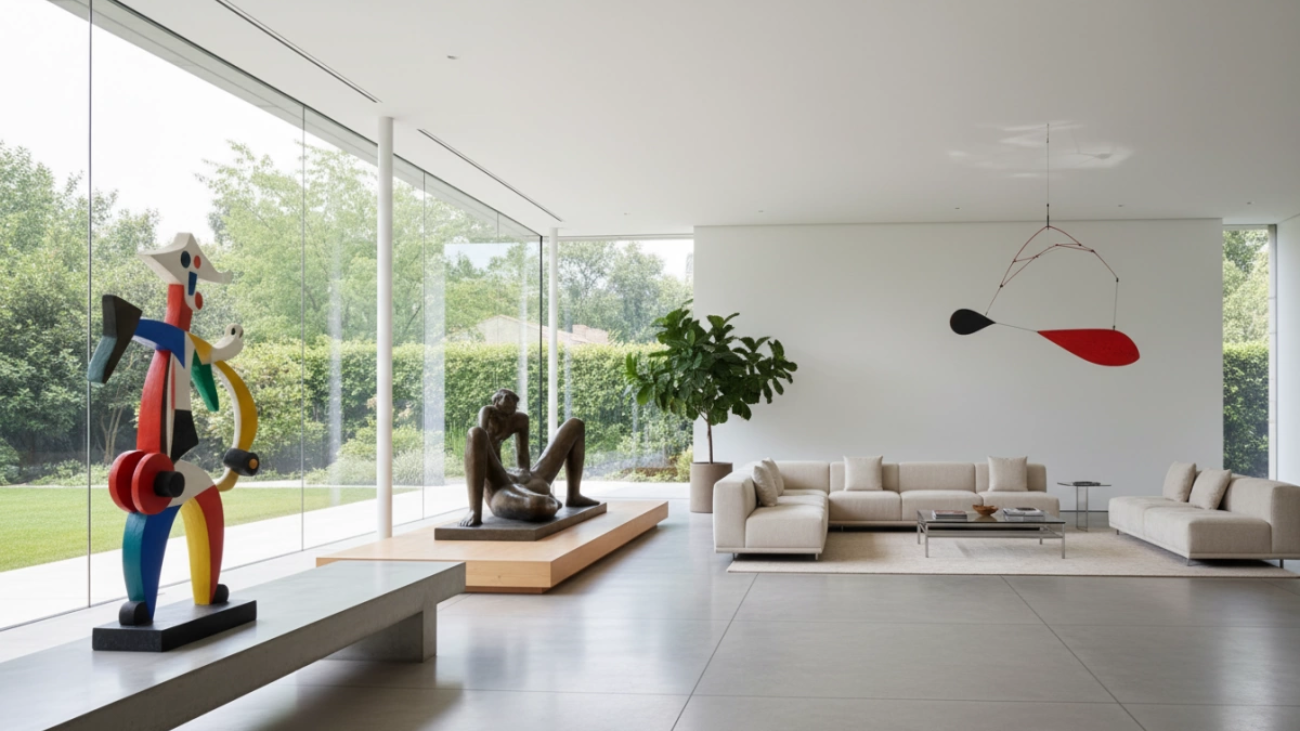
Origins of Famous Abstract Art Sculptures
When people look at famous abstract art sculptures today, they often wonder: how did we get from lifelike marble statues to pure shapes, lines, and forms? The shift didn’t happen overnight—it grew from a deliberate move away from realism.
Rodin and the Break from Pure Realism
Auguste Rodin didn’t sculpt “abstract” works in the strict sense, but he opened the door for modern abstract sculptures by:
- Emphasizing emotion over accuracy – works like The Thinker and The Burghers of Calais distort anatomy slightly to intensify feeling.
- Exposing process – rough surfaces and visible tool marks pushed sculpture away from polished illusion and toward expressive form.
- Freeing the figure from tradition – partial figures, fragmented bodies, and dramatic poses made artists question whether sculpture had to “look real” to be powerful.
This focus on expressive form rather than exact likeness is the foundation of abstract sculpture.
Brâncuși and the Birth of Modern Abstract Sculpture
Constantin Brâncuși is where many art historians mark the true beginning of famous abstract sculptures as we know them.
- In “Bird in Space”, Brâncuși stripped the bird down to a pure, elongated curve, capturing the idea of flight instead of feathers or anatomy.
- With “Endless Column”, he turned repeated geometric modules into a vertical, almost spiritual rhythm—an early landmark of geometric abstract sculpture.
Brâncuși’s key moves:
- Simplification – carving forms down to their essence.
- Symbolic purity – using shape as a direct carrier of meaning.
- Modern materials and finishes – polished bronze and clean lines signaled a new era of abstract bronze sculptures and modernity.
His work set the visual language that countless iconic abstract sculpture artists still reference.
Cubism, Futurism, Constructivism: Shaping the Abstract
The major early 20th-century movements pushed sculpture from “altered reality” into fully modern abstract sculptures:
- Cubism (inspired by Picasso and Braque):
- Broke objects into faceted planes and angles.
- Led sculptors to treat figures as interlocking geometric volumes, seen in early geometric abstract sculpture.
- Futurism:
- Focused on speed, movement, and energy.
- Sculptors stretched forms in one direction, echoing motion and technology—an early step toward kinetic abstract art and dynamic structure.
- Constructivism:
- Embraced industrial materials like steel, glass, and wood.
- Treated sculpture as constructed space instead of carved mass, laying the groundwork for large scale abstract sculpture, outdoor abstract art installations, and site-specific abstract sculptures.
Together, these movements turned sculpture into a field of pure form, space, rhythm, and material, creating the foundation that today’s public abstract art sculptures, custom bronze sculpture fabrication, and contemporary abstract sculpture artists continue to build on.
Famous Abstract Art Sculptures of the Mid-20th Century
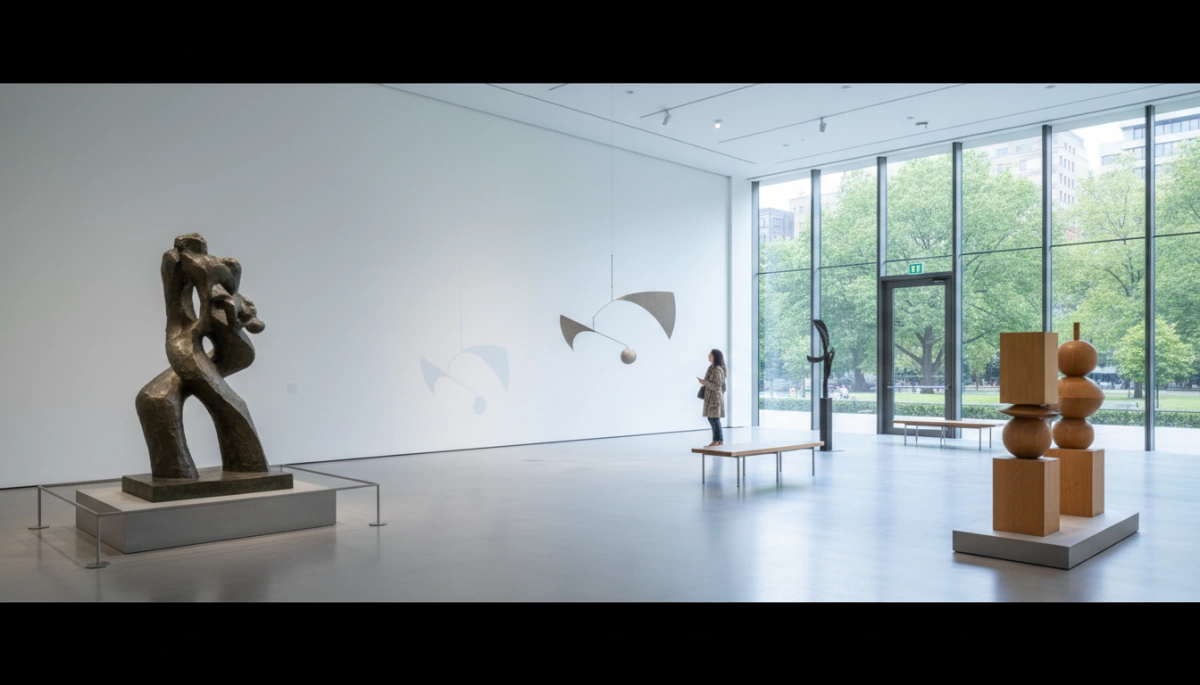
Mid-20th century is when famous abstract art sculptures really hit their stride. The big shift was clear: less about copying the human body or nature, more about pure form, emotion, and space.
Henry Moore’s Abstract Reclining Figures
Henry Moore’s abstract figures took the classic reclining body and stripped it down to flowing shapes and hollow spaces. His work is:
- Massive, yet soft and organic
- Inspired by bones, stones, and landscapes
- Perfect for parks and plazas, where people can walk around and “through” the form
These modern abstract sculptures showed how bronze and stone could feel both monumental and human at the same time.
Barbara Hepworth’s Pierced Abstract Forms
Barbara Hepworth pushed things further with pierced abstract forms – shapes with openings that frame the sky. Her sculptures are:
- Clean, calm, and geometric with soft curves
- Deeply tied to nature and coastal landscapes
- Designed to interact with light, shadow, and space
If you’re into bronze abstract garden sculptures or minimal outdoor pieces, Hepworth’s language of holes, strings, and smooth surfaces is still a huge reference.
Alexander Calder’s Mobiles and Public Abstract Sculptures
Alexander Calder brought motion into the game with kinetic abstract art:
- Mobiles – hanging sculptures that move with air currents
- Stabiles – bold, static steel structures on the ground
- Bright colors, simple shapes, and playful balance
Calder proved that public abstract art sculptures could be light, fun, and highly visible in city centers and corporate spaces.
Jean Arp and Biomorphic Abstract Sculpture
Jean (Hans) Arp led the way in biomorphic abstract sculpture:
- Soft, rounded shapes that feel half-human, half-organic
- No clear front or back – you discover them as you move around
- A bridge between Surrealism and pure abstraction
His style still inspires contemporary abstract sculpture artists who want forms that feel alive without looking realistic.
David Smith and Welded Steel Abstract Structures
David Smith turned industrial steel into pure visual rhythm:
- Welded steel abstract structures that feel like drawing in 3D
- Stacked geometric forms, strong lines, and open frameworks
- Perfect example of large scale abstract sculpture using raw metal
If you’re considering modern abstract metal sculpture for outdoor use, his approach to steel, surface, and structure is still the benchmark. For example, today’s makers often use similar techniques in pieces like refined electroplated stainless steel hollow sculptures that bring this industrial elegance into contemporary spaces.
These mid-century masters set the foundation for modern public abstract art, investment-grade abstract sculpture, and the kind of bold, clean forms that still work brilliantly in homes, gardens, hotels, and urban plazas worldwide.
Post-war famous abstract art sculptures
After WWII, famous abstract art sculptures took a darker, more emotional turn. Artists weren’t just simplifying form anymore – they were using abstract bronze, steel, and stone to process trauma, memory, and identity.
Louise Bourgeois and emotional abstract sculptures
Louise Bourgeois is a key name here. Her giant spider Maman is one of the most famous abstract sculptures on the planet – part mother, part monster, part shelter. It’s emotional, symbolic, and deeply personal, yet still reads as pure abstract form in public space.
Collectors and cities love this kind of work because:
- It’s instantly iconic and memorable
- It works as both sculpture and landmark
- It opens conversations about fear, care, and family, without being literal
Surrealist influence on abstract forms
Post-war abstract sculpture borrowed heavily from Surrealism:
- Biomorphic abstract sculpture – soft, organic, body-like forms, without being fully figurative
- Symbolic shapes that hint at dreams, psychology, and the subconscious
- Strange, hybrid creatures and structures that feel familiar but impossible
This is why so many modern abstract sculptures look “alive” without being realistic – they come straight out of surreal, inner worlds.
Abstract Expressionist sculptors and landmark works
Abstract Expressionism wasn’t just painting. Sculptors pushed emotion and gesture into 3D space using welded steel, rough surfaces, and bold forms. Key directions included:
- Large, welded geometric abstract sculpture with aggressive, energetic lines
- Kinetic abstract art that responds to light, gravity, or movement
- Raw, textured surfaces that feel almost like drawing in metal
These post-war modern abstract sculptures set the stage for today’s large-scale abstract sculpture and outdoor abstract art installations. When I design and commission new abstract bronze sculptures or steel works for clients, I always reference this era – it proves that powerful form + strong emotion is timeless in both museums and public spaces.
Contemporary Famous Abstract Art Sculptures in Public Spaces
Famous abstract art sculptures in public spaces have completely changed how we read cities and landscapes. They’re no longer “background decoration” – they’re landmarks, meeting points, and social media magnets.
Anish Kapoor’s Reflective Abstract Sculptures
Anish Kapoor’s Cloud Gate (The Bean) in Chicago is one of the most famous abstract sculptures on the planet. Its seamless, mirror‑polished stainless steel surface bends the skyline, the people, and the sky into a fluid, abstract reflection.
Why it works so well in public spaces:
- It invites touch, selfies, and constant movement.
- It turns the whole city into part of the sculpture.
- It proves how modern abstract sculptures can become global icons.
Richard Serra’s Large-Scale Steel Installations
Richard Serra’s massive curved steel sculptures redefine how people move through space. Works like Torqued Ellipses and outdoor site-specific pieces force you to walk inside the artwork, not just around it.
Key traits:
- Raw, weathered steel with powerful presence.
- Minimal, geometric abstract forms.
- Strong sense of weight, danger, and balance that you physically feel.
Iconic Public Abstract Sculptures Worldwide
A few public abstract art sculptures have become true cultural symbols:
- Chicago Picasso – a monumental, mysterious steel form that put abstract public art on the US map.
- Spiral Jetty by Robert Smithson – a massive earthwork spiral in Utah’s Great Salt Lake, blurring sculpture, land art, and landscape.
- Alexander Calder’s La Grande Vitesse in Grand Rapids – bright red, biomorphic abstract geometry reshaping the city’s identity.
These iconic abstract sculptures show how large scale abstract sculpture can define a city’s visual brand, attract tourism, and signal cultural confidence.
How Abstract Public Art Reshapes Cities and Landscapes
When we place public abstract art sculptures in plazas, parks, and waterfronts, we:
- Create instant focal points and shared meeting places.
- Turn empty or forgotten areas into active cultural zones.
- Encourage people to walk, explore, and photograph the space.
- Add long‑term value to real estate and urban development.
For clients who want that same impact on a smaller or private scale, I often recommend custom bronze or metal abstract pieces for plazas, corporate HQs, and luxury estates. With modern fabrication and professional foundry support, we can go from design to large-scale outdoor work efficiently. If you’re considering a landmark piece, it’s worth understanding how a bronze sculpture is made and what’s possible with modern metal sculpture fabrication in terms of scale, finish, and durability.
Materials and Techniques Behind Famous Abstract Art Sculptures
When you look at famous abstract art sculptures, you’re really seeing a mix of smart material choices and modern fabrication techniques. That’s what gives these works their bold presence, especially in large public spaces and high-end interiors.
Traditional vs modern materials
Most iconic abstract sculptures are built from a tight group of materials that balance strength, cost, and look:
- Bronze – the classic choice for modern abstract sculptures and bronze abstract garden sculptures
- Marble & stone – timeless, heavy, perfect for minimal or geometric abstract sculpture
- Steel – ideal for large scale abstract sculpture and outdoor abstract art installations
- Found objects & mixed media – common in contemporary abstract sculpture artists’ work
For urban abstract art installations or site specific abstract sculptures, I lean on bronze and steel because they handle weather, crowds, and time.
Why bronze dominates modern abstract sculptures
Bronze is still the go-to for abstract bronze sculptures because it delivers on every front:
- Durable – perfect for outdoor abstract art and public abstract art sculptures
- Detail friendly – captures subtle textures in organic or biomorphic abstract sculpture
- Scalable – great for both small investment grade abstract art and monumental works
- Timeless finish – ages beautifully, especially with controlled patinas
If you’re considering art as a long-term asset, there are solid reasons many collectors choose bronze for high-end investment art, as explored in this guide on why bronze sculpture statues are smart investments.
Modern fabrication for large-scale abstract sculpture
Today, famous abstract sculptures often mix traditional casting with industrial tech:
- Lost-wax casting for custom bronze sculpture fabrication
- CNC cutting and laser cutting for clean geometric abstract sculpture
- Welding and fabrication for steel abstract structures and kinetic abstract art
- Modular construction so huge outdoor abstract art installations can be shipped and assembled on-site
As a modern sculpture manufacturer, I build with fabrication in mind from day one—design, engineering, and transport all need to line up for a smooth commission custom abstract sculpture process.
Finishes, patinas, and textures
Surface treatment is where a lot of the emotion and character lives:
- Patinas on bronze – chemical treatments that create rich browns, greens, blacks, even blues
- Polished vs matte – mirror-polished surfaces for dramatic reflections, or matte for a softer feel
- Textured surfaces – chiseled stone, hammered metal, or rough welds for strong visual impact
- Protective coatings – waxes, clear coats, and sealers to protect outdoor abstract sculptures
For clients placing abstract sculpture for home decor or in gardens, I usually suggest a bronze or copper finish with a stable patina and low-maintenance protection, similar to the approach used in many life-size bronze sculptures built for long-term display.
In short, the right material + the right technique = a famous abstract sculpture that actually holds up in the real world and looks better with time.
Why Famous Abstract Art Sculptures Still Matter Today
Famous abstract art sculptures still shape how we live with art, how we move through cities, and how we invest in culture. They’re not just museum pieces – they’re active parts of daily life, design, and long‑term value.
Cultural impact and public interaction
Public abstract art sculptures change how people use and feel a space. A single large scale abstract sculpture can:
- Turn a boring plaza into a meeting point
- Spark conversation and different interpretations
- Become a local landmark and part of a city’s identity
Because abstract forms are open-ended, people project their own stories onto them. That personal interaction is exactly why iconic abstract public artworks keep their relevance decade after decade.
Inspiration for interiors and outdoor spaces
Modern abstract sculptures are now part of how we design homes, hotels, offices, and gardens:
- Abstract bronze sculptures work as strong focal points in modern interiors
- Geometric abstract sculpture pairs well with minimalist, clean spaces
- Biomorphic abstract sculpture with softer, organic forms fits natural gardens and courtyards
For outdoor spaces, durable metal and bronze abstract garden sculptures bring the feel of a museum or urban square into private villas, rooftop terraces, and corporate campuses. New fabrication approaches, like those used in innovative metal sheet sculpture techniques, also give designers more flexibility with scale and shape.
Long-term investments and collectible pieces
For serious collectors, famous abstract sculptures and high-end contemporary works are solid long-term assets:
- Recognized abstract sculpture artists tend to hold or grow in value
- Limited editions and custom bronze sculpture fabrication can be “investment grade” if you buy smart
- Outdoor abstract art installations for hotels, developers, and institutions become part of the brand’s cultural capital
Because bronze, steel, and stone last for generations, well-chosen modern abstract sculptures function as both aesthetic statements and durable stores of value.
How historic abstract works guide today’s sculptors
Contemporary abstract sculpture artists constantly look back at historic masters:
- The clean forms of Constantin Brâncuși
- The organic power of Henry Moore and Barbara Hepworth
- The kinetic vision of Alexander Calder
Today’s studios (including mine) blend those legacies with modern tools, new alloys, and sustainable processes to create bespoke abstract art for sale online and via private commission. That mix of tradition and innovation keeps famous abstract sculptures alive in every new piece – from a custom indoor bronze to a monumental public abstract art sculpture in a new urban development.
Collecting and Commissioning Abstract Art Sculptures
How to start collecting modern abstract sculptures
If you’re new to collecting famous abstract sculptures, start small but intentional:
- Define your taste: biomorphic abstract sculpture, geometric abstract sculpture, kinetic abstract art, or bronze abstract garden sculptures. Save what you like on Instagram, Pinterest, and gallery sites.
- Set a clear budget: decide a yearly amount for modern abstract sculptures and stick to it.
- Buy from trusted sources: galleries, professional studios, reputable online platforms offering abstract art for sale online and investment grade abstract art.
- Learn the basics: edition size, material, and documentation (COA, signatures, foundry marks) all matter for long‑term value.
Tips for choosing the right abstract sculpture for your space
The right piece should fit both scale and energy of your space:
- Measure first: height, width, and viewing distance. Large scale abstract sculpture needs room to “breathe.”
- Match material to location:
- Indoors: polished stainless, marble, small abstract bronze sculptures
- Outdoor: weather‑resistant bronze, stainless steel, or stone – similar to durable outdoor bronze statues for elegant spaces.
- Think in 360°: sculptures are viewed from all sides; avoid placing them too close to walls or furniture.
- Align mood with function: calm organic forms for living rooms, bold geometric abstract sculpture for offices and lobbies.
Commissioning custom abstract sculptures: process, budget, timeline
Commissioning a custom abstract metal sculpture or bespoke bronze artwork is straightforward if you treat it like a design project:
- Concept & brief
- Define size, material (bronze, steel, fiberglass, mixed media), style, and where it will be installed.
- Share reference images (famous abstract art sculptures you like, color palettes, surfaces).
- Design phase
- Studio provides sketches, 3D renders, or a small-scale maquette.
- You review, request adjustments, and approve the final direction.
- Budget
- Driven mainly by scale + material + complexity + installation.
- Small indoor pieces: lower four figures.
- Large outdoor abstract art installations: can reach high five or six figures, especially in premium bronze or mirror‑polished stainless steel.
- Timeline
- Tabletop works: roughly 4–8 weeks.
- Large site specific abstract sculptures: often 3–9 months including design, fabrication, and installation.
Working with professional sculpture studios for bespoke bronze and abstract art
As a studio owner, I always tell clients: the right partner can make or break your commission.
When you work with a professional sculpture manufacturer or modern sculpture studio:
- You get technical guidance on structure, materials, and finishes (for example, choosing between classic patinated bronze vs mirror‑polished stainless like our mirror polished stainless steel dragon sculpture).
- Engineering and safety are handled: foundations, wind loads, anchoring for public abstract art sculptures and urban abstract art installations.
- Fabrication quality matters: clean welds, stable structures, durable patinas, UV‑resistant coatings.
- Full-service delivery: design, 3D modeling, mold making, casting, finishing, shipping, and onsite installation.
If you want a custom bronze sculpture fabrication or a site-specific contemporary abstract sculpture for a home, hotel, office tower, or public plaza, work with a studio that can show you real past projects, clear pricing, and a transparent process from sketch to installation.
FAQ About Famous Abstract Art Sculptures
What makes a sculpture “abstract” rather than realistic?
A sculpture is “abstract” when it doesn’t try to copy real life exactly. Instead of clear faces, bodies, or objects, you’ll see:
- Simplified shapes – reduced to curves, blocks, lines, or planes
- Distortion – stretched, twisted, or fragmented forms
- Focus on feeling or idea – emotion, movement, or balance matters more than likeness
In short, famous abstract sculptures are about expression and structure, not perfect realism.
Who are the most famous abstract sculptors and why?
Some of the most iconic abstract sculpture artists include:
- Constantin Brâncuși – pure, streamlined forms like Bird in Space
- Henry Moore – large organic abstract figures and reclining forms
- Barbara Hepworth – elegant pierced forms that play with light and space
- Alexander Calder – colorful kinetic abstract art, mobiles and stabiles
- Jean Arp – soft biomorphic abstract sculpture
- Louise Bourgeois – emotional works like the abstract spider sculpture Maman
- Anish Kapoor – reflective public abstract art sculptures such as Cloud Gate
- Richard Serra – monumental curved steel sculptures that reshape space
These artists are famous because they changed how we see form, space, and materials in modern abstract sculptures.
Where can I see famous abstract sculptures around the world?
You’ll find famous abstract art sculptures in:
- Major museums – MoMA (New York), Tate Modern (London), Centre Pompidou (Paris), Guggenheim (Bilbao)
- Public spaces – Cloud Gate in Chicago, the Chicago Picasso, Richard Serra’s outdoor steel works, large scale abstract sculpture parks
- Land art sites – pieces like Spiral Jetty integrating landscape and abstraction
Many cities now use urban abstract art installations and site specific abstract sculptures to define their skyline and public squares.
How to care for and maintain bronze and outdoor abstract sculptures?
Bronze abstract sculptures and outdoor metal works can last for generations if you treat them right:
- Bronze (indoor)
- Dust with a soft cloth
- Avoid harsh cleaners; use mild soap and water if needed
- Keep away from constant humidity and direct aggressive sunlight
- Bronze (outdoor)
- Expect a natural patina over time (green/brown tones)
- Rinse with clean water a few times a year
- Clear wax coatings can help protect the surface
- Outdoor steel and metal sculptures
- Use corrosion‑resistant metals like stainless or corten where possible
- Inspect yearly for rust, cracks, or damage
- For high-end pieces, I recommend professional maintenance and modern finishes like those used in durable stainless steel sculpture fabrication.
If you’re investing in bronze abstract garden sculptures or large outdoor abstract art installations, build a simple maintenance plan into your budget from day one.


 English
  German
  French
  Italian
  Panjabi
  Chinese
  Spanish
  Arabic
  Hindi
Hindi
Add a Comment