
How to Make a Bronze Sculpture: Materials and Fundamentals
If you’re serious about learning how to make a bronze sculpture, the first thing you need is not a torch—it’s a clear understanding of the metal itself, the tools, and the safety basics. Bronze is unforgiving when it’s 2,000°F, but if you respect the process, a small DIY bronze sculpture is absolutely within reach.
Below, I’ll walk you through the core materials and fundamentals we use in our own studio for lost-wax bronze sculpture, in plain language and with realistic cost and safety notes for artists in the United States.
What is bronze and why it works so well for sculpture
Bronze is an alloy, usually a mix of copper and tin, with other metals added for specific properties. That mix is what makes bronze ideal for fine art sculpture.
Typical sculpture bronze in the U.S.:
- Common composition:
- Copper: ~88–92%
- Tin: ~6–10%
- Small amounts of zinc, lead, or silicon depending on the alloy
- Melting range: Around 1,750–1,950°F (950–1,065°C), depending on the exact mix
- Strength: Much stronger and more durable than pure copper or aluminum
- Fluidity: Flows well when molten, capturing fine detail in wax models and ceramic shells
Why sculptors love bronze:
- Excellent detail: The metal is fluid enough in the pour to pick up crisp lines and textures.
- Durability: Resistant to weather, impact, and time—perfect for both indoor art and outdoor sculpture.
- Beautiful surface: Takes patinas, polishing, and textures extremely well.
- Repairable: You can weld, chase, and re-finish bronze if something goes wrong.
When we talk about the “lost-wax casting process” or “lost-wax bronze sculpture,” this alloy is what we’re usually pouring.
How bronze behaves: heat, pour, cool, and age
To work safely and effectively, you need to know how bronze acts at every stage.
When heated:
- Bronze goes from solid → red-hot → glowing orange → fully molten.
- It forms slag on top (impurities and oxides) that we skim off before the pour.
- Overheating burns off alloying elements and can change color, strength, and fluidity.
When poured:
- Bronze flows like thick syrup, not like water.
- It can splash or “boil” dangerously if:
- The mold or ceramic shell is damp
- The metal is poured too fast or from too high a height
- Good gating and venting let air escape and metal fill every detail.
When cooling:
- Bronze shrinks as it solidifies, which is why we design gating systems and sometimes oversize the wax.
- Thick sections cool more slowly than thin ones, which can cause:
- Internal stresses
- Small shrinkage cavities if the gating isn’t designed well
When aging:
- Raw bronze slowly reacts with the environment, forming a patina:
- Indoors: usually warm browns and darker tones over time.
- Outdoors: browns, greens, and blues from moisture and pollutants.
- A sealed, waxed, or lacquered bronze sculpture ages more slowly and is easier to clean and refresh.
Choosing the right bronze alloy: detail vs durability vs budget
In our studio, we choose the bronze alloy based on the project, not just what’s cheap. Here’s a simple breakdown for sculpture:
| Alloy type | Best for | Pros | Cons |
|---|---|---|---|
| Classic art bronze | Figurative & fine-detail sculpture | Great detail, traditional color, weldable | Slightly higher cost |
| Silicon bronze | Outdoor work, structural pieces | Strong, good corrosion resistance | Slightly different color, needs matching rods |
| Red or statuary bronze | Traditional statuary, historical feel | Beautiful warm tone, patinas nicely | Can be more expensive |
| High-zinc “low cost” bronze/brass | Budget projects, practice pieces | Cheaper material cost | Less ideal color/patina, different fluidity |
For a first small bronze sculpture in the U.S., we usually recommend:
- Silicon bronze for outdoor durability, or
- Classic art bronze if you care most about traditional color and patina.
If you use a professional bronze foundry, they’ll usually pour a standard art or silicon bronze and can tell you exactly which alloy they use.
Essential tools for bronze sculpture casting
To pour molten bronze, you need tools that can handle heat, weight, and repetition. For a small, DIY bronze casting setup, the core tools include:
- Crucible:
- Graphite or ceramic crucible sized for your project.
- Rated for bronze temperatures and the capacity (by weight) you need.
- Furnace:
- Propane, natural gas, or induction furnace that can hit and hold 1,900–2,000°F.
- For bronze casting at home, most artists use a propane-fired furnace with a refractory-lined shell.
- Torches:
- Propane or oxy-fuel torches for:
- Preheating tools
- Adjusting gating
- Small repairs and wax work (not structural welding).
- Propane or oxy-fuel torches for:
- Handling tools:
- Pouring shank or lifting tongs that clamp securely around the crucible.
- Additional tongs and clamps for handling hot molds, shells, and metal.
- Heavy-duty ladles for smaller pours or transferring metal.
- Support equipment:
- Heat-resistant stands and tables.
- Fire bricks or refractory pads.
- Metal buckets filled with dry sand for emergencies and tool parking.
You don’t need a giant industrial foundry to do a small bronze sculpture project, but you must use tools that are properly rated for molten metal.
Safe workspace: home setup vs shared foundry
We run a professional studio, but we’ve seen both home setups and shared foundry spaces work well for artists.
Home bronze casting workspace (small scale):
- Best for:
- Small lost-wax bronze sculpture projects
- DIY metal casting tutorials and experiments
- You need:
- Outdoor or very well-ventilated area (no garages with doors closed)
- Concrete, dirt, or gravel floor (never wood, vinyl, or carpet)
- Clear 6–10 ft radius around the furnace, with no flammables
- A sturdy, level surface for the furnace and molds
- Pros:
- Full control over schedule and process
- Great for learning and iteration
- Cons:
- Upfront tool cost
- You are 100% responsible for safety and compliance
Shared bronze foundry or community metal arts studio:
- Best for:
- Beginners learning the lost-wax casting process
- Artists without outdoor space or budget for a furnace
- You get:
- Professional furnaces, crucibles, and ventilation
- Trained staff supervision and safety protocols
- Often, wax rooms and ceramic shell rooms ready to use
- Cons:
- Studio fees or pour fees per pound
- You work on their schedule and within their rules
If you’re in the U.S. and just starting, we usually recommend doing your first pour in a shared foundry, then later building a small home bronze casting furnace if you fall in love with the process.
Personal protective equipment (PPE) for bronze casting
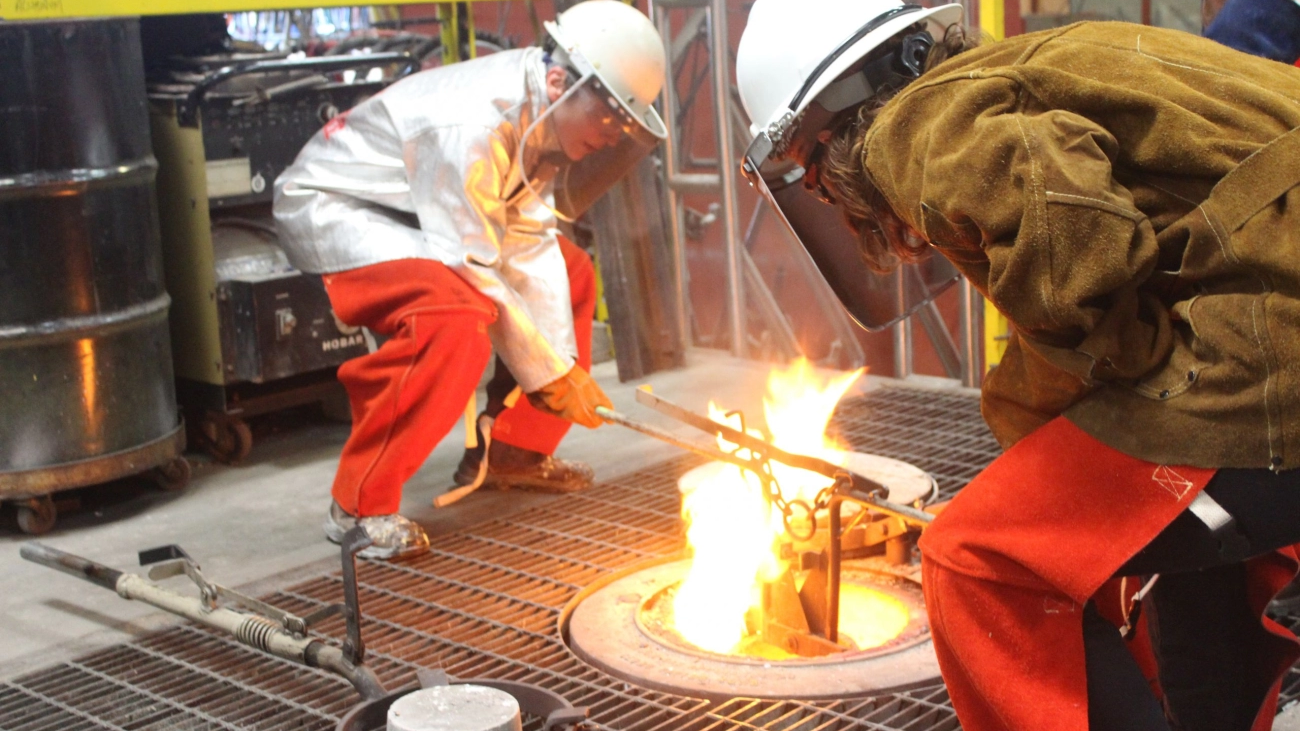
This part is non-negotiable. When we pour bronze, everyone in the pour area wears:
- Heat-resistant gloves:
- Leather foundry gloves with cuffs that protect wrists and lower forearms.
- Face shield and safety glasses:
- Full-face shield rated for heat and impact.
- Safety glasses underneath the shield, not instead of it.
- Respiratory protection:
- At minimum, a respirator with filters rated for dust and fumes when breaking shell or grinding.
- For home setups: prioritize good ventilation and work upwind of fumes.
- Clothing:
- Natural fibers only: cotton, wool, leather (no synthetics that melt).
- Heavy long-sleeve shirts, long pants, and a leather apron if possible.
- Footwear:
- Leather boots, fully closed, over pants (not tucked in—so metal runs off, not into your shoes).
Think of PPE as part of your bronze casting tools and equipment. If you can’t afford proper protective gear, you’re not ready to pour molten metal yet.
Safety rules for handling molten bronze, fumes, and fire risk
We treat molten metal like a loaded weapon: carefully, consistently, and without shortcuts.
Key safety rules we follow and recommend:
- No moisture near molten metal:
- Molds, tools, and floors must be dry. Moisture causes violent steam explosions.
- Preheat everything that touches the melt:
- Tongs, ladles, and tools are preheated to drive off condensation.
- Control your pour area:
- No visitors, kids, or pets in the pour zone.
- Clear walkways. No cables or hoses where you’ll walk with metal.
- Manage fumes and dust:
- Burnout, ceramic shell, and grinding all produce dust and fumes.
- Use ventilation, respirators, and wet methods when breaking shell.
- Fire readiness:
- Keep dry sand, fire extinguishers (Class ABC), and a clear emergency path.
- Know how to shut off gas or power to the furnace fast.
- Never work alone for full pours:
- For a real bronze pour, we keep at least two trained people present.
- One leads the pour, one acts as spotter and backup.
If you’re doing DIY bronze casting at home, adopt the same mindset foundries use. The metal doesn’t care if you’re a beginner.
How much bronze you need: size and wall thickness
Before ordering metal, we always estimate weight. For lost-wax bronze sculpture, we usually work with hollow castings with controlled wall thickness.
Basic guidelines:
- Wall thickness for small sculptures:
- 3 mm–5 mm (about 1/8–3/16 inch) is common for small to medium pieces.
- Solid vs hollow:
- Very small elements (fingers, thin rods) may be solid.
- Larger volumes are usually hollow to reduce weight and cost.
Rough estimates for small projects (including gating and sprues):
| Sculpture size (approx.) | Casting type | Estimated bronze needed* |
|---|---|---|
| 4–6 in small figure or abstract form | Hollow | 2–4 lb |
| 8–10 in tabletop bronze sculpture | Hollow | 5–8 lb |
| 12–14 in detailed figurative piece | Hollow | 10–15 lb |
*These are ballpark figures for planning and budgeting, not engineering specs.
We typically add 20–30% extra to account for gates, sprues, runners, and vents, since those get cut off after the pour.
Where to buy bronze for sculpture in the U.S.
You don’t need to smelt your own metal. For a beginner or small studio, we source bronze from:
- Art foundry suppliers:
- Sell bronze ingots specifically formulated for sculpture.
- Reliable composition, often with technical data sheets.
- Industrial metal suppliers and foundries:
- Sell silicon bronze and other alloys by the pound.
- Good for larger projects if you know the exact alloy you want.
- Recycled scrap (with caution):
- Machine shops, metal recyclers, or demolition yards may have bronze/brass.
- The downside: mixed or unknown alloys can cause:
- Inconsistent color
- Poor casting behavior
- Toxic fumes depending on the composition
For a first bronze sculpture, I strongly recommend buying known bronze ingots from a reputable supplier or working with a foundry that provides the metal. Once you know what you’re doing, recycled metal can be part of an eco-friendly bronze casting practice, but start with something predictable.
Typical costs for tools and materials for your first bronze sculpture
Costs vary a lot across the United States, but here’s a realistic, no-nonsense snapshot for a small lost-wax bronze sculpture project (around 8–10 inches tall).
If you use a professional foundry for the pour only:
- Wax, mold materials, and your time: varies
- Bronze and casting fees:
- Roughly $15–$30 per pound of finished bronze, depending on:
- Foundry
- Complexity
- Quantity
- A small 5–8 lb sculpture might cost $200–$400+ in foundry fees for casting alone.
- Roughly $15–$30 per pound of finished bronze, depending on:
- Finishing and patina services (if they do it):
- Often $150–$500+ depending on detail and labor.
If you set up a small home bronze casting furnace (entry-level DIY):
- Propane furnace and crucible kit: $400–$1,200
- Basic tongs, shanks, and foundry tools: $200–$600
- PPE (gloves, face shield, respirator, clothing): $150–$400
- Bronze ingots for a few small sculptures: $100–$300
- Mold and investment materials (rubber, plaster, ceramic shell): $100–$300
You don’t need to buy everything at once. Many artists in the U.S. start by:
- Sculpting the original and wax themselves.
- Using a foundry for the actual bronze casting.
- Gradually adding tools and equipment as they do more DIY bronze sculpture work.
Once you understand the materials, tools, and safety fundamentals, you’re in a strong position to decide whether you want a home setup, a foundry partnership, or a hybrid approach that fits your budget and your long-term sculpture goals.
How to Make a Bronze Sculpture from Sketch to Maquette
If you want to learn how to make a bronze sculpture, everything starts before the metal: it starts with a clear idea and a solid maquette. This is where you solve design, proportion, and balance issues while materials are still cheap and easy to change.
Clarify Your Creative Goal First
Before you touch clay or wax, get clear on what you want the bronze to say.
Ask yourself:
- What’s the subject? Figurative, animal, abstract, or architectural?
- What’s the feeling? Calm, powerful, playful, tense, sacred?
- Where will it live? Shelf, tabletop, garden, public space?
Write a short creative brief for yourself:
- One sentence about the theme
- One sentence about the viewer’s first impression
- A quick note on size and placement (e.g., “Indoor, 18-inch tabletop piece”)
This saves you from “winging it” and ending up with a sculpture that feels confused or weak.
Build Reference and Mood Boards
Even experienced sculptors use reference. It keeps your proportions, gestures, and style grounded.
You can build a simple mood board using:
- Photos: people, animals, architecture, drapery, or natural forms
- Other bronze sculptures: for surface texture, patina, and pose ideas
- Lighting references: how shadows fall over forms
Use tools like Pinterest, local photos, or your own phone shots. For US buyers who enjoy bronze art but aren’t ready to make their own, studying finished pieces—like these handcrafted bronze art sculptures that blend classic design with modern interiors at Art Vision Sculptures—is also a great way to train your eye on proportion and presence.
Basic Sketching for Bronze Sculpture
You don’t need to be a master draftsman, but you do need clear, simple drawings.
Do this:
- Start with silhouettes
- Draw your sculpture as a solid black shape from the front, side, and top.
- Check: Is it readable and interesting even in silhouette?
- Block in proportions
- Use rough lines to mark head height, torso length, leg length, etc.
- For figures, use simple proportion guides (e.g., 7–8 heads tall for a realistic adult).
- Check stability in sketch
- Draw the base. Make sure the weight visually falls inside that footprint.
- If the design looks like it might tip, fix it now.
Aim for quick, messy sketches that explore options, not perfect drawings.
Use Simple Shapes to Plan Complex Forms
To keep your bronze sculpture manageable, simplify it into basic volumes:
- Spheres for heads and joints
- Cylinders for arms, legs, and columns
- Boxes for torsos, bases, and big structural masses
- Cones and wedges for dynamic direction and flow
Think in 3D, not just silhouette:
- Rotate the design in your head and sketch it from multiple angles.
- Ask: “Can this actually be built and cast without impossible undercuts?”
This step makes sculpting faster and prevents headaches later.
Building a Maquette in Clay, Wax, or Polymer
The maquette is your small, test version of the final bronze. It’s where you experiment and make mistakes cheaply.
Good materials for maquettes:
- Oil-based clay (plastiline): Reusable, doesn’t dry out, great for detailed work.
- Wax: Closer to what you’ll cast later, good for fine edges and surface.
- Polymer clay (e.g., Super Sculpey): Can be baked and hardened, solid for smaller models.
Guidelines:
- Start small: 6–12 inches is ideal for a first small bronze sculpture project.
- Work from big shapes to small details—don’t start with eyelashes and buttons.
- Keep the overall silhouette and balance in mind at all times.
Choosing and Building a Strong Armature
A good armature keeps your maquette from sagging or cracking as you sculpt.
Common armature materials:
- Aluminum armature wire: Easy to bend, great for small–medium work.
- Steel wire or rods: Stronger, better for heavier clay builds.
- Wood bases: Provide a stable anchor point.
Keep in mind:
- The armature should act like a skeleton, following the main lines of action.
- Avoid bulky armatures that sit right at the surface—leave room for clay.
- Use screws or pipe flanges to anchor the armature to a wood base.
Test it by lightly pushing or tilting the armature. If it wobbles now, it’ll fail under clay.
Scaling Your Maquette for Real Space
You want the final bronze to read correctly in its actual environment.
Think about:
- Viewing distance:
- Tabletop piece: lots of detail; people see it up close.
- Outdoor or public piece: simpler, bold forms that read from far away.
- Scale relationships:
- Use a simple ratio (e.g., maquette at 1:4 scale, 12″ model → 48″ final).
- For monumental works, digital tools and 3D scans can help scale accurately.
Check by:
- Placing your maquette on a table or shelf similar to the final location.
- Stepping back across the room and seeing if the pose and gesture still read.
Common Design Mistakes in Early Bronze Sculptures
Beginners often create designs that look great in clay but are trouble in bronze. Watch out for:
- Deep undercuts that are hard to mold or cause casting issues
- Thin, weak joins like tiny ankles or wrists holding lots of weight
- Unstable bases that can tip easily, especially in tall vertical pieces
- Overly delicate details that may not fill properly with molten metal
- Spindly elements like long, thin fingers or antennas with no structural support
As you design, always ask: “Can this be molded, cast, and handled without breaking?”
Quick Practice Exercises to Generate Ideas
If you’re stuck, try short, low-pressure exercises:
- 10 mini gesture sketches in 10 minutes—focus on energy, not detail
- Three small clay thumbnails (2–3 inches high) exploring different poses
- Silhouette only: sculpt a tiny form you judge only by its outline
These exercises sharpen your eye and relieve the pressure of “making a masterpiece” on your first try.
How to Know Your Maquette Is Ready for Mold Making
Your maquette doesn’t need to be perfect, but it should be solid and intentional.
It’s ready when:
- The pose and balance are locked in from all main viewpoints
- Major proportions look right (no accidental distortions)
- You’ve checked for problem undercuts and impossible thin spots
- The base design is clear and stable
- Surface detail is developed enough that you won’t “figure it out later” in metal
A strong maquette makes every step after this smoother, whether you’re casting at home or partnering with a professional foundry for a full custom piece or even a commissioned bronze statue following a clear ordering guide like we use for our own projects at Art Vision’s custom statue service.
Once your maquette hits that point—clear design, solid structure, and realistic details—you’re ready to move forward into mold making and the full lost-wax bronze sculpture process.
Bronze Sculpture Mold Making with Rubber and Plaster
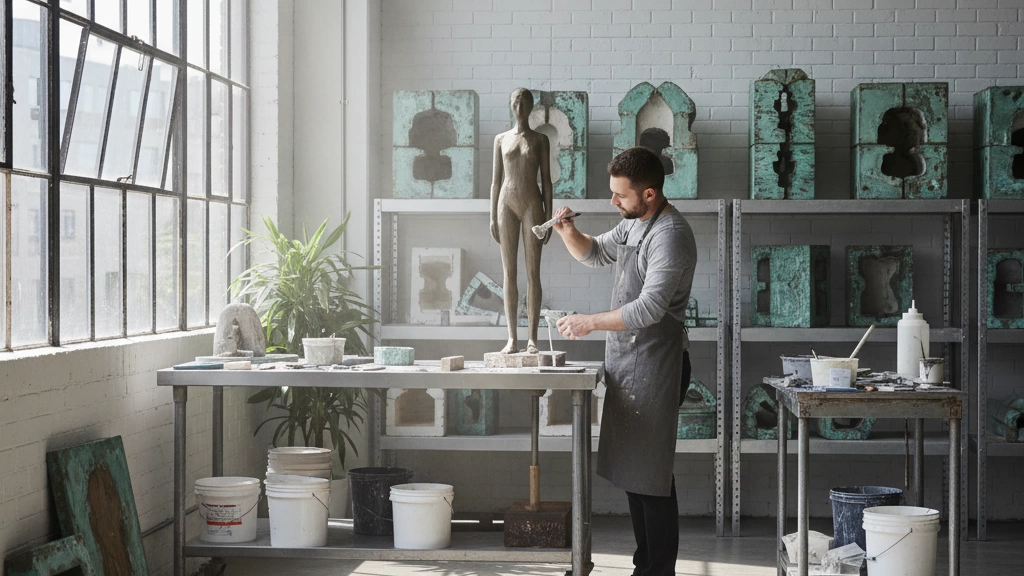
When I show people how to make a bronze sculpture in my studio, this is the stage that quietly makes or breaks the whole project. A good mold is what turns one clay or wax original into a repeatable bronze casting.
Why You Need a Mold for Bronze Sculpture
You can’t pour molten bronze onto your original maquette and expect it to survive. A mold lets you:
- Capture every detail of your maquette safely
- Pour multiple wax copies for lost-wax bronze sculpture
- Fix issues in wax before paying for bronze
- Create an “edition” of the same design
If you want to see where mold making fits inside the full bronze statue making process, I walk through the big picture in my guide on how a bronze sculpture is made.
One-Part, Two-Part, and Multi-Part Molds
For bronze sculpture mold making, I choose the mold style based on undercuts and complexity:
- One-part mold – For very simple, flat-backed pieces with no deep undercuts (plaques, medallions).
- Two-part mold – My default for small bronze sculptures; good for figures, heads, and simple abstract shapes.
- Multi-part mold – For complex figurative bronze sculpture with extreme undercuts, open arms, or negative spaces.
Rule of thumb: if you can’t imagine the model pulling straight out of the mold without snagging, you need at least a two-part mold.
Choosing Mold Materials: Silicone, Urethane, Alginate, Plaster
Different projects need different mold materials:
- Silicone rubber – My go-to for most DIY bronze sculpture projects. Great detail, flexible, long-lasting, works with most clays and waxes.
- Urethane rubber – Tough and cheaper, but pick formulas that won’t stick to sulfur clays and always use the right release.
- Alginate – Fast and skin-safe, but short-lived; more for quick life casts, not long-term bronze casting molds.
- Plaster – Used mainly for the rigid “mother mold” that supports your flexible rubber skin, not as the main flexible layer.
For a beginner-friendly, step-by-step bronze sculpture tutorial, I almost always recommend a silicone rubber mold with a plaster mother mold.
Preparing the Maquette for Molding
Before any rubber goes on, I prep the maquette so the mold releases cleanly:
- Seal the surface – Spray shellac, acrylic clear coat, or a compatible sealer if the clay is porous or fragile.
- Apply mold release – Light, even coat so rubber doesn’t bond to the original or the mold box.
- Plan parting lines – Use a wax pencil or tape to mark where the mold will split. Aim for hidden seams and easy demolding.
- Fill traps – Lightly fill deep holes that could lock the piece into the mold, or plan multi-part mold sections there.
Take your time here; clean prep saves hours of chasing and patching later.
Step-by-Step: Silicone Rubber Mold for a Small Bronze Sculpture
For a small tabletop bronze, this is the basic silicone mold workflow I use:
- Build a mold box – Foam board, plywood, or acrylic walls, sealed at the seams. Leave 0.5–1 in. of rubber around the sculpture.
- Secure the maquette – Glue or clay it down to the base so it can’t float when rubber is poured.
- Mix silicone – Weigh parts accurately, scrape the sides, and mix slowly to reduce air bubbles.
- Brush-on “print coat” – With brush-on silicones, I paint a thin first coat, working rubber into all details and undercuts.
- Build thickness – Add several more coats, sometimes thickened, until I get about 1/4–3/8 in. overall thickness.
- Add keys – Push small bumps or pre-made key shapes into the last rubber layer so the mother mold fits perfectly.
- Cure – Let the rubber cure fully per the manufacturer’s schedule before handling.
For pourable silicone, I’ll often do a simple two-part block mold: half the model in clay, pour first half, flip, clean, and pour the second half.
Building a Rigid Plaster or Fiberglass Mother Mold
The rubber gives detail; the mother mold gives support. Without it, your wax model sculpture can warp:
- Plaster bandage mother mold – Fast, cheap, and perfect for small bronze sculpture projects.
- Fiberglass mother mold – Stronger and lighter for bigger or more complex shapes, but more fumes and PPE needed.
I grease the cured rubber with a release, then:
- Apply plaster bandages in overlapping strips, building up to about 3/8–1/2 in.
- Shape clean edges and registration flanges while it’s still soft.
- Let it cure hard before demolding.
Flanges, Keys, and Registration
Good registration is what keeps seams tight and details crisp:
- Flanges – Flat overlap areas where mold halves meet and clamp together. They keep the mold from sliding.
- Keys – Raised bumps or recesses molded into the rubber and mother mold so everything “clicks” into position.
- Registration marks – Simple alignment marks on the outside so you know which pieces line up.
In my shop, I’d rather spend 10 extra minutes building strong flanges and keys than fight leaks and misaligned wax pulls later.
Avoiding Common Mold-Making Problems
Here are the big mistakes I see with DIY bronze sculpture mold making and how I avoid them:
- Air bubbles – Mix slowly, pour from high in a thin stream, and brush a print coat into details first.
- Trapped undercuts – Plan parting lines carefully or convert tricky areas into multi-part sections.
- Tearing – Make the rubber thick enough, use a high-tear-strength silicone, and avoid razor-sharp edges.
- Inhibition – Some clays and paints inhibit silicone cure; always test a small area first.
If the mold looks bad, I fix it in rubber now rather than hoping it magically improves in bronze.
Cure Times Before Pouring Wax
Every material has its own cure schedule:
- Silicone rubber – Normally 6–24 hours for a full cure, depending on brand and temperature.
- Urethane rubber – Often faster; I still give it at least overnight.
- Plaster bandage mother mold – Hard in 30–60 minutes, but I let it dry several hours so it isn’t damp against wax.
I never rush cure times. Pouring hot wax into a half-cured mold can distort the shape or shorten mold life.
Storing and Caring for Your Molds
A good rubber mold is an asset, especially if you plan an edition of bronze sculptures:
- Clean after use – Rinse off wax, clay, and plaster dust; dry completely.
- Support the shape – Store rubber inside its mother mold so it doesn’t sag.
- Avoid heat and sun – Keep molds in a cool, dry place to prevent rubber breakdown.
- Label clearly – Note which bronze alloy, wax setup, and edition number you used with each mold.
With this level of care, I regularly get multiple clean wax pulls from a single silicone rubber mold—more than enough for a full small bronze edition.
Lost Wax Casting: How to Make a Bronze Sculpture in Metal
If you want crisp detail and a clean, professional bronze, lost-wax casting is the method to use. I’ll keep this tight and practical so you can see how the full metal stage works, step by step.
What Is the Lost-Wax Casting Process?
Lost-wax casting (a.k.a. investment casting) is a method where you:
- Create a detailed wax version of your sculpture.
- Build a ceramic or plaster “shell” around that wax.
- Melt the wax out (“lost wax”).
- Pour molten bronze into the empty cavity.
Why artists use it for fine bronze sculpture:
- Captures very fine detail from the original model
- Works well for complex undercuts and organic forms
- Allows multiple identical castings from one mold
- Produces clean, smooth surfaces that finish beautifully
This is the same basic process used for many high-end bronze statue sculptures built to last decades outdoors.
Lost-Wax vs Sand Casting vs Other Methods
Here’s a quick comparison so you know what you’re choosing:
| Method | Best For | Detail Level | Cost/Setup | Typical Use |
|---|---|---|---|---|
| Lost-wax (investment) | Fine art, figurative, complex forms | Very high | Higher, more steps | Professional bronze sculpture |
| Sand casting | Simple shapes, plaques, parts | Medium | Lower, simpler | Basic shapes, DIY metal work |
| Permanent mold / die casting | Repeat industrial parts | Medium–High | Very high tooling | Mass production, not art focus |
If you care about subtle textures, facial expressions, folds in fabric, or organic shapes, go lost-wax. If you just need a simple, chunky shape and you’re on a budget, sand casting can work.
Pouring a Wax Positive and Controlling Wall Thickness
Once you have your rubber mold, you pour or brush wax into it to create a “wax positive” (the wax version of your sculpture).
Common ways to control wall thickness:
- Slush casting (for hollow pieces):
- Pour hot wax in, roll the mold so it coats the inside, then pour the excess out.
- Repeat until walls are about 1/8–3/16 inch (3–5 mm) for small pieces.
- Solid pour (for very small parts):
- Fill the mold completely with wax.
- Use for small, thick details that need strength.
Tips:
- Use casting wax that’s designed for sculpture (holds detail, carves well).
- Keep your wax at a steady, recommended temperature (usually 160–180°F / 71–82°C).
- Check thickness with calipers so you don’t end up with weak, thin walls.
Attaching Wax Sprues, Runners, and Vents
Sprues and vents are just wax channels that help bronze flow in and air escape out.
- Sprue: Main channel where bronze enters.
- Runners: Side channels that distribute bronze into various parts.
- Vents: Thin channels that let air and gases escape.
Basic rules:
- Attach sprues to thicker, less visible areas (bottoms, backs, underside).
- Avoid spruing directly on fragile details like fingers, noses, or edges.
- Add vents to high points and trapped areas where air will collect.
Think of it like plumbing: bronze needs a clean, continuous path in, and air needs a path out.
Designing a Wax Gating System to Reduce Defects
A good gating system prevents:
- Cold shuts (where metal doesn’t fully fuse)
- Shrinkage cavities
- Air pockets and gas porosity
Good practices:
- Tapered main sprue: Slightly wider at the top, narrower at the sculpture.
- Even wall thickness: Don’t feed ultra-thick and ultra-thin sections with the same tiny gate.
- Feed from heavy to light: Put the main feed into the heaviest mass so it fills first.
- Use reservoirs (“risers”): Small wax cups that act as extra metal supply to compensate for shrinkage.
If in doubt, oversprue slightly as a beginner; you can always cut and chase off extra metal later.
Building a Wax Tree for Multiple Bronze Pieces
If you’re casting several small parts:
- Mount multiple wax positives together onto one main sprue trunk.
- Arrange them like branches on a tree, all feeding into the central “trunk.”
- Leave enough space between pieces so the ceramic shell can coat everything evenly.
Benefits:
- Fewer pours
- More efficient use of bronze
- Less time in the furnace and burnout kiln
Creating a Ceramic Shell or Investment Mold
Once your wax and gating are ready, you build the mold that will hold the bronze.
Two common systems:
- Ceramic shell (foundry standard):
- Dip wax in liquid ceramic slurry
- Coat with fine sand or stucco
- Repeat several times (6–10 layers) until you get a strong shell
- Investment in a flask (more small-studio friendly):
- Place wax in a metal flask or can
- Pour in investment (plaster + silica mixture)
- Let it cure fully
Key points:
- Make sure wax is clean, dry, and securely attached to the sprue base.
- Avoid trapping air pockets; gently tap or vibrate to release bubbles.
- Follow the manufacturer’s cure times carefully.
Burnout: Removing the Wax and Prepping for Bronze
The burnout step removes the wax and hardens the mold.
Typical steps:
- Place the shell or flask in a kiln or furnace.
- Slowly ramp up temperature to burn out wax (commonly 300–1350°F / 150–730°C depending on system).
- Hold at temperature long enough to fully drain and burn off wax residues.
- Preheat the shell to pouring temperature so it doesn’t crack or chill the bronze.
What matters:
- Slow, controlled ramp-up = less cracking.
- Adequate venting so wax can drain and fumes escape.
- Shell must be fully dry and solid before you pour metal.
Melting Bronze Safely and Checking Pour Quality
Safety first: molten bronze is around 1900–2100°F (1038–1149°C).
Basic safety gear:
- Leather gloves rated for high heat
- Face shield + safety glasses
- Heavy cotton or leather clothing (no synthetics)
- Leather boots, no exposed skin
Melting steps:
- Use a propane, natural gas, or oil-fired furnace, or an electric melting furnace.
- Charge the crucible with clean bronze ingots or known scrap (avoid mystery metal).
- Skim slag off the surface with a steel skimmer.
You want:
- Correct temperature (foundry pyrometer or thermocouple is ideal).
- Good fluidity (bronze should pour in a smooth, continuous stream).
- Minimal slag or contamination.
Team Pouring, Cooling, and Solidification
Bronze pouring is not a one-person job once you get above very small workpieces.
Team pour basics:
- Two people on the crucible (one on each handle or shank).
- One person spotting, guiding, and watching for spills or issues.
- Clear commands: “Lift,” “Walk,” “Tilt,” “Stop.”
Pouring:
- Bring the crucible close to the mold, steady and level.
- Start with the main sprue and pour smoothly—no splashing, no stopping mid-stream.
- Fill each mold until the metal crowns at the top.
Cooling:
- Let bronze cool in the mold until it’s fully solid (commonly 30–90 minutes for small–medium pieces; larger work can take hours).
- Do not quench hot shells in water unless you know the alloy and shell can handle thermal shock.
As bronze cools:
- It shrinks slightly.
- Risers and gates feed shrinking areas if your gating system is designed correctly.
- The shell will eventually be broken off once the piece is cold enough to handle.
When to Consider Sand Casting at Home
If you’re working from a home setup and don’t want the full ceramic shell system, sand casting can be a realistic option.
Sand casting is better if:
- Your designs are simple, bold, and low-detail
- You want a lower-cost, easier mold system
- You have limited tools and space
But sand casting:
- Doesn’t hold fine, crisp details as well as lost-wax
- Struggles with deep undercuts and complex forms
- Often needs more cleanup and machining
A smart workflow for a home artist in the U.S. is:
- Use lost-wax and professional foundry services for more detailed or figurative pieces.
- Experiment with sand-cast bronze for simpler shapes while you learn furnace safety and metal handling.
Use this overview as your roadmap for how to make a bronze sculpture in metal using the lost-wax process. Once you understand wax control, gating, shell building, burnout, and safe pouring, you’re ready to start producing clean, professional bronze castings.
Finishing a Bronze Sculpture: Chasing, Welding, and Polishing
Once the bronze is cast, the real “make or break” work starts. Finishing is where your sculpture goes from rough metal to gallery-ready. Here’s how I handle each step in a straightforward, repeatable way.
Breaking Out the Raw Bronze Casting
When the pour is done and the bronze is cooled, you’ve got a rough casting locked inside ceramic or investment.
Basic breakout steps:
- Safety first:
- Leather gloves
- Full face shield
- Dust mask or respirator
- Long sleeves and pants
- Knock off the shell:
- Use a hammer and chisel or air hammer to break the ceramic shell away.
- Work slowly around delicate areas like fingers, thin edges, or facial features.
- Clean the surface:
- Wire brush or wire wheel to remove remaining shell.
- Blow off dust with compressed air.
You’ll see something similar to a raw Art Deco bronze sculpture at this stage—lots of potential, but still rough compared to a finished piece you’d see in a curated collection like an art-deco bronze sculpture with a refined finish.
Cutting Off Sprues, Gates, and Extra Metal
Sprues, gates, and vents did their job during casting, but now they’re just in the way.
How I remove them without damage:
- Tools:
- Angle grinder with cut-off wheel
- Bandsaw (if available)
- Hacksaw for small areas
- Workflow:
- Cut sprues a bit proud (leave a small stump) so you don’t gouge the sculpture.
- Keep the metal cool—avoid overheating by taking breaks.
- Support the piece so nothing flexes or snaps while cutting.
Tip: Always cut away from thin sections, not into them. It’s easier to grind and chase away a small stump than to repair a big chunk you accidentally removed.
TIG Welding Bronze Sculpture Sections
If your sculpture was cast in multiple parts, TIG welding is the cleanest way to assemble it.
Why TIG for bronze:
- Fine control of heat
- Clean, narrow weld bead
- Better color match when done right
Basic TIG setup:
- DC TIG welder
- Silicon bronze filler rod (or alloy that matches your casting alloy)
- Argon shielding gas
- Preheat larger pieces when possible (helps avoid cracking)
Welding tips:
- Tack the pieces first so you can check alignment from all angles.
- Use small, controlled welds along the seam.
- Let sections cool gradually—don’t quench bronze with water.
Matching Filler Rods and Weld Color
A great bronze weld should disappear after chasing.
What I look at:
- Alloy match:
- If you’re casting in silicon bronze, use silicon bronze filler rods.
- For other alloys, ask your foundry or supplier what rod they recommend.
- Test weld:
- Make a short test weld on scrap from the same casting.
- Grind and polish it to see if the color matches in bright light.
If the weld metal is too light or too red, it will show even after patina. Get this right now and your finishing gets much easier.
Chasing Techniques for Bronze
Chasing is where you “erase” the evidence of casting and welding and bring the sculpture back to your original vision.
Main chasing goals:
- Hide welds and sprue removal points
- Fix pits, pores, and small casting flaws
- Sharpen lines and details that softened in casting
Common chasing tools:
- Hand files (flat, half-round, needle files)
- Small chisels and punches
- Rotary tools (Dremel/Foredom) with carbide or diamond burrs
- Rifflers for tight spots
Basic chasing process:
- File welds and sprue stumps flush with the surrounding metal.
- Use burrs to re-cut lines, folds, hair, or fabric texture.
- Blend the worked area into the original surface so you can’t see a transition.
Work under strong raking light so surface imperfections stand out clearly.
Hand Tools and Power Tools for Refining Bronze
You don’t need a fully loaded shop, but a smart basic setup helps a lot.
Hand tools:
- Bastard and mill files (coarse and fine)
- Needle files
- Scrapers
- Sandpaper (80–600+ grits)
Power tools (for speed):
- Angle grinder with flap discs
- Rotary tool or flex shaft (with various burrs and sanding drums)
- Die grinder (for larger works)
Rule of thumb:
Start with the largest tool that’s safe, then downshift to smaller, more precise tools as you get closer to final detail.
Sanding and Polishing: From Rough to Mirror
Even if you don’t want a mirror finish, a controlled sanding sequence makes your patina more even and professional.
Typical grit progression:
- 80–120 grit: Remove deep grinder marks and big scratches.
- 180–220 grit: Start smoothing and leveling.
- 320–400 grit: General pre-finish; many sculptors stop here for a satin look.
- 600–800+ grit: Pre-polish for a bright finish.
- Polishing compounds: For near-mirror or mirror finishes.
Polishing tools:
- Cloth or felt wheels
- Polishing compounds (brown/black for cutting, white/green for final gloss)
- Hand polishing for tight spots
Wipe the sculpture clean between stages so you’re not dragging coarse grit into finer stages.
Adding or Restoring Texture
Casting and chasing can soften or flatten your original texture. Bring it back before patina.
Ways I restore texture:
- Punches and stamps: For skin pores, stone, or fabric patterns.
- Burrs used lightly: To suggest hair, rough stone, or wood grain.
- Scratching and stippling: With awls or sharp tools for subtle surface noise.
Always compare with your maquette or original texture reference. The goal is to keep the piece looking intentional, not overworked.
Checking for Structural Issues and Final Cleanup
Before you call it done, treat your sculpture like it’s about to live outdoors for decades.
Structural checklist:
- Are welds continuous and fully penetrated?
- Are thin sections (like ankles, wrists, or tails) strong enough for transport?
- Does the base sit flat and stable? No rocking.
- Is any area overly thin or stressed?
Final cleanup:
- Degrease the sculpture with solvent or a commercial metal cleaner.
- Remove buffing compound residue from corners and textures.
- Do a last visual pass under different lighting angles.
This step is critical if you’re selling or shipping the piece; clients expect the same level of integrity you see in long-lasting bronze works like a well-made timeless bronze Buddha sculpture.
Realistic Timeline to Finish a Bronze Sculpture
How long this takes in real life (for a small to medium piece):
- Breakout and rough cleanup: 2–6 hours
- Sprue removal and grinding: 2–4 hours
- Welding multiple sections: 3–10 hours (depends on complexity)
- Chasing and detail work: 1–3 full days
- Sanding and polishing: 1–2 days
So for a single small bronze sculpture, expect roughly 2–7 days of focused finishing work. Larger or highly detailed pieces can easily stretch into weeks. The artists who stand out in the U.S. market are usually the ones who don’t rush this stage—finishing is where the value and professionalism really show.
Bronze Sculpture Patina: Color, Texture, and Protection
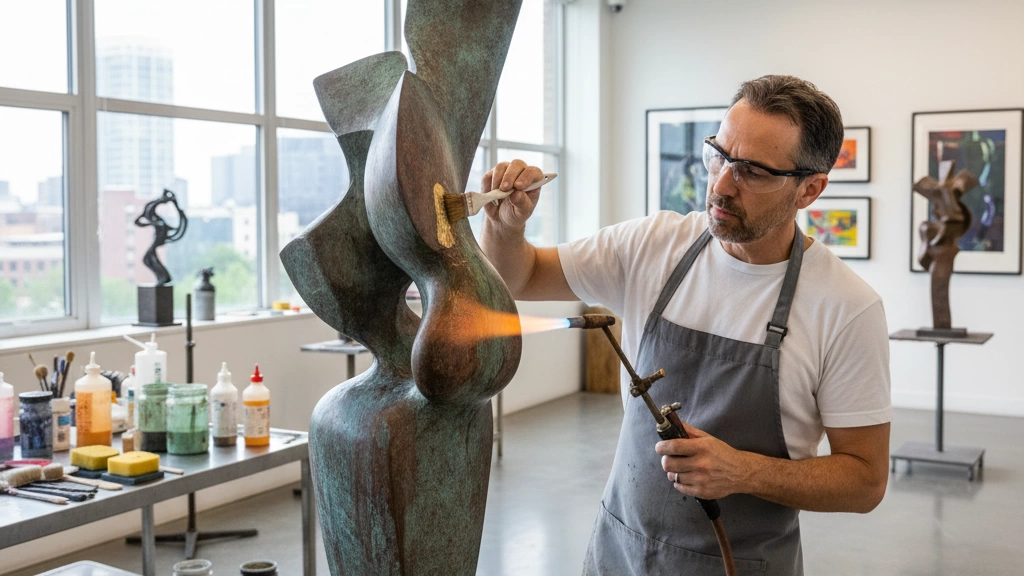
If you want your bronze sculpture to look finished and stay protected for the long haul, patina is where the real magic happens. This is where raw metal turns into something with character, depth, and a professional gallery-level finish.
What Is a Patina and Why It Matters
A patina is a controlled surface reaction on bronze—basically a thin layer of corrosion or color that forms on the metal. It can be natural or created with chemicals and heat.
A good patina matters because it:
- Shapes the entire mood of the sculpture (classic, modern, ancient, bold).
- Softens glare and brings out form and texture.
- Adds visual depth—especially on figurative and abstract bronze sculpture.
- Protects the metal from weather, fingerprints, and staining.
- Helps your work stand alongside professional outdoor bronze statues with lasting beauty.
Think of patina as the “skin” of the sculpture. The bronze underneath is the structure—patina is the look.
Natural Patina vs Chemical Patina
You’ve got two main paths:
1. Natural Patina (Aging Over Time)
This happens slowly from exposure to:
- Oxygen and moisture (browns, darks)
- Pollution and salts (greens, blues, crusty texture)
- Hands and oils (shine and dark spots on high points)
Natural patina is slower and less predictable, but it can look gorgeous on outdoor work. It’s common on historical bronze statuary and older public art.
2. Forced Chemical Patina (Controlled, Faster)
Here you use chemicals, heat, and sometimes sprays to “fast-forward” the process:
- You control color: brown, black, green, blue, or layered effects.
- You control placement: stronger on high spots, lighter in recesses.
- You can repeat the same look across an edition or series.
If you’re selling work, making commissions, or want consistent results, chemical patina is the way to go.
Common Patina Chemicals and Their Effects
Here are some of the most-used patina chemicals in bronze sculpture techniques:
- Ferric Nitrate
- Color: warm brown to reddish-brown.
- Best for: classic bronze statue look, rich “museum” browns, skin tones.
- Cupric Nitrate
- Color: greens and blue-greens.
- Best for: traditional green “aged bronze” look, outdoor-style finishes.
- Liver of Sulfur
- Color: deep browns, grays, and blacks.
- Best for: dark, moody finishes and black patinas, great underlayer for color.
- Ammonium Sulfide / Sulfate Mixes
- Color: darker browns, blacks, and some iridescent tones.
- Ammonia & Salt (Fume Patina)
- Color: light blues, greens, mottled textures.
- Best for: more organic, uneven surfaces with an aged feel.
Always buy patina-grade chemicals from art or foundry suppliers—not random hardware chemicals.
Hot vs Cold Patina Methods
You’ll mostly choose between two methods: hot or cold.
Hot Patina (Most Common for Bronze Sculpture)
- Bronze is heated to around 180–220°F (warm-hot, not glowing).
- Chemical is brushed, sprayed, or dabbed on the hot metal.
- Color develops quickly and can be layered.
- Finish is usually more durable and bonded.
Use hot patina when you want:
- Rich, stable browns and greens.
- Smooth blending and depth.
- A professional lost-wax bronze sculpture look.
Cold Patina
- Applied at room temperature.
- Often sprayed or wiped onto clean bronze.
- Color builds more slowly and can be less durable without a strong sealer.
Use cold patina when:
- You don’t have a torch or can’t heat the piece evenly.
- You’re doing subtle touch-ups.
- You’re working on smaller bronze sculpture projects indoors with good ventilation.
Step-by-Step: Patina on a Small Bronze Sculpture
Here’s a straightforward step-by-step bronze sculpture tutorial for patina on a small piece (tabletop size):
- Clean the Bronze
- Degrease with a solvent like acetone or denatured alcohol.
- Remove all oil, polishing compound, and fingerprints.
- Let it dry completely.
- Lightly Abrade if Needed
- If the surface is too slick, lightly scuff with a fine Scotch-Brite pad.
- Wipe clean again.
- Heat the Bronze (For Hot Patina)
- Use a propane or MAP gas torch.
- Warm the sculpture evenly; don’t let it get red or too hot to control.
- Aim for a uniform “hot to the touch” feel (test with the back of your hand near it, not on it).
- Apply the Patina Chemical
- Use a natural bristle brush, spray bottle, or sponge.
- Apply in thin layers, not one heavy coat.
- Watch the color shift as it reacts with the hot bronze.
- Build Layers
- Reheat slightly as needed between layers.
- Add more solution where you want darker or richer tones.
- You can rinse lightly with water to freeze the reaction at any point.
- Adjust and Refine
- For highlights: gently rub high areas with fine steel wool or Scotch-Brite to expose bright bronze.
- For darker recesses: re-apply patina solution specifically in low spots.
- Lock It In
- Once you’re happy with the color and depth, let the sculpture cool fully.
- Then seal it (see sealing section below).
Simple Patina Recipes (Brown, Black, Green, Blue)
Here are some simple beginner-friendly “recipes” for small bronze sculpture projects:
Classic Brown Patina
- Base: Ferric nitrate solution.
- Method: Hot patina, brush or spray on warm bronze.
- Finish: Build 2–4 passes for depth. Seal with wax.
- Look: Classic gallery bronze, perfect for figurative or abstract bronze sculpture.
Dark Black / Charcoal Patina
- Base: Liver of sulfur or commercial black/brown patina solution.
- Method: Can be hot or cold. Start dark, then rub back highlights.
- Finish: Buff high spots slightly to reveal some bronze for contrast.
Traditional Green Patina
- Base: Cupric nitrate solution.
- Method: Hot patina, applied in light layers.
- Option: Start with a brown underlayer (ferric nitrate), then add green on top.
- Look: “Aged statue” effect like many public bronzes.
Blue / Blue-Green Patina
- Base: Cupric nitrate plus ammonia fumes or specialized blue patina.
- Method: Cold (fume box) or low heat. Use multiple light applications.
- Look: Strong contemporary feel, especially on modern or geometric forms.
Always test on a scrap piece or hidden area before committing to the entire sculpture.
Layering Colors and Building Depth
Real professional patinas rarely come from a single flat color. You get depth by layering:
- Dark Base, Lighter Top
Example: Black or deep brown base, then subtle green or blue on raised areas. - Warm and Cool Mix
Example: Warm brown in recesses, cooler green on edges and transitions. - Selective Highlights
- Lightly buff the high points to expose metal.
- Then hit with a very thin layer of brown or clear wax to warm it up.
Think of patina like glazing in painting—you’re stacking transparent or semi-transparent layers to create complexity.
Safety When Heating Bronze and Using Patina Chemicals
Bronze casting safety tips definitely carry over to patina work. Don’t skip this part:
- Ventilation
- Always work in a well-ventilated area or outdoors.
- Avoid breathing vapors from heated chemicals.
- Protective Gear
- Nitrile or chemical-resistant gloves.
- Safety glasses or a face shield.
- Long sleeves, long pants, closed shoes.
- Respirator with appropriate cartridges if working indoors with fumes.
- Heat Safety
- Be aware of hot metal—bronze holds heat longer than you think.
- Clamp or secure your sculpture so it doesn’t shift when you’re torching.
- Chemical Handling
- Label all bottles clearly.
- Never mix chemicals randomly.
- Store away from kids, pets, and food.
If you wouldn’t want it on your skin or in your lungs, keep it off and out.
Sealing a Bronze Sculpture: Wax vs Lacquer
After patina, you need a protective layer. Two main options:
1. Wax Finish (Most Common for Art Bronze)
- Use a high-quality microcrystalline or museum-grade paste wax.
- Apply in thin coats with a soft cloth or brush while the bronze is slightly warm.
- Buff to matte, satin, or soft sheen.
Pros:
- Easy to apply and touch up.
- Looks natural and rich.
- Great for indoor bronze sculpture.
Cons:
- Needs re-waxing over time (every 6–24 months depending on handling).
2. Lacquer / Clear Coat
- Use a professional-grade metal lacquer designed for bronze.
- Usually sprayed for best results.
- Good for outdoor work or high-touch areas.
Pros:
- Tougher, longer-lasting barrier.
- Better protection against weather and fingerprints.
Cons:
- Harder to touch up invisibly if damaged.
- Can look “plastic” if applied too thick or with cheap products.
Sometimes I’ll use lacquer for outdoor pieces and wax only for indoor or gallery work.
How Patina Ages and How to Refresh Older Bronze
All patinas change over time—that’s part of their charm.
What to Expect Over Time:
- Indoor pieces:
- Slight darkening in recesses.
- More shine on high spots where people touch it.
- Outdoor pieces:
- More contrast between protected areas and exposed surfaces.
- Possible streaking, spotting, or areas of bright metal if heavily handled or rubbed.
Basic Cleaning and Refreshing:
- Dusting
- Use a soft, dry cloth or soft brush to remove dust.
- Light Cleaning
- Slightly damp cloth with mild soap and water, then wipe dry.
- Avoid harsh cleaners, abrasives, or household chemicals.
- Wax Refresh
- If the wax looks dull or patchy, reapply a thin coat.
- Buff after it hazes to restore sheen and protection.
If the patina is truly damaged—large scratches, bright metal showing, or heavy corrosion—you may need to:
- Strip the surface gently (with help from a pro foundry if it’s valuable).
- Re-patina and reseal.
For serious restoration or high-value pieces, it’s worth talking to a professional bronze foundry or conservation specialist rather than experimenting on your only casting.
Dialing in patina is where your bronze sculpture really becomes yours. Between patina color, surface texture, and sealant choice, you can give the same casting a classic museum feel, a bold contemporary finish, or something that looks like it came out of an ancient temple.
Advanced Bronze Sculpture Tips, Variations, and Commissions
How to Scale Up a Bronze Sculpture
When you move from a small tabletop bronze to a big outdoor piece, you can’t just “make it bigger.” You have to redesign it for scale.
Smart ways to scale up:
- Start with a strong maquette (small model), then:
- Use a pointing machine, 3D scanning, or 3D printing to scale the form accurately.
- Check silhouettes from far away—big public bronze sculpture needs to read clearly from 20–100+ feet.
- Simplify fussy details:
- Deep textures and bold shapes survive scaling.
- Tiny details often get lost outdoors and cost more to cast.
For monumental bronze statue projects in public spaces, I always plan the final size first, then design the maquette to translate cleanly at that scale.
Engineering and Armature Planning for Large Bronze
Large bronze sculptures are essentially “skins” of metal over a structural system. Treat them like architecture, not just art.
Key engineering points:
- Internal armature:
- Use steel tubes or I‑beams inside the bronze to carry the load.
- Anchor the internal frame into a concrete footing or base.
- Wall thickness:
- Typical bronze wall thickness: 3/16″–1/4″ for large work.
- Thicker where stress is high (legs, cantilevered arms, thin connections).
- Structural review:
- For public or outdoor installations, get a licensed structural engineer to review drawings for wind, snow, and impact loads.
- Cities and public agencies usually require stamped calculations.
Think of the bronze as a durable shell, and the hidden steel as the skeleton that keeps everything safe.
Working With a Professional Bronze Foundry vs. DIY
For big or complex bronze sculpture, a professional foundry is often the smartest move.
When to use a professional bronze foundry:
- Large scale, public, or permanent outdoor work.
- Complex undercuts, multiple parts, tight deadlines.
- You need expert chasing, welding, and patina at a high level.
What you can do at home:
- Sculpt the original.
- Build the mold.
- Pour wax positives for smaller pieces.
- Do light chasing, patina touch‑ups, and simple bases.
In the U.S., many artists sculpt and build maquettes at home, then partner with a foundry for the heavy lifting—similar to how some artists also choose a professional metal studio for steel sculptures.
Cost Ranges for Professional Bronze Casting
Costs vary by region, complexity, and finish level, but here’s a rough U.S. range:
- Small bronze (6″–12″)
- Simple form, basic patina: $800–$2,500 per piece.
- Medium bronze (18″–30″)
- More detail, multiple parts: $2,500–$8,000+ per piece.
- Large outdoor bronze (life-size figure)
- Full professional service: $25,000–$100,000+.
- Monumental public bronze (multi-figure or oversized)
- Often $100,000–$1M+, depending on size and engineering.
Foundries usually charge by weight, labor hours, and complexity. Expect deposits, staged payments, and extra charges for complex patinas or changes mid‑project.
Using 3D Scanning and 3D Printing for Bronze
Digital tools save time and keep details crisp, especially when scaling or producing editions.
How I use them:
- 3D scanning:
- Scan your clay or wax maquette.
- Scale up or down in software without losing proportions.
- 3D printing:
- Print the model in wax/resin directly for investment casting.
- Or print a plastic master and mold that for wax casting.
This is especially helpful for figurative bronze sculpture, geometric pieces, or when a client wants tight control over proportions.
Cold-Cast Bronze and Resin Alternatives
Full bronze is heavy and expensive. For some projects, cold-cast bronze (bronze powder + resin) is a good alternative.
Pros:
- Lighter and cheaper than solid bronze.
- Can capture very fine detail.
- Good for indoor pieces, prototypes, or budget-limited projects.
Cons:
- Not as durable outdoors as real bronze.
- Different feel and weight in the hand.
- Collectors usually value it less than true lost-wax bronze.
I use cold-cast bronze mainly for small editions and decor pieces where cost and weight matter more than museum-level longevity.
Planning a Bronze Sculpture Edition
If you want multiple castings from one design, you’re talking about an edition.
Basics of a solid edition strategy:
- Edition size:
- Common fine art ranges: 5, 10, 25, or 50.
- Smaller edition = higher perceived value.
- Numbering:
- Mark as 1/10, 2/10 etc., plus artist’s signature and foundry mark.
- Certificates of authenticity:
- Include material, size, edition number, year, and your info.
- Proofs:
- Artist’s Proofs (A/P) and Foundry Proofs (F/P) are sometimes created in addition to the numbered edition.
Plan the edition size up front; changing it later can hurt trust and long-term value.
Sustainable Bronze Sculpture Practices
You can create bronze sculpture and still be mindful of the environment.
Practical eco-friendly steps:
- Use recycled bronze:
- Many foundries melt down scrap and previous runs.
- Optimize your gating and thickness:
- Less waste metal, less grinding, less energy.
- Invest in good molds:
- A durable silicone mold lets you cast more waxes from one setup.
- Work with foundries that:
- Reuse investment material where possible.
- Run efficient furnaces and responsible waste handling.
We recycle as much alloy as possible and design our processes to reduce extra pours and grinding passes.
Commissioning a Bronze Sculpture: What to Expect
If you’re a client or an artist dealing with clients, structure the commission clearly from day one.
Typical commission process in the U.S.:
- Discovery & concept
- Discuss subject, size, location, budget, and deadline.
- Proposal & contract
- Written agreement with scope, price, payment schedule, and usage rights.
- Maquette approval
- Client signs off on a small model or digital render before full-size work begins.
- Production
- Sculpting, mold making, casting, finishing, patina, base fabrication.
- Installation
- Site prep, anchoring, lifting equipment, permits (for public work).
Always include clear terms for revisions, extra costs, delays, and maintenance expectations.
Documenting, Crating, and Shipping Bronze Safely
Bronze is tough, but patina and details can be damaged if shipping is sloppy.
Documentation:
- Photograph the piece from all angles before crating.
- Record dimensions, weight, materials, edition number, and installation instructions.
- Keep copies for insurance and the client.
Crating tips:
- Use a custom wood crate with foam blocks or rigid supports.
- The sculpture should not be able to move inside the crate.
- Protect contact points with soft wrap over sensitive areas (like patina-rich surfaces).
Shipping:
- For heavier or large bronze sculpture, use fine art shippers or freight with insurance.
- Mark crates with “This Side Up,” “Fragile,” and weight.
- For international shipping, prep customs paperwork and material declarations.
If you’re unsure, partner with a shipper used to handling bronze and other metal artworks, similar to those that transport large modern metal sculptures.
These advanced bronze sculpture techniques and workflows are exactly how I move from small studio pieces to serious public work, while keeping costs, safety, and long-term value under control.
Bronze Sculpture FAQ: How to Make a Bronze Sculpture at Home
Can I safely make a bronze sculpture at home, and what minimum tools do I need?
You can do small DIY bronze casting at home, but you need to treat it like serious industrial work. Molten bronze is over 1,800°F, so safety and setup come first.
For basic home bronze casting, you’ll need at minimum:
- Propane or waste-oil furnace rated for bronze temps
- Graphite or silicon-carbide crucible
- Heat-resistant tongs and crucible shank
- Fire bricks or a refractory-lined area
- Simple investment setup (sand or investment mix, steel flask, etc.)
- Angle grinder / hacksaw for cutting sprues
- Basic sculpting tools, clay or wax for your model
- PPE:
- Full face shield + safety glasses
- Leather gloves and leather boots
- Heavy cotton or leather clothing (no synthetics)
- Respirator if you’re burning out molds or grinding metal
If you’re just getting started, many U.S. artists begin by sculpting at home and then using a professional foundry for the actual pour. It’s safer and often not much more expensive than buying all the heavy equipment up front. For comparison, if you’re into metal finishes, you’ll notice some overlap with what’s used for outdoor corten steel sculptures with rust patina finishes, especially in terms of safety and surface treatment mindset.
How long does it take from idea to finished patina?
For a small tabletop bronze sculpture, a realistic timeline is:
- Idea, sketches, and maquette: 1–3 weeks
- Mold making (rubber + mother mold): 2–7 days (including cure time)
- Wax work and gating: 1–3 days
- Investment / ceramic shell + burnout: 3–7 days
- Bronze casting + cooling: 1 day
- Chasing, welding, finishing: 1–3 weeks (depends on detail and your skill)
- Patina and sealing: 1–3 days
For first-timers working nights and weekends, expect 4–8 weeks from idea to finished, patinated bronze.
How hard is it to learn the lost-wax process for a first-time bronze sculpture?
Lost-wax bronze casting isn’t “plug and play,” but it’s very learnable if you:
- Start small (under 10″ tall)
- Take a weekend workshop or community college class
- Use a foundry for the furnace and pour while you focus on sculpting, molds, and wax
The “hard” parts for beginners:
- Designing wax sprues and vents so the bronze fills cleanly
- Avoiding undercuts in mold-making
- Chasing and finishing without over-grinding your details
Once you’ve gone through the full process one or two times, it stops feeling mysterious and becomes a repeatable workflow.
What size bronze sculpture should beginners start with?
In the U.S., most beginners have the best experience starting with:
- Size: 6–10 inches (roughly 15–25 cm) in the longest dimension
- Form: Simple pose or abstract forms with limited deep undercuts
- Wall thickness: Around 3–5 mm (⅛–3⁄16″) for lost-wax hollow casting
This size is:
- Easy to handle in wax and rubber molds
- Affordable to cast
- Large enough to hold detail and feel “real,” but not so big that it becomes an engineering project
How much does a small bronze sculpture cost in materials and foundry fees?
For a small tabletop bronze sculpture (6–10″) in the U.S., you’re usually looking at:
If you do everything at a professional foundry (typical scenario):
- Foundry fees (wax, shell, casting, basic cleanup):
- About $400–$1,200+ per piece depending on size, complexity, and region
- Bronze metal cost: often rolled into the foundry quote
- Mold making materials (if you do it yourself):
- Silicone, plaster, supplies: $50–$200
- Patina + final finishing:
- DIY: materials $20–$80
- Foundry: $100–$300+ depending on finish
If you try full DIY (furnace, tools, etc.):
- Initial setup (furnace, crucible, tongs, PPE, molds):
- Easily $800–$2,500+ for a decent, safe starter setup
- Per-sculpture material cost after startup:
- Often $30–$150 depending on size and bronze prices
For most U.S. beginners, starting with foundry services is cheaper and safer than fully building a bronze setup right away.
Can I reuse molds and wax setups for multiple bronze sculptures?
Yes, and this is how artists create editions of bronze sculptures.
- Silicone rubber molds:
- Can often produce 20–40+ wax positives, sometimes more if treated carefully
- Plaster/fiberglass mother mold:
- Reusable as long as it’s not dropped or cracked
- Wax setup (sprues and gates):
- Wax patterns are lost each time during burnout
- You reuse the mold to pour new wax copies, not the original wax tree
So you can absolutely cast multiple bronzes from one design, which spreads your mold cost across the full edition.
What are the biggest mistakes beginners make with their first bronze sculpture?
These are the issues I see most with first-time bronze casters:
- Going too big, too fast
- Starting with a large or super complex figurative bronze instead of a small, clean piece
- Ignoring safety
- No respirator during burnout or grinding
- Synthetic clothing that can melt
- Poor ventilation around fumes and dust
- Bad mold design
- Deep undercuts that lock the piece in the mold
- Thin parts that tear the rubber when demolding
- Poor gating and venting
- Not enough sprues and vents, leading to misruns, shrinkage, or big air pockets
- Over-grinding the bronze
- Grinding away sharp edges, textures, and fine details while “cleaning up”
- Skipping patina testing
- Applying patina chemicals directly to the final piece without testing on scrap bronze
If you keep your first project small, design your mold and gating carefully, and respect the heat and chemicals, you can get a clean, professional-looking bronze even on your first run.


 English
  German
  French
  Italian
  Panjabi
  Chinese
  Spanish
  Arabic
  Hindi
Hindi
Add a Comment