
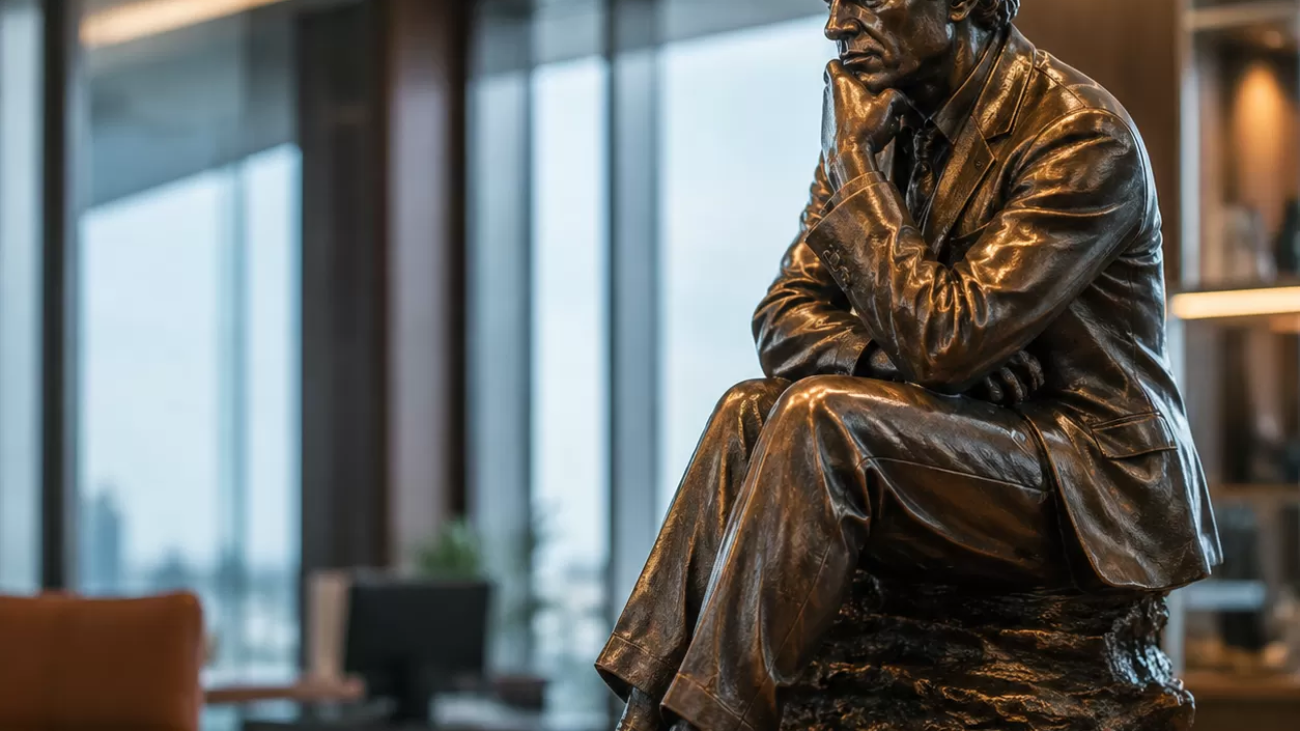
Why does bronze sculpture survive for centuries?
We often get asked how public monuments withstand decades of harsh weather without degrading. The answer lies in heavy-duty material engineering. Bronze doesn’t just sit in an environment—it conquers it. Unlike iron that rusts away, copper-based alloys form a protective barrier that seals the underlying metal from destruction.
Silicon bronze composition
Modern fine art foundry services rely on precise metallurgy. We reject cheap alloys to focus on structural integrity and flawless pour fluidities.
| Element | Percentage | Industrial Purpose |
|---|---|---|
| Copper | 88% – 90% | Forms the durable, corrosion-resistant base matrix |
| Silicon | 2% – 4% | Boosts the tensile strength of bronze alloys and weldability |
| Zinc & Tin | Remaining % | Increases fluid flow at the molten metal foundry floor |
Resilience against the elements
Outdoor environmental exposure ruins inferior materials, but high-grade silicon bronze thrives under pressure.
- Self-Healing Shield: When exposed to oxygen, the alloy develops an initial oxide layer that stops deep atmospheric corrosion in its tracks.
- Acid Rain Resistance: The absence of iron prevents blistering, flaking, and structural rotting.
- Thermal Stability: From freezing winters to blistering summer heat, the metal expands and contracts without structural cracking.
The sculpture patination process
Bronze is a living medium. Left alone, nature will slowly coat the metal in its own green protective skin. However, we accelerate and control this evolution on the foundry floor to achieve immediate, world-class finishes.
Chasing the metal with fire: Our master artisans apply specialized chemical solutions directly onto the raw bronze while blasting it with intense torch heat.
This controlled chemical reaction binds directly with the alloy matrix, creating rich depths of statuary brown, classic green, or deep black. The resulting finish protects the metal and deepens the artistic contrast of every sculpted line.
The Traditional Core: The Lost-Wax Casting Process
Bringing a bronze in sculpture to life requires a time-tested blend of artistry and industrial precision. At our foundry, we rely on the centuries-old lost-wax casting technique to transform delicate concept models into permanent metal monuments. While modern technology speeds up certain steps, the core journey from clay to molten metal remains an intense, highly technical craft.
To understand how these masterpieces are built, it helps to break down exactly how bronze sculptures are cast from start to finish.
Step 1: The Original Maquette & Rubber Mold
Every project begins with the artist’s original vision, often sculpted as a smaller clay or wax model called a maquette. Once the design is finalized, we apply a flexible liquid rubber mold over the original sculpture to capture every fingerprint, texture, and fine detail. A rigid fiberglass or plaster mother-mold backs this rubber layer, creating a reusable negative that ensures perfect accuracy for the final product.
Step 2: The Hollow Wax Core
Large statues are never poured as solid metal. Solid casting creates massive weight restrictions and causes severe cracking or warping when the metal cools and contracts.
- The Process: We pour hot, liquid wax into the rubber mold, coating the interior walls evenly.
- The Result: A hollow wax replica that matches the exact thickness required for the final bronze shell—usually about 3/16 of an inch thick.
- Quality Check: Artisans pull the hardened wax replica from the mold and meticulously hand-chase any imperfections out of the surface.
Step 3: Ceramic Shell Investment
Next, the hollow wax replica undergoes sculptural investment casting. We dip the wax piece into a specialized high-temperature ceramic slurry and coat it with fine silica sand. This dipping process is repeated multiple times over several days, allowing each layer to dry completely. The result is a rock-hard, fireproof ceramic shell that tightly encloses the wax pattern inside and out.
Step 4: The Burnout & The Pour
The ceramic shell is placed into a high-temperature kiln, face down. As the heat rises, the wax melts completely and drains out, leaving behind a perfectly hollow ceramic cavity—hence the term “lost wax.”
[Wax Replica] —> [Ceramic Coating] —> [Heat Burnout] —> [Empty Cavity Ready for Metal]Immediately following the burnout, the shell is preheated while technicians prepare the molten bronze pouring. Working in a specialized molten metal foundry, our team heats the alloy to temperatures exceeding 2,200°F. The glowing white-hot liquid is poured with high-precision speed into the empty ceramic shells. Once the metal cools and solidifies, the outer ceramic shell is carefully smashed away, revealing the raw, enduring bronze sculpture underneath.
3D Scanning for Classic Sculpture Enlargement
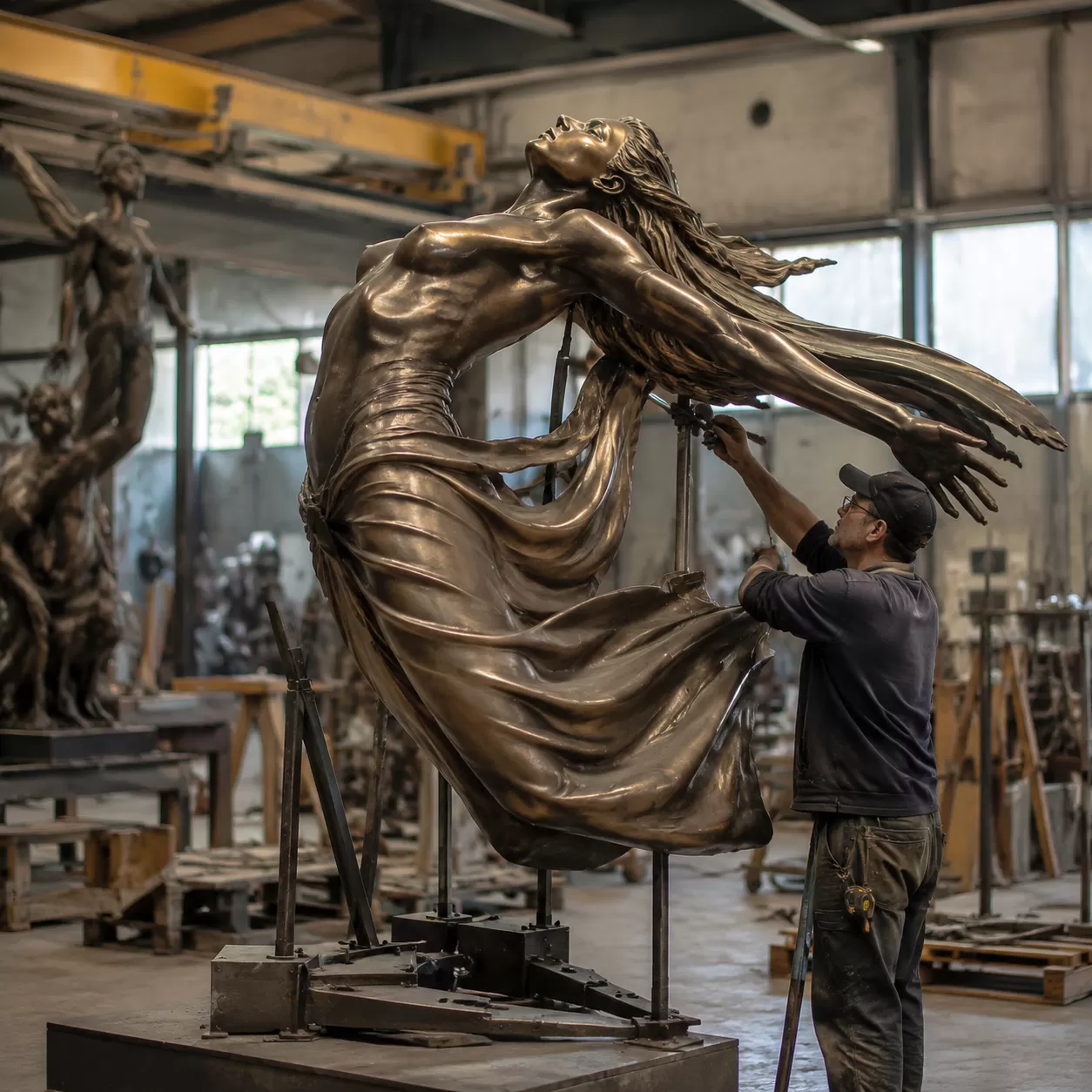
Scaling up a 12-inch hand-sculpted maquette into a 20-foot public landmark requires extreme precision. Through digital point clouds and advanced 3D scanning, we capture every subtle detail of the original artwork. This digital data allows our team to enlarge the design to a monumental scale sculpture with millimeter accuracy, ensuring the final piece perfectly preserves the artist’s original intent.
Heavy Metal Forging and Bronze Pouring
Creating massive public art bronze monuments involves complex structural engineering. Multi-ton bronze sculptures face immense environmental stress from high winds and seismic activity. To guarantee permanent stability, we engineer internal stainless steel structural armatures. This heavy metal forging process provides the essential backbone needed to support the immense weight of the sculpture following the molten bronze pouring phase.
+————————+—————————————+
| Engineering Component | Primary Function |
+————————+—————————————+
| Stainless Steel Core | Resists high winds and seismic loads |
| — | — |
| Heavy Metal Forging | Supports multi-ton bronze weight |
| Silicon Bronze Shell | Provides exterior weather resistance |
+————————+—————————————+
OEM Bronze Statuary Fabrication
For commercial designers and architects, scaling custom architectural accents requires a streamlined supply chain. Our direct-from-foundry large-scale public art fabrication services eliminate the middleman. Through our OEM bronze statuary fabrication, we deliver precise, custom statuary design tailored specifically to the structural and aesthetic demands of modern commercial developments.
Bronze in the Public Square: Elevating Commercial & Civic Spaces
Commercial Plaza Bronze Centerpieces
Placing a central bronze installation in a commercial plaza does more than just fill empty space. It radically changes how people interact with the environment. High-end bronze artwork creates an immediate sense of architectural luxury, anchoring the location and elevating the corporate brand image. These major visual landmarks naturally draw crowds, increase foot traffic, and turn ordinary plazas into community gathering hubs. Investing in a striking metal focal point creates an unforgettable identity for any commercial property.
Public Art Bronze Monuments
Public art bronze monuments serve as permanent, weather-resistant structural narratives that tell a community’s story. Whether celebrating local history or honoring significant cultural milestones, these heavy-duty installations stand strong against time and harsh elements. They bridge the gap between past and future generations, transforming civic spaces into open-air museums.
Why Bronze is a Timeless Investment
For developers and municipalities, selecting bronze for large-scale projects is a smart financial strategy. Beyond its aesthetic appeal, bronze offers incredible long-term asset appreciation.
- Minimal Maintenance: Unlike other materials that rust, crack, or degrade, bronze requires very little ongoing upkeep to maintain its structural integrity.
- Weather Resistance: It naturally develops a protective layer that shields it from rain, wind, and pollution.
- Lasting Value: Choosing this enduring metal ensures that a beautiful bronze sculpture remains a timeless investment for both culture and property value, yielding high returns in community pride and visual appeal for decades.

 English
  German
  French
  Italian
  Panjabi
  Chinese
  Spanish
  Arabic
  Hindi
Hindi